Gain end-to-end visibility into supplier risk, strengthen human rights due diligence, and track product-level carbon data with the world’s most trusted sustainability intelligence platform.
Automotive supply chains are among the most complex in the world: spanning thousands of suppliers across multiple tiers, regions, and materials. EcoVadis empowers automotive leaders to move beyond basic monitoring to operationalize resilience. By turning data into decision-grade intelligence, we help you proactively manage human rights risks, enhance global regulatory compliance, and transform climate ambition into measurable decarbonization at scale.
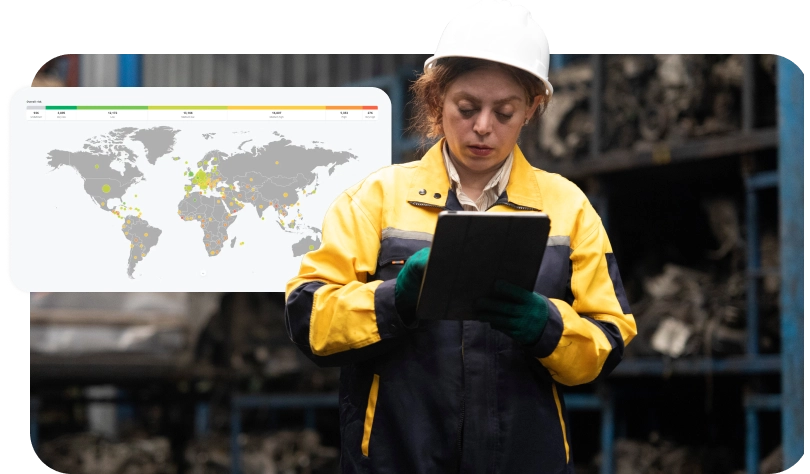
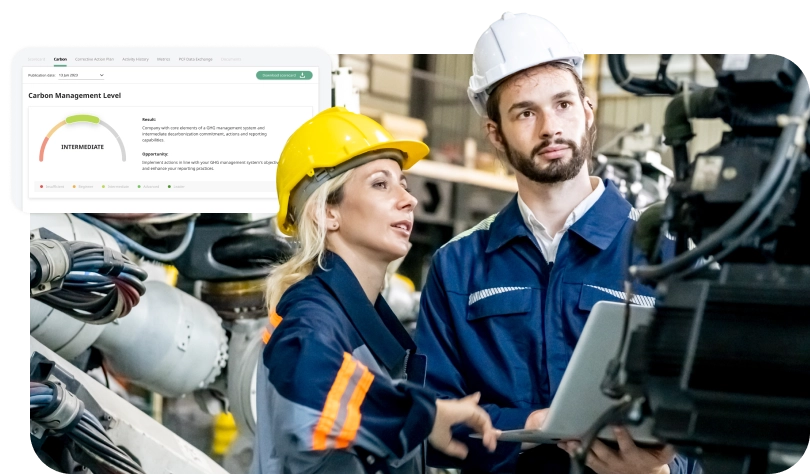
Automotive supply chains are deeply interconnected, and many of your suppliers may already be part of the EcoVadis network.
~12,500 automotive suppliers were rated by EcoVadis in 2025 – here’s the global distribution:
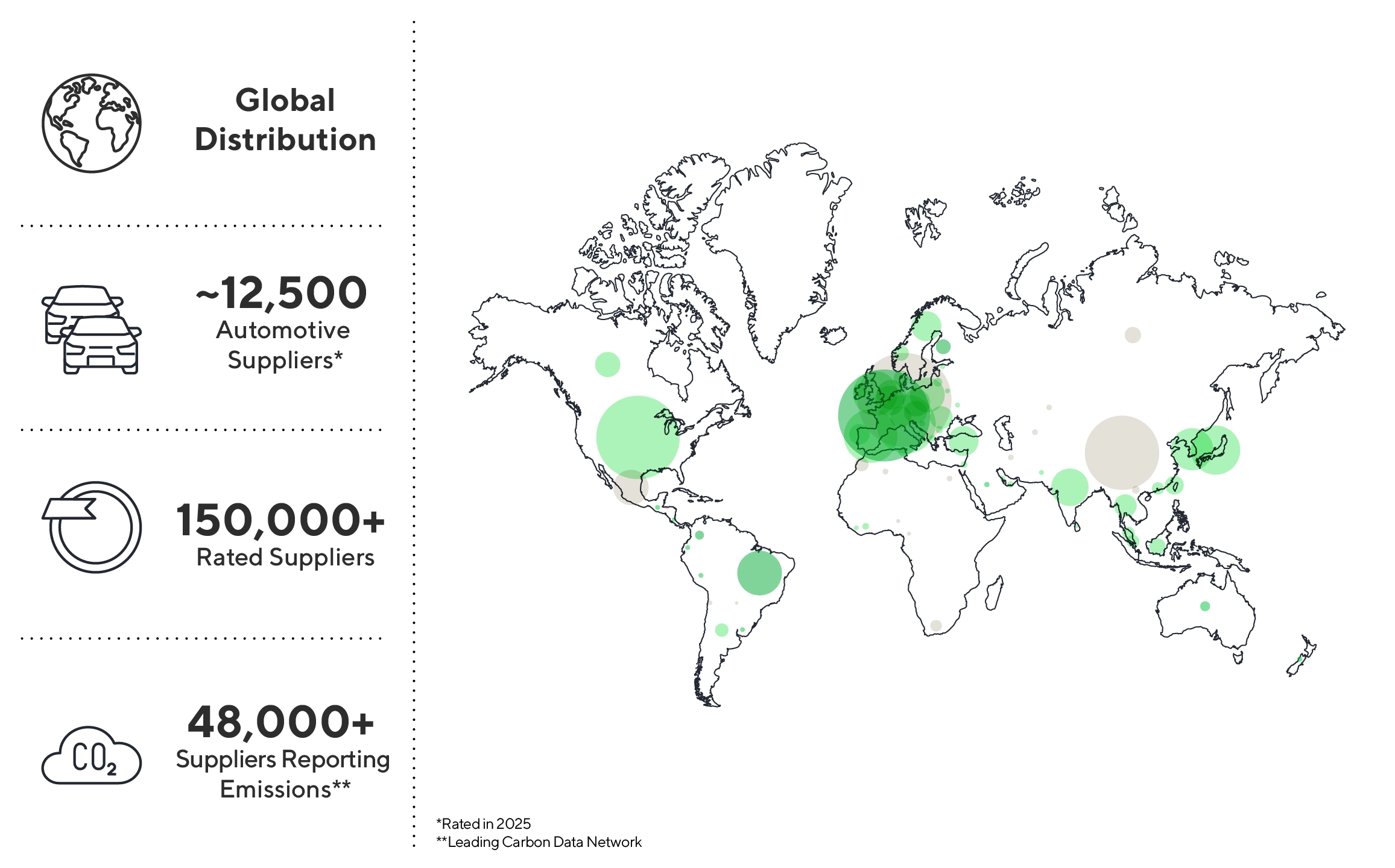
Tap into a global network of 150,000+ rated suppliers and a Carbon Data Network of more than 48,000 suppliers reporting emissions data.
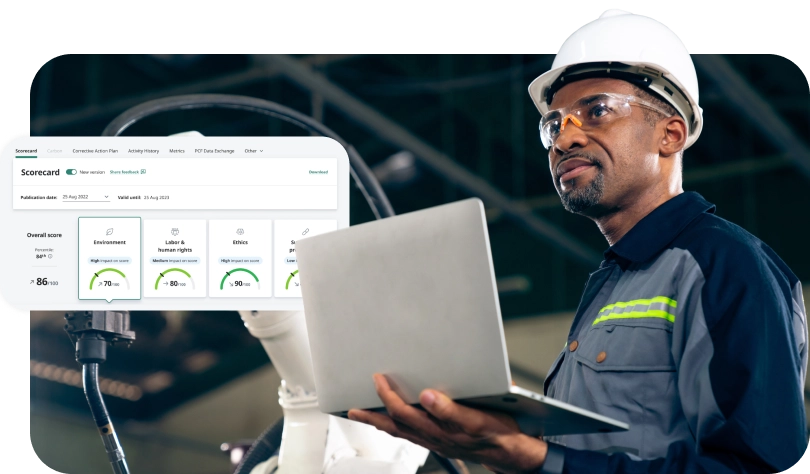
When suppliers complete an EcoVadis assessment, their results can be shared with multiple customers on the platform. This allows companies to access reliable sustainability insights while reducing duplicate requests and minimizing supplier fatigue.
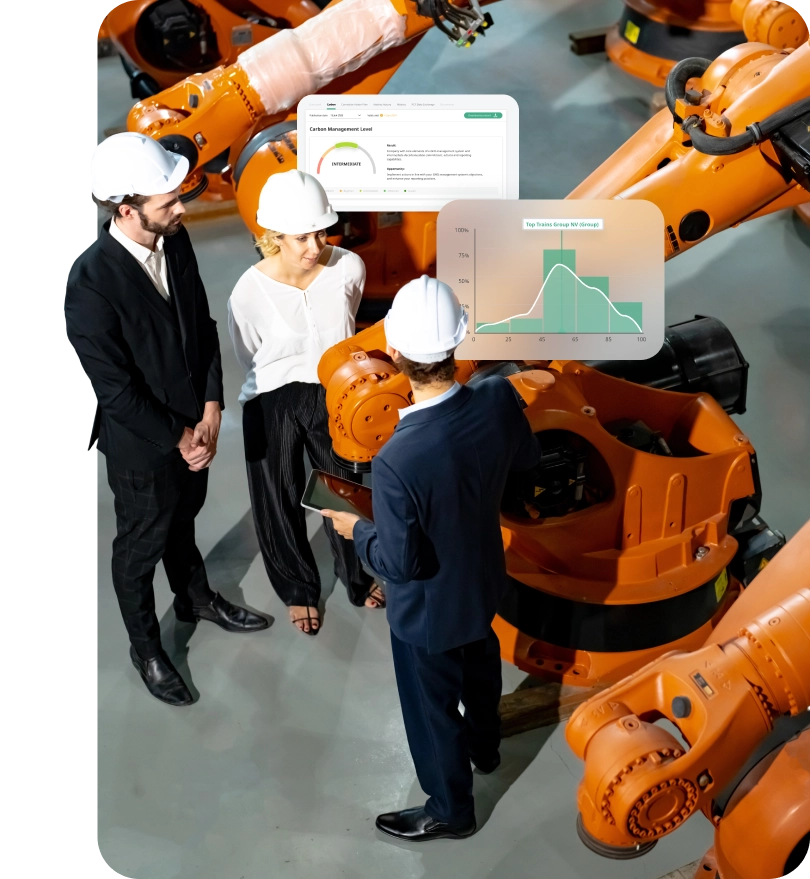





EcoVadis supports sustainability and procurement teams across the global automotive ecosystem, from OEMs to Tier 1 and Tier 2 suppliers.
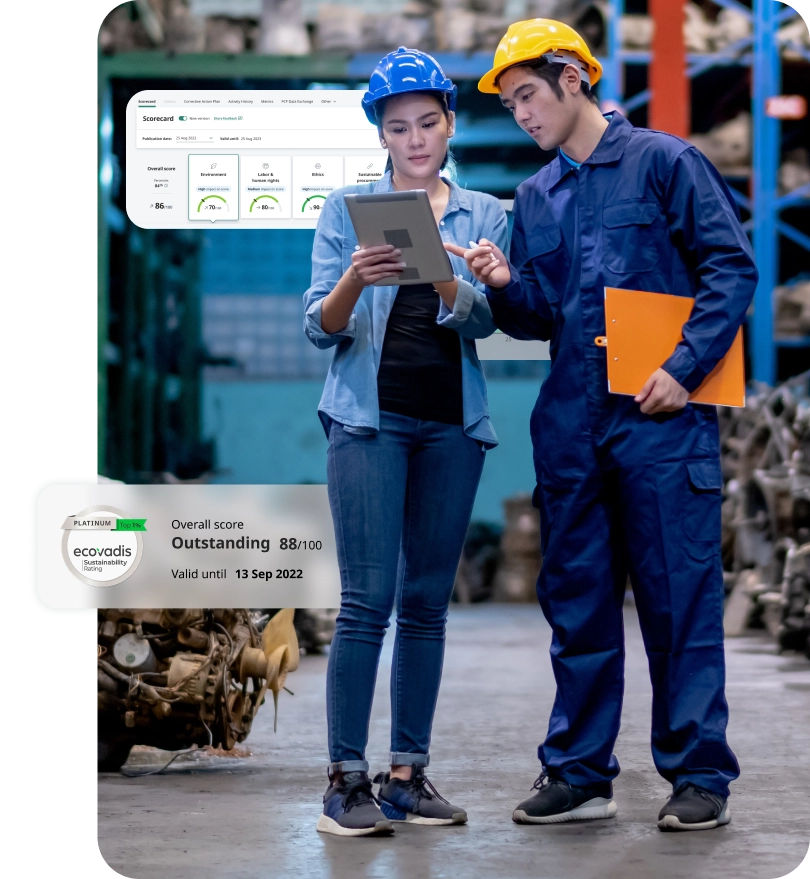

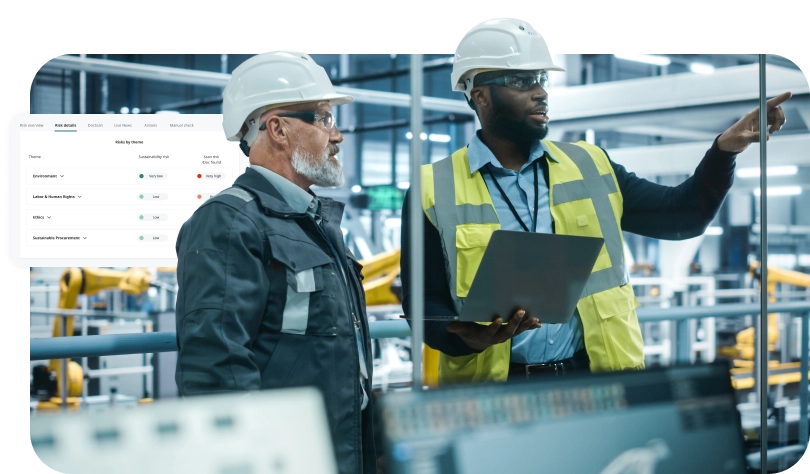
This enables procurement teams to identify potential risk hotspots and focus engagement efforts where they matter most.
As automotive companies work to reduce emissions across vehicles and components, understanding carbon at the product level is becoming essential.
EcoVadis now offers a Product Carbon Footprint (PCF) Calculator, a guided self-service tool that enables suppliers to generate GHG Protocol-aligned product carbon footprints, even when primary data is limited.
Built on the ecoinvent database, the PCF Calculator helps suppliers generate consistent lifecycle emissions estimates across automotive parts and materials.
This enables procurement and sustainability teams to gain more accurate insights into product-level emissions and support supply chain decarbonization initiatives.