Passer au contenu
SUSTAINABLE PROCUREMENT BAROMETER 2026

Upgrade your strategy with our global benchmark

Discover the 5 pillars of leading sustainable procurement programs with actionable insights from 1,000+ global businesses

Users Love Us par G2 Momentum Leader par G2 Easiest To Do Business With par G2 Leader par G2
Contenu principal

Who did we survey?

1000
Multinationals, $1B+
revenue
2000 +
Suppliers
20
Secteurs
d’activité
50 %
of respondents are

C-suite level

Procurement for a volatile future

Supply chains are under pressure from geopolitical conflict, regulation shifts, climate disruption, and Scope 3 demands – yet many teams still react to risks instead of anticipating them. This year’s Barometer report shows how leaders are rewiring sustainable procurement. No longer just an isolated program, they’re building a new procurement operating system that embeds supplier ESG intelligence throughout the business. Follow their lead to improve resilience, decarbonization, ROI, and competitiveness in today’s volatile economy.

Value beyond compliance

Compliance remains a top benefit of sustainable procurement, but companies are reporting a wider value profile than ever, including innovation, risk reduction, and revenue growth. 80% of leaders cite innovation as a leading driver of program ROI.

Visibility frontier

Around half (48%) of buyers now have visibility of ESG practices for most of their Tier 1 suppliers, a major increase since 2024. But visibility drops off sharply for Tier 2 and beyond.

Uneven data

Companies are raising standards for carbon data quality, collecting more primary data from suppliers and moving to product-level data. But supplier readiness is uneven, with 30% still not reporting any emissions data at all.

Integration is the norm

Almost all (98%) of surveyed companies have started embedding ESG data into procurement processes, either manually or through digital tools. But full digital integration is a work in progress.

Higher impact engagement

Buyers are moving beyond SAQs to higher-impact engagement actions. Leaders pair expectations with training and incentives, and 26% of buyers now cover more than half of their spend with third-party ESG ratings.

AI asymmetry

55% of buyers have gone from experimenting with AI to operational use, especially for ESG analytics and risk screening. Yet over a third of suppliers have no plans to adopt AI tools. [55%]

EVOLVING DRIVERS & REGIONAL PRIORITIES

What’s driving sustainable procurement

Managing risk and compliance is the top driver of sustainable procurement programs today, but this is changing fast. Over the next 2-3 years, business leaders expect net-zero goals to rise back up the agenda, and supplier innovation to become a strategic priority for value creation.

2026
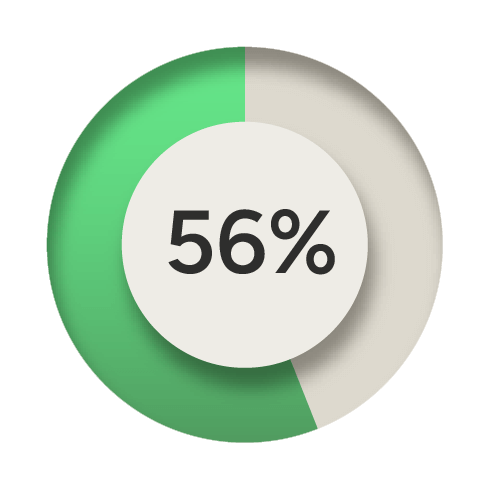
Managing ESG risks & compliance
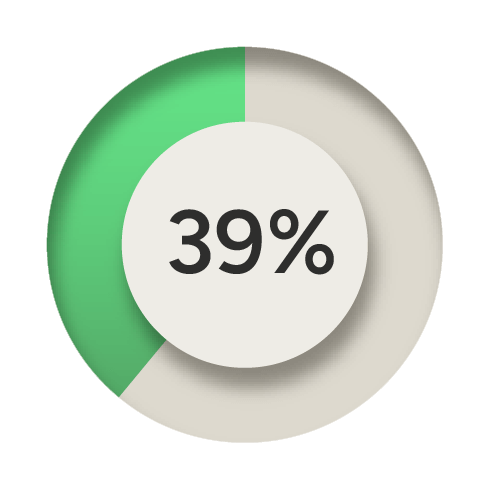
Delivering on ESG & net-zero goals
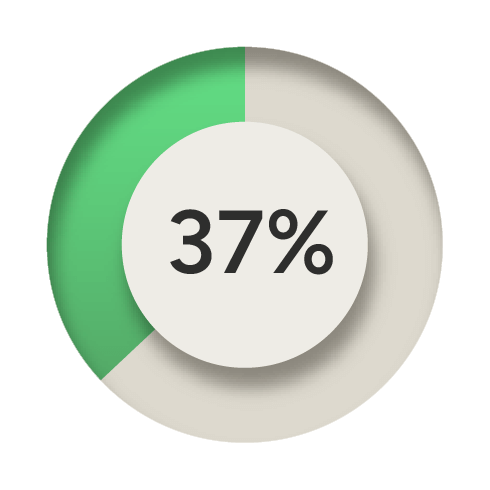
Enhancing supply chain resilience
Next 2-3 years
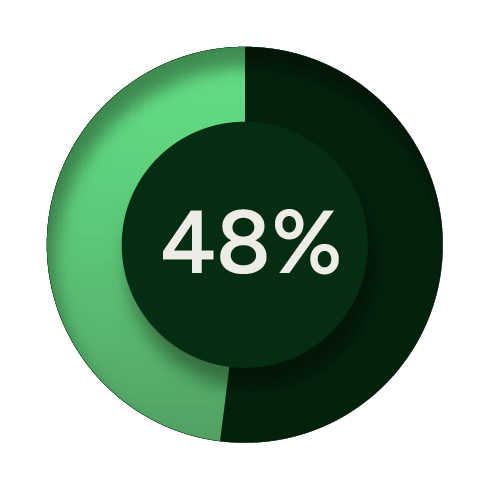
Delivering on ESG & net-zero goals
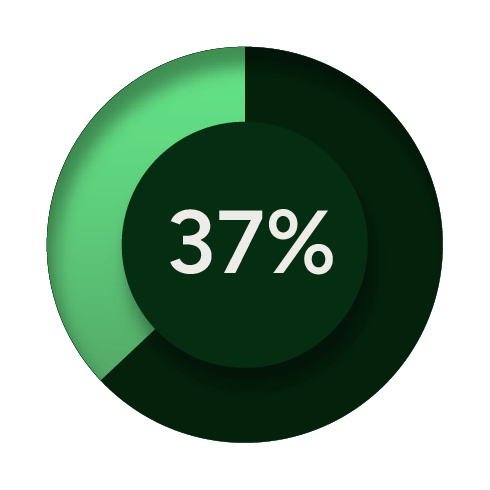
Driving supply chain innovation & transformation
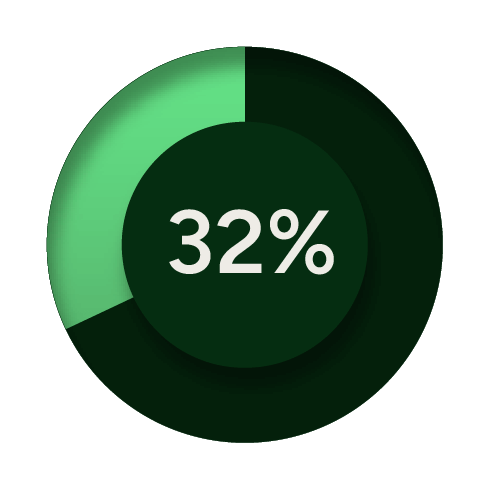
Managing ESG risks & compliance

ESG priorities across regions

Across markets, three ESG priorities are converging: net-zero and carbon management, supplier workforce practices, and circularity. Regional divergence on secondary topics reflects differing regulatory landscapes and market conditions.

Aligned on the Top 3, Balanced on the Rest

After the top global priorities of net zero, supplier equity and circularity, the Americas have a relatively balanced profile of secondary priorities. Ethical governance, ESG compliance, and non-carbon environmental impacts hold similar weight.

Regulation-Driven, Governance-Led

In EMEA, sustainability is largely driven by institutional and regulatory pressure, including ambitious new regulations like CBAM and CSRD. After the top 3 ethical governance and compliance stand out as the clearest secondary priorities for the region.

Supplier Equity & Digital Traceability Upweighted

As markets mature, APAC doubles down on fair, stable supplier relationships and digital traceability. This reflects the region’s status as a global supply chain hub and seems to be driven by customer expectations rather than any single regulation.

RECOMMENDATIONS & PRIORITIES

What this means for executives and how to make your strategy operational

Invest where data meets decisions
Build visibility beyond Tier 1. Embed ESG in sourcing, SRM, and risk.

Measure and report ROI

Track risk avoided, continuity, cost/margin, and revenue.
Upgrade supplier engagement 
Move beyond SAQs to ratings, training, and joint innovation projects. Offer incentives and support.

Design for Scope 3
Design for Scope 3
Use product carbon footprints to inform materials, suppliers, and packaging.

Data underpins everything. When you take that step to primary data, you’re in a better position to understand where your true hotspots are and act on them.


Robert Williams Senior Director of Sustainable Procurement

Sustainability is about doing the same – or more – with less. That’s the ROI story suppliers can act on.

Christophe Quiquempoix VP Sustainable Procurement
SUPPLIER SPOTLIGHT

The supplier carbon data gap

Buyers are demanding more – and higher-quality – carbon data from their suppliers. But most suppliers aren’t ready to meet these expectations, with nearly a third currently not providing any emissions data at all to customers. Only 1 in 5 suppliers report providing primary carbon data across Scope 1, 2 and 3. As standards rise, suppliers need more targeted support from buyers to accurately measure, track, and report emissions. And the benefits are mutual, with both suppliers and buyers uncovering opportunities from better data intelligence.

30%

do not provide any carbon data

26%

provide aggregated Scope 1 and 2 data (limited or no Scope 3)

23%

provide estimated carbon data (using models/averages)

21%

provide detailed activity-level carbon data for Scope 1–2 and select Scope 3 categories

DIVE DEEPER

What’s in the full report?

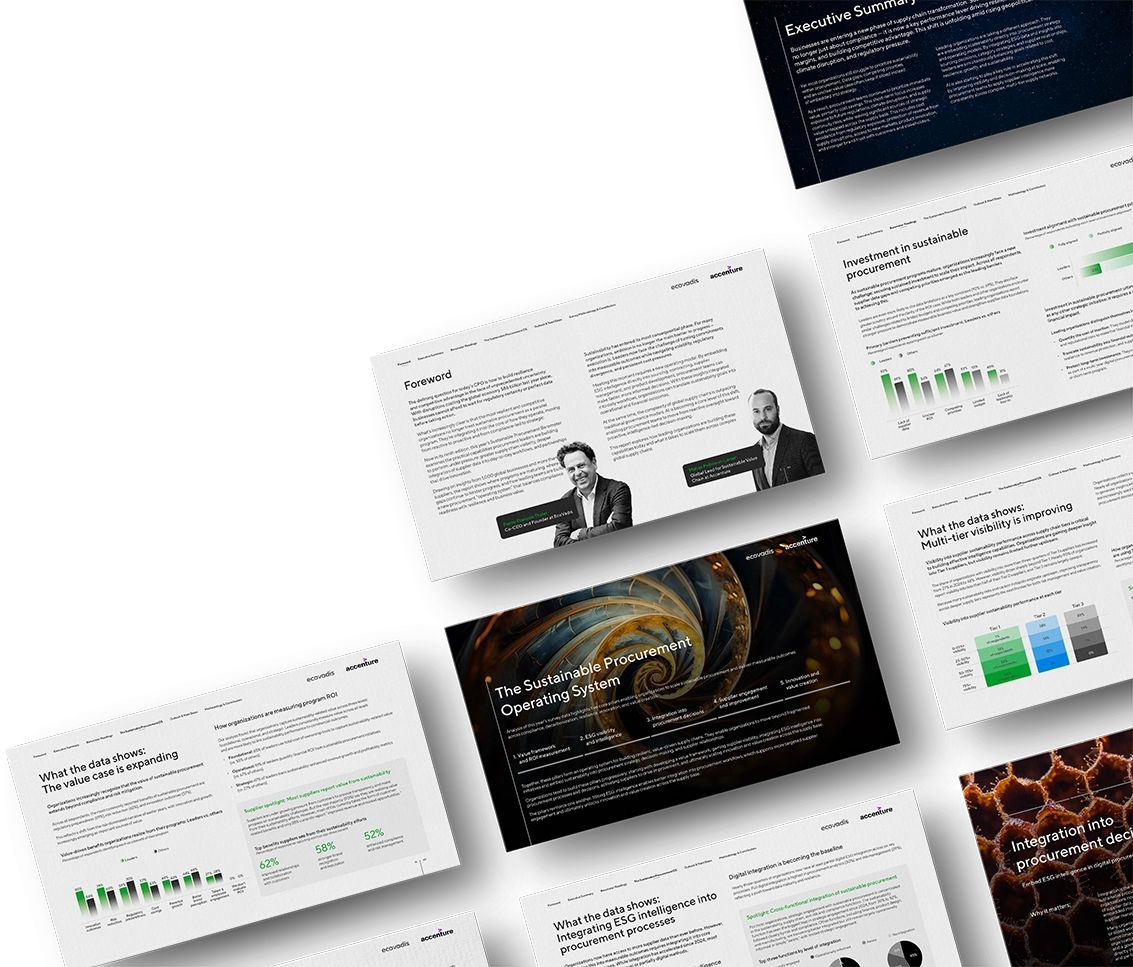
This year’s Barometer report, produced by EcoVadis and Accenture, is a data-rich snapshot of what sustainable procurement looks like in 2026 and what the leaders do differently. The report is centred around the 5 pillars of leading sustainable procurement programs: impact, intelligence, integration, engagement, and innovation. Each section includes key survey findings, supplier spotlights, and recommendations for leadership teams.

À propos d’EcoVadis

EcoVadis is the world’s trusted provider of business sustainability ratings, intelligence and collaborative performance tools for global supply chains. Our ratings, carbon and risk solutions help companies integrate ESG into sourcing, engage suppliers at scale, and turn compliance into value – reducing risk, accelerating decarbonization, and enabling resilient, responsible growth across industries.

About Accenture

Accenture is a global professional services company that helps organizations reinvent with technology, data and sustainability. Combining industry expertise with strategy, consulting, operations and managed services, we partner to build digital supply chains, deliver measurable ESG results, and unlock growth – bringing innovation at scale through our people, ecosystem partnerships and platforms.

Communauté EcoVadis : exploitez la puissance des rencontres et de la collaboration entre pairs
Découvrir 
Nouveau : 5 accélérateurs clés des programmes phares d’Achats Responsables
Découvrir 
Nouveau : plan en quatre étapes pour une chaîne d’approvisionnement plus résiliente
Découvrir 
Paru ! Performances RSE des entreprises françaises et européennes
Découvrir