
 ChatGPT
  Gemini
  Perplexity
  Claude
  Grok
Grok 
Gain insights from 30+ sustainability leaders, including superstars like Paul Polman, former CEO of Unilever, and Helena Helmersson, former CEO of H&M Group. Learn how to build a sustained advantage through responsible business practices.

ESG Compliance: Key Regulations, Challenges, and Best Practices
28th May 2026
Read summarized version with:
ESG compliance has transformed from a voluntary disclosure exercise to an essential operational requirement. As regulatory bodies enforce stricter mandates, businesses are increasingly being forced to align strategies with environmental, social and governance criteria to maintain market access and meet customer expectations.
This guide examines what ESG compliance means, why it matters and how businesses can meet evolving requirements. It covers key regulations across major markets and outlines best practices for integrating ESG into corporate strategy.
Key Takeaways
- ESG compliance demands legal accountability for an organization’s operational and supply chain performance.
- Modern mandates like the CSRD now require double materiality, assessing both a company’s financial risks and its external impacts.
- Regulatory focus in 2026 has transitioned from “non-reporting” risks to “misrepresentation” risks, placing higher scrutiny on greenwashing.
- Global standards like the ISSB and ESRS aim to simplify data requirements, making standardized, audit-ready reporting a technical necessity.
- Effective ESG compliance requires a structured roadmap that bridges the gap between data collection and verifiable performance improvements.
What is ESG Compliance?
ESG compliance is the process of adhering to laws, regulations and industry standards that govern a company’s impact on the environment, society and internal management. While it involves tracking ESG data like carbon emissions and labor practices, modern compliance frameworks, such as the EU’s Corporate Sustainability Reporting Directive (CSRD), incorporate double materiality. This requires companies to report on how ESG issues affect their financial health as well as how their business operations impact the world.
Compliance is structured across three areas:
- Environmental compliance: Meeting emission reduction targets, following waste disposal laws and improving energy efficiency. Many companies must report scope 1, 2 and 3 greenhouse gas emissions under regulations like the EU’s Carbon Border Adjustment Mechanism (CBAM)..
- Social compliance: Involves labor laws, supply chain due diligence and human rights protections. Regulations like Germany’s Supply Chain Act (LkSG) and Canada’s Modern Slavery Act (Bill S-211) require businesses to monitor and prevent forced labor in their supply chains.
- Governance compliance: Financial transparency, anti-corruption efforts and board diversity. Companies must follow rules like the UK Bribery Act or the US Foreign Corrupt Practices Act (FCPA) to prevent fraud and unethical business practices.
The modern regulatory environment demands a move from basic ESG reporting to more active risk management. Companies must now demonstrate verifiable performance improvements across their entire supply chain.
ESG Frameworks, Standards and Regulations: What’s the Difference?
Understanding the distinction between frameworks, standards and regulations is essential for building a robust ESG compliance strategy:
- ESG Frameworks (The What and Why): These provide the context and structure for reporting. They are generally voluntary and principles-based. Examples include the Task Force on Climate-Related Financial Disclosures (TCFD) and the Global Reporting Initiative (GRI).
- ESG Standards (The How): These provide the technical metrics and specific data points needed to report on the broad themes defined by a framework. If a framework identifies climate change as a priority, a standard like the International Sustainability Standards Board (ISSB) IFRS S1 or S2 specifies the exact data that must be disclosed.
- ESG Regulations (The Law): These are legally mandated rules enforced by government authorities. Non-compliance results in penalties. Examples include the EU CSRD and California’s climate disclosure laws, which we cover in detail later.
Why ESG Compliance Matters
Indeed, as much as ESG compliance might feel like a box-ticking exercise, it’s about far more than simply meeting specified requirements. Scrutiny of ESG issues, not just from regulators but also consumers and business partners, is intensifying.
Organizations must be ready to meet strict ESG requirements or face financial penalties, legal action and reputational damage. Investors and customers now demand transparency, and those that fall behind risk losing access to capital and market opportunities.
Legal and Regulatory Risk Mitigation
Governments worldwide are expanding ESG compliance regulations, shifting from voluntary guidelines to legally enforceable requirements. The EU’s Corporate Sustainability Due Diligence Directive (CSDDD) requires large companies to assess and mitigate ESG risks in their supply chains. Germany’s Supply Chain Due Diligence Act (LkSG) fines non-compliant companies up to 2% of global turnover, while the UK Modern Slavery Act mandates annual statements on human rights risks.
Environmental compliance is also tightening. The EU’s Carbon Border Adjustment Mechanism (CBAM) puts a price on carbon, forcing companies in high-emission industries to cut emissions or pay significant costs. California’s SB 253 is now an active mandate, requiring companies with over $1 billion in revenue to report scope 1 and 2 emissions, with scope 3 being added in 2027.
Failure to comply with these regulations leads to more than just fines. Lawsuits, supply chain disruptions and investor divestment are real consequences for businesses that lack ESG oversight. Companies operating across multiple jurisdictions must navigate overlapping and sometimes conflicting regulations, which demands a proactive compliance strategy.
Investor and Consumer Expectations
ESG performance is now a financial issue. Investment funds managing over $40 trillion in assets integrate ESG factors into decision-making, and failing to disclose ESG risks can limit a company’s access to financing. The Sustainable Finance Disclosure Regulation (SFDR) classifies investment funds based on ESG criteria, influencing how capital is allocated. Companies with weak ESG ratings may struggle to secure loans, attract investors or issue green bonds.
Consumer expectations are also shifting. 78% of global consumers prefer sustainable products, and major retailers increasingly require suppliers to meet ESG standards. Companies in industries that produce fast-moving consumer goods and electronics must demonstrate traceability in their supply chains, comply with deforestation-free sourcing rules and prove ethical labor practices to avoid losing contracts.
Corporate buyers are also under pressure. Many firms require their suppliers to complete ESG assessments before entering into procurement agreements. Suppliers with poor ESG scores may be excluded from supply chains entirely.
Competitive Advantage and Reputation Management
Regulatory and stakeholder pressures aside, ESG compliance offers a strategic advantage. Companies with strong ESG policies secure better supply chain relationships, lower financing costs and improved risk management.
Companies now face as much scrutiny for the accuracy of their sustainability claims as they do for meeting reporting deadlines. Greenwashing, or making misleading sustainability claims, carries significant legal weight The EU Green Claims Directive imposes strict penalties on businesses that can’t substantiate their environmental claims. Regulatory bodies in the US (SEC), UK (CMA) and Australia (ASIC) are investigating companies for deceptive ESG reporting.
Beyond compliance, ESG programs drive operational efficiencies. Companies that optimize energy use, reduce waste or transition to circular economy models cut costs and improve resilience against resource shortages. ESG-aligned businesses are also better positioned to win government contracts, as many public procurement policies now require suppliers to meet sustainability criteria.
Key ESG Regulations Around the World
Global ESG regulations are currently undergoing rapid evolution. While many jurisdictions are moving toward mandatory reporting, the specific requirements vary by region and implementation timelines. Organizations with international operations must comply with overlapping and sometimes conflicting rules, making global ESG compliance a strategic but necessary challenge to overcome.
ESG Compliance in the European Union
The EU has the most comprehensive and enforceable ESG compliance framework, covering corporate disclosures, supply chain due diligence, and sustainable finance.
- EU Omnibus I Simplification: Passed to streamline reporting requirements for CSRD and CSDDD, effectively reducing the administrative burden on companies while maintaining high transparency standards.
- Corporate Sustainability Reporting Directive (CSRD): Requires detailed ESG disclosures from large EU and non-EU companies operating within the bloc. Reporting aligns with European Sustainability Reporting Standards (ESRS) as well as ISSB and TCFD standards.
- Corporate Sustainability Due Diligence Directive (CSDDD): Mandates human rights and environmental due diligence across global supply chains. The directive will phase in from 2027 to 2029, starting with the largest firms based on turnover and employee thresholds.
- EU Taxonomy: Defines what qualifies as a sustainable economic activity, guiding investors and businesses. Companies seeking green financing must align with EU Taxonomy criteria, which determine eligibility for green bonds, loans and sustainability-linked investments.
- EU Forced Labour Regulation: Bans all products made with forced labor from the EU market regardless of sector, origin or company size. Fully applicable from December 2027, with European Commission enforcement guidelines expected in June 2026.
- Industrial Accelerator Act: The European Commission’s proposed legislation introduces mandatory Union-origin and low-carbon quotas for public procurement in sectors including steel, cement, automotive and net-zero technologies. Not expected to be finalized before mid-to-late 2027, but companies in affected industries should monitor developments closely.
United States ESG Regulations
The US lacks a single federal ESG law, with the SEC climate disclosure rule on an indefinite hold,. To bridge the gap, several state-level ESG laws are emerging, including New York’s proposed climate disclosure rules and Colorado’s ESG reporting standards for financial institutions, with several other regulations currently in place.
- California SB 253: The Climate Corporate Data Accountability Act mandates scope 1, 2 and 3 emissions reporting for companies with over $1 billion in revenue operating in California. It’s the strictest climate disclosure law in the US and will likely influence any future federal regulations.
- California SB 261: Requires large companies doing business in California to disclose climate-related financial risks. Currently under a temporary judicial stay, though the underlying legislation remains intact and enforcement could resume following a court ruling.
- Dodd-Frank Act (Conflict Minerals Rule): Requires US-listed companies to disclose sourcing of tin, tungsten, tantalum and gold (3TG) from conflict-affected regions.
UK & Canada ESG Regulations
The UK has moved ahead with mandatory ESG disclosures, particularly in climate risk reporting and sustainable finance. Meanwhile, Canada has introduced measures focusing on forced labor risks.
- UK Modern Slavery Act requires companies with annual revenues above £36 million to publish an annual slavery and human trafficking statement. Businesses must assess forced labor risks across supply chains, detail mitigation efforts and disclose actions to prevent human rights abuses.
- Canada’s Bill S-211 requires companies to report on forced labor risks in supply chains, similar to the UK Modern Slavery Act. Applies to public and private businesses meeting revenue and operational thresholds.
Asia-Pacific Regulations
Asia-Pacific is an emerging force in mandatory ESG disclosure, with two of the region’s largest economies advancing frameworks that carry significant implications for global supply chains.
- China: China’s 2026 Preparation Guidance revision introduces mandatory corporate sustainability disclosures with a double materiality approach, aligning more closely with the EU’s ESRS than with ISSB standards. Multinational enterprises with Chinese operations or suppliers should assess how these requirements intersect with existing reporting obligations.
- South Korea: South Korea has launched a government consultation on a phased roadmap for mandatory sustainability reporting based on the Korean Sustainability Disclosure Standards, aligned with ISSB’s financial materiality framework, effectively signaling a divergence from China’s double materiality approach.
Global ESG Reporting Standards
While regulations vary by jurisdiction, the move toward a single global baseline for ESG reporting is accelerating. The International Sustainability Standards Board (ISSB) standards, particularly IFRS S2 on climate-related disclosures, are increasingly the reference point for regulators worldwide.
The UK is aligning its Sustainability Reporting Standards (UK SRS) with ISSB, reinforcing the case for a common global framework. For companies still managing responses across multiple ESG standards, consolidating into a unified reporting strategy is becoming a practical necessity.
Challenges in ESG Compliance Implementation
Complying with ESG regulations and standards is no easy process, especially when you have to meet concomitant requirements. Regulations are also evolving fast, and organizations must adapt to new requirements while managing data inconsistencies, resource constraints and supplier compliance gaps.
Data Collection and Standardization
Many organizations struggle to collect accurate and verifiable ESG data, especially for scope 3 emissions and supply chain risk assessments. Unlike the scope 1 and 2 categories, which are under an organization’s direct control, Scope 3 emissions depend on external suppliers and partners, making reliable data collection difficult.
The lack of standardized ESG reporting frameworks adds another layer of complexity. Organizations must navigate the CSRD, TCFD, GRI, SASB and ISSB standards, each with different disclosure requirements. This inconsistency makes data comparisons difficult and increases the risk of non-compliance when reporting across multiple jurisdictions.
Keeping Up with Regulatory Changes
Regulatory compliance is a moving target. Governments frequently adjust reporting thresholds and disclosure requirements to align with global climate goals and other pressures. Those operating in multiple regions must track regulatory updates in real time to avoid falling behind.
Efforts to harmonize global ESG standards, such as the ISSB’s IFRS S1 & S2, aim to create a single global baseline for sustainability reporting. While this reduces long-term complexity, companies must still adjust their reporting processes to align with these new frameworks. Transitioning to these standards requires investments in data collection systems and training compliance teams to interpret evolving requirements.
Supply Chain Due Diligence
Most ESG risks occur outside an organization’s direct operations, making supply chain due diligence a major compliance challenge. Identifying ESG risks beyond Tier 1 suppliers can be difficult due to limited visibility into subcontractors and raw material sourcing.
Many suppliers, particularly in emerging markets, lack the resources or expertise to meet ESG compliance standards. Large companies are expected to audit, train, and support suppliers in meeting due diligence requirements, which can be resource-intensive. Non-compliant suppliers pose legal, financial and reputational risks, and failing to enforce ESG standards in the supply chain can result in penalties under CSDDD or the UK Modern Slavery Act.
ESG Compliance Priorities
Across every jurisdiction, regulators are scrutinizing what gets reported, how it’s verified and whether public claims hold up to evidence. Three themes stand out for the coming years.
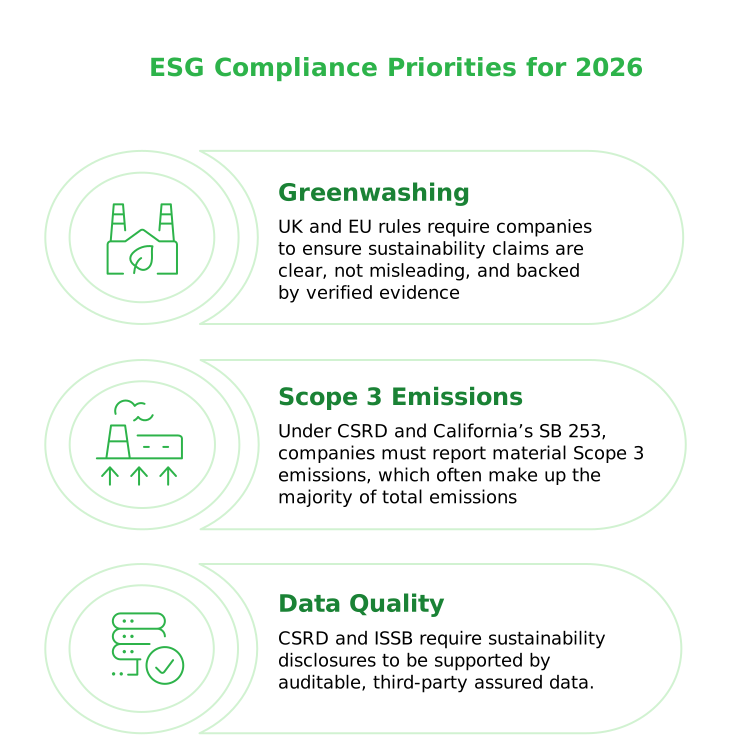
- Greenwashing: The UK Financial Conduct Authority’s anti-greenwashing rule came into force in May 2024, requiring all FCA-authorized firms to ensure sustainability claims are clear and not misleading. In the EU, the Green Claims Directive, originally proposed in March 2023, is now on hold indefinitely. In its place, the Empowering Consumers for the Green Transition (ECGT) directive applies from September 2026, targeting misleading labels, generic environmental claims and unsubstantiated future performance claims. The intended effect is similar: companies can no longer make vague sustainability claims without evidence to back them up.
- Scope 3: Under CSRD’s double materiality framework, in-scope companies must report Scope 3 emissions where material. California’s SB 253 also mandates Scope 3 reporting starting 2027. Scope 3 typically accounts for 70-90% of a company’s total emissions footprint, which is why regulators are pushing hard here.
- Data quality: CSRD explicitly requires third-party assurance of sustainability disclosures, and ISSB standards are built around the same expectation. Auditable, independently verified data is now the baseline across multiple jurisdictions. For companies still relying on self-reported figures, that gap between what they claim and what they can prove is becoming a liability.
The 5-Step Roadmap to ESG Compliance
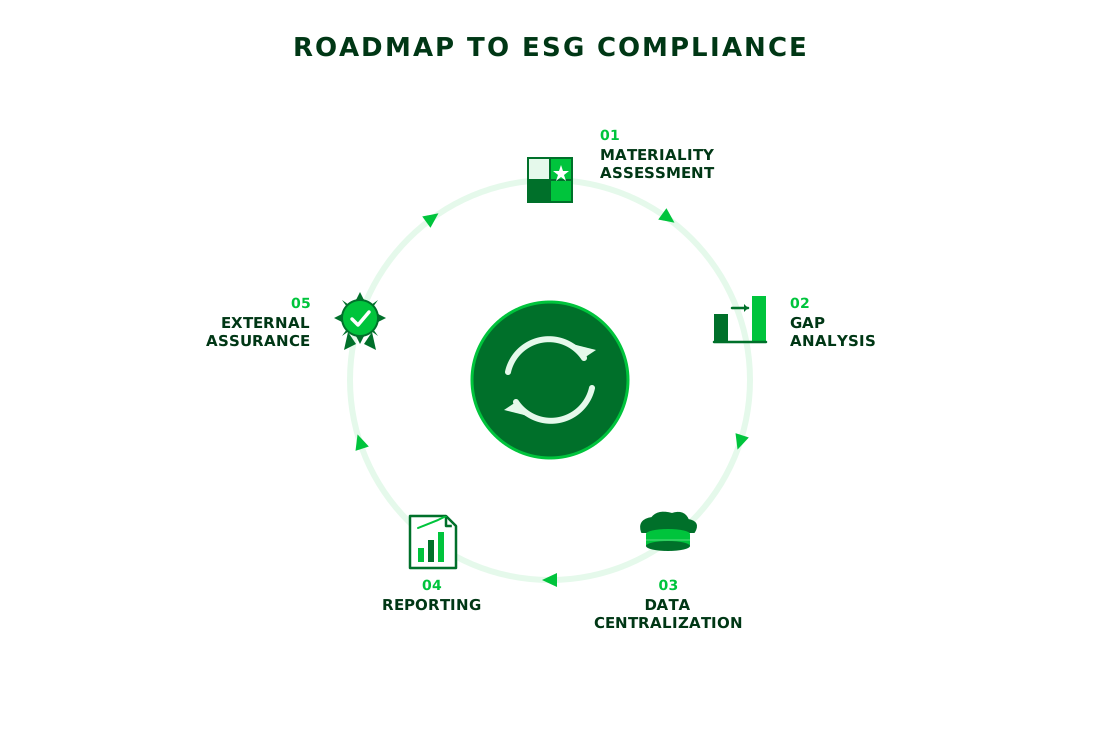
Establishing a compliant ESG strategy is a major undertaking, but a structured sequence helps ensure no regulatory requirements are missed. This roadmap offers a path for turning raw data into audit-ready disclosures.
- Materiality Assessment: Identify which ESG issues pose the greatest financial or operational risk to the business and its stakeholders.
- Gap Analysis: Compare existing internal data and policies against the specific requirements of active regulations like the CSRD or LkSG.
- Data Centralization: Consolidate data from across the organization and supply chain into a single software platform to replace manual spreadsheets and siloed information.
- Reporting and Disclosure: Align data with recognized standards like the ESRS or ISSB to generate transparent, compliant reports.
- External Assurance: Conduct third-party audits to verify the accuracy of reported data, ensuring the organization is prepared for mandatory regulatory scrutiny.
Best Practices for ESG Compliance
ESG compliance requires a structured approach that integrates risk management, data collection, governance and supplier oversight. Businesses that implement clear policies, leverage technology and engage suppliers effectively are better positioned to meet regulatory requirements and stakeholder expectations.
Establish an ESG Compliance Framework
This begins with identifying material risks and aligning corporate policies with global standards.
- Materiality assessments help determine which ESG issues pose the greatest financial, operational and reputational risks. This process ensures that businesses prioritize compliance efforts where they matter most.
- Organizations should align with recognized ESG reporting frameworks like GRI, TCFD, SASB and ISSB. These standards provide structured reporting guidelines that meet investor and regulatory expectations.
- Organizations must embed ESG compliance into corporate strategy, ensuring that executives, legal teams and procurement managers work together to integrate sustainability into operations.
Strengthen Governance and Reporting Practices
ESG compliance requires clear accountability and independent verification to ensure credibility and prevent greenwashing risks.
- Assigning a Chief Sustainability Officer (CSO) or ESG Compliance Lead ensures ESG policies are enforced across departments and compliance efforts are coordinated with financial and legal teams.
- Third-party ESG audits provide independent verification of sustainability reports, supply chain due diligence and emissions tracking. Many regulations, including the CSRD and California SB 253, require external assurance for reported data.
- Board oversight and executive incentives linked to ESG performance help drive accountability. Organizations that tie executive compensation to ESG goals are more likely to implement effective compliance measures.
Supplier Engagement and Risk Management
Many ESG compliance risks come from supplier operations, making supplier engagement an important component of any ESG compliance strategy.
- Establishing Supplier Codes of Conduct aligned with the CSDDD, UK Modern Slavery Act and forced labor laws sets clear ESG expectations for vendors. These codes should include minimum labor standards, environmental targets and ethical sourcing requirements.
- Companies should train suppliers on ESG compliance, providing capacity-building programs and sustainability workshops to help smaller vendors improve environmental and human rights practices.
- Supplier ESG performance assessments – including on-site audits, self-assessments and third-party evaluations; help businesses identify high-risk suppliers and take corrective actions before violations occur.
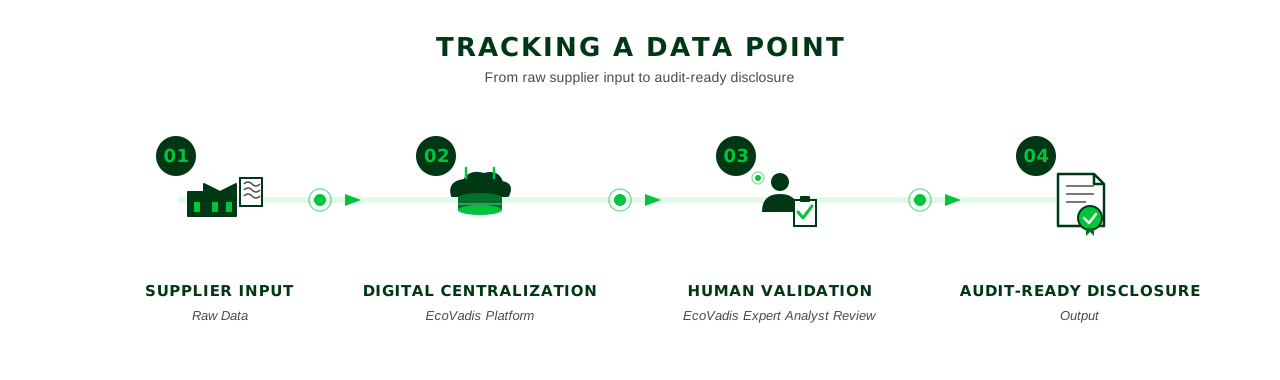
EcoVadis provides the tools to bridge the gap between static compliance data and operational performance. Through AI-driven analytics and supplier risk mapping, our platform streamlines reporting and enhances due diligence for over 150,000 companies worldwide.
FAQs
Q: What are the real-world consequences of ESG non-compliance?
A: The consequences of ESG non-compliance extend well beyond fines. Companies that fall short face legal action, reputational damage and investor pressure that can produce lasting financial impact. Recent examples include:
- In 2024, the European Center for Constitutional and Human Rights filed lawsuits against Volkswagen, BMW and Mercedes-Benz for failing to adequately address forced labor risks under Germany’s LkSG.
- Mondelez faced a class action lawsuit alleging child labor and deforestation in its cocoa supply chains, following years of criticism for weak transparency under the UK Modern Slavery Act.
- BP’s Deepwater Horizon spill resulted in $65 billion in fines and settlements. It is a case that permanently reshaped how institutional investors assess environmental risk.
Q: What is the difference between voluntary ESG reporting and mandatory ESG compliance?
A: Voluntary ESG reporting is driven by market expectations or internal corporate initiatives, whereas mandatory compliance is a regulatory obligation enforced by government authorities. While voluntary reporting uses frameworks such as the GRI to attract investors and meet consumer demands for transparency, ESG compliance requires adherence to specific laws, like the CSRD. Non-compliance with relevant regulations often results in legal penalties, fines and restricted market access.
Q: Who is required to comply with the EU Corporate Sustainability Reporting Directive (CSRD) in 2026?
A: For the current 2026 reporting cycle, the CSRD applies to EU and non-EU companies with more than 1,000 employees and €450 million in net turnover. These updated thresholds come from the Omnibus I Directive, which streamlined requirements to reduce administrative burdens.
Q: When does the Corporate Sustainability Due Diligence Directive (CSDDD) take effect?
A: The CSDDD went into effect in July 2024, and EU Member States have until July 26, 2026 to transpose it into national law. Compliance requirements phase in through a staggered timeline based on company size:
- July 26, 2027: Companies with more than 5,000 employees and €1.5 billion EU turnover
- July 26, 2028: Companies with more than 3,000 employees and €900 million EU turnover
- July 26, 2029: Remaining in-scope companies with 1,000+ employees and €450 million turnover
Q: Does ESG compliance apply to private companies and SMEs?
A: ESG compliance impacts private companies and SMEs primarily through value chain requirements and lender expectations. Large regulated firms must report on their entire supply chain, forcing smaller suppliers to provide ESG data to maintain contracts. Additionally, the CSDDD mandates due diligence that includes SMEs within the business relationships of larger corporations.
Q: How does the “Double Materiality” requirement affect ESG compliance strategy?
A: Double materiality requires a company to report on both its financial risks and its impact on the environment and society. This dual focus ensures that a compliance strategy accounts for external damages as well as internal vulnerabilities. Companies use the results of this assessment to determine which data points they must disclose under the European Sustainability Reporting Standards (ESRS).