

Supplier Code of Conduct
Read summarized version with:
 ChatGPT
 Gemini
 Perplexity
 Claude
 Grok
Sourcing from global supply chains means accepting responsibility for how the parties within that chain operate. Labor conditions, environmental practices and ethical conduct at the supplier level increasingly reflect on the companies that purchase from them. When those standards are left undefined, the gaps create enormous risk. A supplier code of conduct is how companies formally define expectations, giving the supplier network a clear, shared standard to work from.
Key Takeaways
- A supplier code of conduct defines the standards a company expects its entire supplier network to follow.
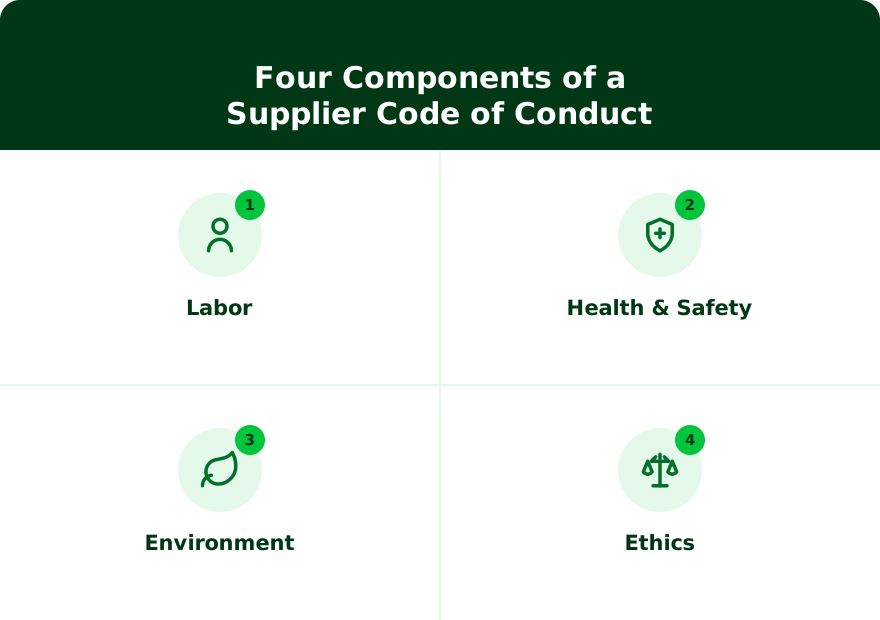
- Most supplier codes are built around labor practices, health and safety, environmental responsibility and business ethics.
- Development should always start with a risk assessment of the supply chain before any requirements are drafted.
- A code of conduct is only as effective as its implementation.
- Ongoing monitoring keeps the code meaningful and enforceable as the business and its supplier relationships evolve.
What is a Supplier Code of Conduct?
A supplier code of conduct helps ensure that a company’s suppliers maintain high standards for safe working conditions, fair and respectful treatment of employees, and ethical practices. It serves as a documented reference for both the company and its supply chain partners, outlining shared expectations for the working relationship.
The primary purpose is accountability. Companies use these codes to protect workers, reduce operational and reputational risk, and demonstrate a genuine commitment to responsible sourcing. This is particularly valuable when suppliers operate in regions where local laws may be less strict or inconsistently enforced, as it sets expectations that go beyond the legal minimum.
What Does a Supplier Code of Conduct Include?
While the specifics vary by industry and company, most codes are structured around several common components.
Labor Practices and Standards
Labor standards ensure that workers throughout the supply chain are treated with dignity and fairness. These provisions reflect legal requirements as well as broader expectations around working conditions and compensation.
Requirements typically include:
- Freely chosen employment, with no use of forced labor, modern slavery or human trafficking
- Compliance with child labor laws, including minimum working age requirements
- Fair wages and working hours that meet or exceed applicable regulations
- Non-discrimination in hiring and employment, covering race, gender, religion, age, disability and other protected categories
- Respect for freedom of association and the right to collective bargaining
Health and Safety
A safe working environment is a baseline expectation for any supplier. Health and safety provisions address the physical conditions workers face, from hazard identification to emergency preparedness.
Requirements in this area cover:
- Machinery safeguards and workplace hazard identification
- Emergency procedures and protocols for occupational injury and illness
- Access to clean water, sanitation facilities and adequate rest areas
- Worker training on safety procedures relevant to their roles
If suppliers provide worker housing, standards for cleanliness and basic living conditions should also be addressed.
Environmental Policy
Environmental standards require suppliers to identify and reduce the impact of their operations. This covers how materials are sourced and used, how emissions are managed and how waste is handled.
Key areas include:
- Securing required environmental permits
- Pollution prevention and decarbonization efforts
- Resource efficiency and responsible material use
- Handling, storage and disposal of hazardous substances
- Waste reduction and recycling practices
What a company emphasizes here will depend on its industry and the environmental risks its supply chain faces.
Ethics
Ethical standards set expectations for honest, transparent business conduct. This area has grown in importance as regulatory requirements around anti-corruption and data protection have expanded globally.
These standards typically address:
- Anti-bribery and anti-corruption compliance, including adherence to laws like the US Foreign Corrupt Practices Act and the UK Bribery Act
- Conflicts of interest and fair competition practices
- Responsible sourcing of materials, including due diligence on conflict minerals
- Data privacy and the protection of personal information
- Grievance mechanisms that allow workers and others to report violations safely and confidentially
Beyond these four pillars, a code should establish how compliance will be reviewed and documented. This gives both parties a clear path to accountability and sets expectations around record-keeping, audits and corrective action processes.
How to Develop Your Supplier Code of Conduct
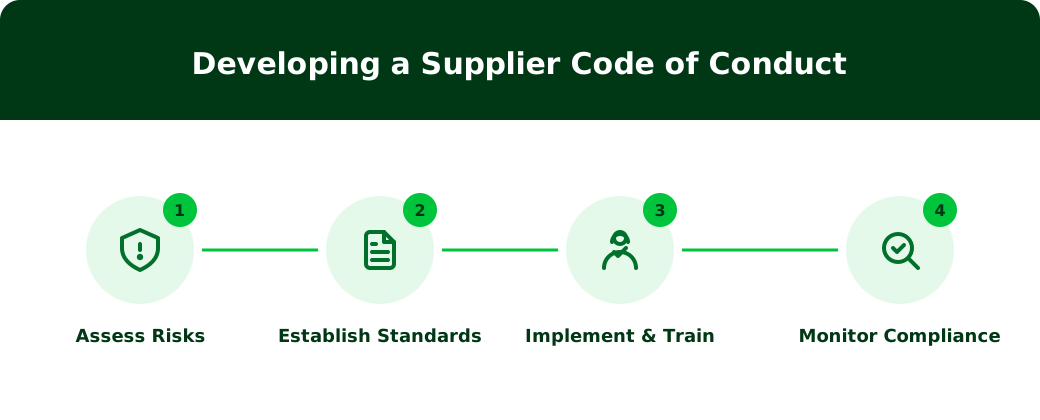
Getting a supplier code of conduct right takes preparation. The most common mistake is drafting requirements without first understanding where supply chain risks exist or what standards other companies and suppliers are already working with. The following steps build that foundation.
- Assess risk in your supply chain
Before drafting any requirements, conduct a thorough supplier risk assessment to better understand where to focus your efforts.
- Where are your manufactured products sourced from?
- What is the environmental and labor law enforcement like in those countries?
- Do the manufacturing methods conflict with the environmental, social and ethical goals of your company?
The answers shape what your code should prioritize. A company sourcing from regions with weak labor protections will need more detailed labor provisions than one operating entirely in tightly regulated markets.
- Consult with your suppliers and industry peers
If your suppliers are working with customers that already have a code of conduct in place, using consistent terminology and processes reduces friction and lowers the compliance burden. Engaging suppliers early in development also surfaces concerns around meeting specific standards, making it easier to set expectations that are both meaningful and achievable.
- Seek out industry initiatives or standards
Many industries and socially responsible companies already have initiatives in place that establish common standards for supplier conduct, which can serve as a model for your own. Examples include the Ethical Trading Initiative, Fair Labor Association and the Responsible Business Alliance.
- Consider cascading requirements to sub-suppliers
For companies with complex, multi-tier supply chains, it’s worth deciding whether suppliers should be required to apply your standards to their own subcontractors. This is increasingly common in manufacturing and high-risk sectors, and some regulatory frameworks now expect it. Building this expectation into the code from the outset is easier than retrofitting it later.
How to Implement a Supplier Code of Conduct
A supplier code of conduct is only valuable if your suppliers understand, accept and follow it. Implementation requires as much intention as the development process.
- Embed it in contracts. The code should be contractually binding. Write clear expectations and consequences for non-compliance into supplier agreements from the beginning.
- Onboard suppliers thoroughly. New suppliers should review and agree to the code of conduct before work begins, with enough context to understand both its requirements and the reasoning behind them.
- Train suppliers to understand, not just acknowledge. Training programs help suppliers move from signing off to genuine comprehension. Interactive sessions, translated materials and real-world examples are more effective than distributing a document and moving on.
- Make it accessible. The code should be written in plain language and provided in the languages your suppliers work in. Standards that can’t be easily read likely won’t be followed.
- Establish a grievance mechanism. Workers and others need a clear, safe channel to report violations. A comprehensive grievance mechanism signals that the code is taken seriously and that concerns will be addressed.
- Define consequences for non-compliance. Suppliers should know upfront what happens when standards aren’t met, from corrective action plans to contract termination.
Standards That Inform Supplier Codes of Conduct
A number of internationally recognized frameworks have shaped how companies approach supplier codes of conduct. Many organizations use these as reference points when developing their own standards.
Labor and Human Rights Standards
- UN Universal Declaration of Human Rights: Adopted in 1948, it establishes the fundamental rights and freedoms all people are entitled to, and is widely referenced as the baseline for human rights expectations in supplier codes.
- UN Global Compact: A voluntary corporate sustainability initiative organized around ten principles covering human rights, labor, environment and anti-corruption. Companies often use these principles to structure the ethical commitments in their supplier codes.
- ILO International Labor Standards: The International Labour Organization’s conventions and recommendations set minimum standards for decent work. They cover forced labor, child labor, non-discrimination and freedom of association.
- UN Guiding Principles on Business and Human Rights (UNGPs): Endorsed by the UN Human Rights Council in 2011, the UNGPs establish that businesses have a responsibility to respect human rights throughout their value chains. They are a foundation for global supply chain due diligence frameworks.
- OECD Guidelines for Multinational Enterprises: Government-backed recommendations for responsible business conduct covering labor rights, environmental stewardship, anti-corruption and supply chain due diligence. Among the most comprehensive international references available for companies developing supplier standards.
Environmental and Social Standards
- ISO 14000: A set of international voluntary standards and guidelines regarding environmental management systems, eco labeling, environmental auditing, environmental performance evaluation and environmental aspects in product standards and life cycle assessments.
- SA 8000: An international standard to ensure good working conditions, prevent child and forced labor, workplace safety and health, freedom of association, right to collective bargaining, anti-discrimination, discipline, remuneration, working hours and human resources management systems.
How to Monitor and Enforce Your Supplier Code of Conduct
Monitoring your company’s supplier code of conduct is a multi-stakeholder initiative that should include:
- Performance assessments and ratings. Sustainability intelligence platforms provide evaluations of supplier performance across the areas a code typically addresses, giving companies a consistent, comparable view of how suppliers measure up.
- Procurement integration. Supplier performance data should feed into sustainable procurement decisions, ensuring the code carries weight in how purchasing relationships are evaluated and maintained.
- Contract enforcement mechanisms. Contract clauses and supplier status programs, such as preferred or key supplier designations, give companies structured ways to both reward strong performance and enforce consequences for non-compliance.
- Internal training. Employees who manage supplier relationships need to understand the code and factor it into their day-to-day decisions. A code is only effective if employees know how to enforce it.
- Regular review and updates. The code should evolve alongside changes in law, industry standards and business relationships. Periodic reviews ensure the code stays relevant as regulations shift and new risks emerge.
As supply chain due diligence requirements grow across major markets, including through frameworks like the EU’s Corporate Sustainability Due Diligence Directive (CSDDD) and Germany’s Supply Chain Act (LkSG), monitoring programs are increasingly expected for compliance.
Supplier Code of Conduct Benefits
The case for a supplier code of conduct goes beyond compliance. Companies that invest in developing and enforcing one see returns across risk management, supplier relationships and business reputation.
- Sets clear expectations for suppliers, reducing ambiguity and creating a stronger foundation for long-term partnerships.
- Protects the company when incidents occur at a supplier site. A documented, enforced code demonstrates that standards are in place and being actively managed.
- Provides protection for companies sourcing from regions where local environmental and labor laws may be inadequate or inconsistently enforced, establishing a baseline that local regulation alone cannot guarantee.
- Supports regulatory compliance efforts. Regulations increasingly require active supply chain due diligence, and a code of conduct forms the foundation of that effort.
- Strengthens a company’s broader ESG position with customers, investors and prospective employees who scrutinize how supply chains are managed.
FAQs
What is the difference between a supplier code of conduct and a supplier contract?
A supplier contract governs the commercial terms of a business relationship, including pricing, deliverables and timelines. A supplier code of conduct is broader, establishing the ethical, environmental and labor standards that apply across all supplier relationships regardless of the specific work involved. The two typically work together; many companies incorporate the code of conduct directly into supplier contracts to make compliance legally binding.
Who is responsible for enforcing a supplier code of conduct?
Enforcement is a shared responsibility. Procurement and supply chain teams are typically the primary owners, managing day-to-day relationships and performance reviews. Legal and compliance teams ensure contract language reflects the code’s requirements. Sustainability teams often oversee the monitoring framework, while leadership sets the tone by treating supplier standards as a business priority.
What happens if a supplier violates a code of conduct?
The appropriate response depends on the nature and severity of the violation. Most companies take a graduated approach, beginning with notification and a corrective action plan with a defined improvement timeline. Serious or repeated violations can result in contract suspension or termination. Establishing consequences in writing reduces the risk of disputes down the line.
How often should a supplier code of conduct be updated?
Most companies review their code on a regular cycle, typically every one to two years. Reviews should also be triggered by significant changes in applicable law, major shifts in the business or incidents that reveal gaps in existing standards. A code that never changes is almost certainly out of date.