
 ChatGPT
  Gemini
  Perplexity
  Claude
  Grok
Grok 

Gain insights from 30+ sustainability leaders, including superstars like Paul Polman, former CEO of Unilever, and Helena Helmersson, former CEO of H&M Group. Learn how to build a sustained advantage through responsible business practices.
26th May 2026
A Practicle Guide to Sustainable Procurement Strategy
Read summarized version with:
Procurement teams are working under an increasingly high set of expectations. Regulators demand greater transparency into Scope 3 emissions and labor practices, investors link capital to ESG performance, and customers want proof that sustainability commitments extend beyond broad statements. Meeting these expectations requires far more than good intentions. It requires an intentional strategy.
This guide explores what a sustainable procurement strategy looks like, how to build one that scales and how to measure whether it’s working.
Key Takeaways
- A sustainable procurement strategy has moved from a corporate responsibility initiative to a business imperative driven by regulation, investor scrutiny and supply chain risk.
- Building a strategy that works requires embedding ESG criteria into every sourcing decision, from supplier selection to contract terms.
- Supplier engagement is what separates programs that drive real improvement from those that exist only on paper.
- The right tools and data give procurement teams the visibility and credibility to demonstrate real impact across their supplier network.
What is a Sustainable Procurement Strategy?
A sustainable procurement strategy is a structured approach to embedding critical environmental, social and governance (ESG) criteria into sourcing and supplier management decisions. Rather than treating sustainability as a side initiative, it integrates these factors into the way companies evaluate suppliers, negotiate contracts and track supplier performance across the relationship lifecycle.
Sustainable procurement requires assessing suppliers on factors like carbon emissions, labor rights and ethical business conduct alongside traditional criteria like cost and delivery. It means setting measurable targets, engaging suppliers as partners in improvement and building a feedback loop that drives progress across your supply base.
The Business Case for Sustainable Procurement
Sustainable procurement strategies are moving beyond general corporate responsibility commitments. When planned and executed well, they create tangible benefits across the organization.
- Regulatory positioning. The Corporate Sustainability Due Diligence Directive (CSDDD), Corporate Sustainability Reporting Directive (CSRD) and California’s SB 253 reporting requirements are raising the bar on supply chain transparency. Companies with a comprehensive procurement strategy are better positioned to meet those requirements without scrambling.
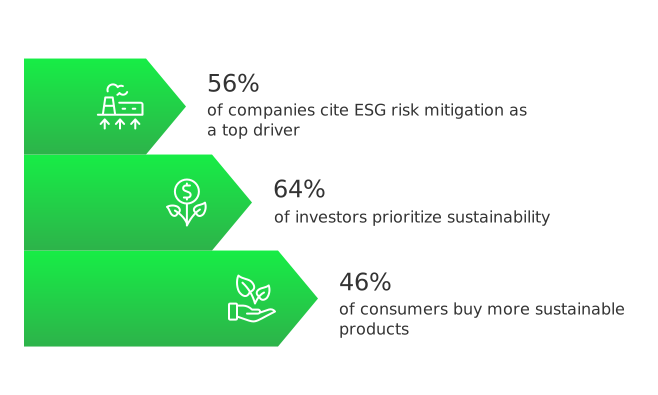
- Investor expectations. Today, 64% of investors prioritize sustainability when evaluating long-term stability, and ESG performance is increasingly factored into capital allocation decisions.
- Customer preferences. Modern consumers are keenly aware of sustainability issues and expect the brands they purchase from to reflect those values. Recent surveys found that 46% of consumers report buying more sustainable products to reduce their environmental impact.
- Supply chain resilience. Geopolitical conflict and evolving trade policies are creating massive market volatility. Companies that actively manage supplier ESG performance have greater visibility into vulnerabilities and more opportunities to insulate their supply chains to withstand unexpected changes.
That shift in expectations is showing up in how procurement teams set priorities. In a 2024 survey, EcoVadis found that 56% of global companies cite ESG risk mitigation and regulatory compliance as a primary driver of their sustainable procurement programs, with corporate sustainability and net-zero goals close behind at 39%.
Barriers to Sustainable Procurement Implementation
Most organizations understand why sustainable procurement matters in theory. Unfortunately, there are several challenges that often make it harder to develop strategies and policies that move the needle toward real progress.
- Supplier data is unreliable. EcoVadis research shows that 70% of organizations cite a lack of supplier data as the primary barrier to securing investment in their sustainable procurement programs.
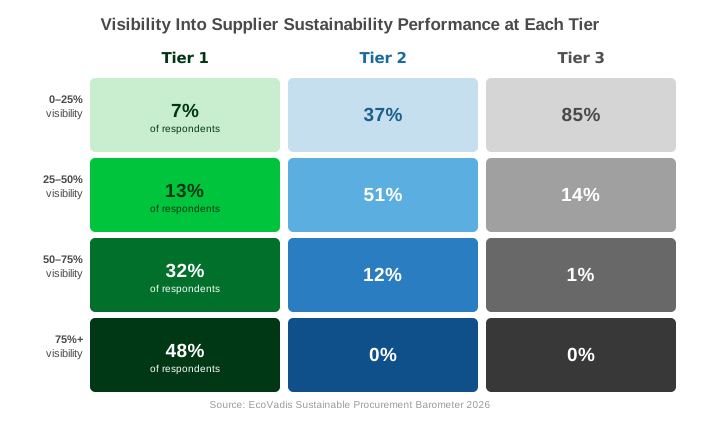
- Visibility drops off quickly beyond direct suppliers. Only 42% of companies report meaningful visibility beyond tier 1 suppliers, leaving significant portions of the supply chain unexamined.
- Outcomes are difficult to quantify upfront. Sustainability teams frequently struggle to demonstrate the ROI of sustainable procurement to compete with cost-focused KPIs, making it harder to secure the internal investment needed to scale.
- Supplier assessment doesn’t scale without the right infrastructure. Manual processes and inconsistent criteria break down quickly across a large, geographically diverse supply base.
Each of these barriers has a practical solution, and addressing them systematically is what separates a sustainable procurement strategy from a generalized aspiration.
Building a Scalable Sustainable Procurement Strategy
A sustainable procurement strategy is only as strong as its execution. The following steps outline how to move from commitment to operational reality.
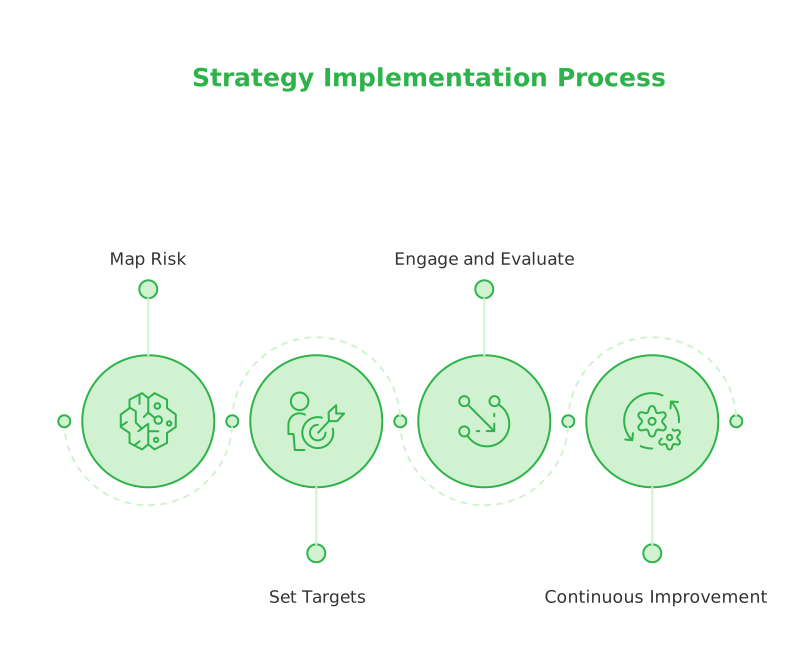
1. Map Risk and Prioritize Spend
Not all suppliers carry equal risk, and not all spending categories deserve the same level of scrutiny. Before committing resources to deep supplier assessments, you need to understand where supply chain risk is most concentrated. Tools like EcoVadis IQ help teams surface high-risk areas across the full supplier network by examining:
- Spend category and industry sector
- Geographic and geopolitical risk exposure
- Regulatory environment by market
Starting with inherent risk mapping makes the assessment process more focused and easier to justify internally.
2. Set Targets and Integrate into Sourcing
Sustainable procurement initiatives need measurable goals to drive accountability. That means defining specific targets, like Scope 3 carbon reduction milestones or percentage of suppliers with formal grievance mechanisms, and building them into sourcing processes. Defining those targets looks like:
- Weighted ESG scoring in RFPs
- Sustainability criteria in supplier selection decisions
- Contractual clauses that set clear expectations from day one
When sustainability is embedded into every sourcing decision, it becomes a driver of supplier selection rather than a footnote in the contract review process.
3. Engage, Evaluate and Benchmark Suppliers
Supplier engagement is one of the most effective levers for turning a procurement strategy into long-term performance, and it has to come before evaluation, not after.
- Engage first. According to EcoVadis Barometer research, 46% of suppliers view buyer sustainability efforts as important only on paper. The difference between that perception and genuine partnership comes down to how procurement teams come to the table. Assessment requests need context. Expectations need to be set early. And improvement needs to be treated as a shared goal, not merely a suggestion.
- Evaluate objectively. Third-party ESG ratings provide the consistency needed to assess supplier performance without bias. Rather than relying on self-reported data or inconsistent internal criteria, standardized scorecards give procurement teams a credible, comparable basis for decision-making.
- Benchmark strategically. Comparing supplier scores within the same industry or region identifies where performance gaps exist and where targeted support will have the most impact.
4. Build a Continuous Improvement Loop
A sustainability rating is a starting point, but it’s not the finish line. Sustainable procurement programs that drive real progress treat supplier assessments as the beginning of an ongoing conversation. When gaps are identified, suppliers need a clear path forward, through capacity building, defined corrective action plans and direct collaboration on specific issues. Closing the loop between assessment and action is what turns a procurement strategy into a performance driver.
Turn Your Sustainable Procurement Strategy Into Action
A sustainable procurement strategy is only effective if you can execute it well, measure progress consistently and engage suppliers at scale. EcoVadis gives procurement teams the tools to do exactly that, from initial risk mapping with EcoVadis IQ to supplier scorecards that benchmark performance across industries and regions. Capacity building resources and continuous monitoring help teams demonstrate progress, satisfy regulatory requirements and build supply chains that hold up over time.
Ready to see what strategic sustainability initiatives can do for your organization? Connect with our team to get started.

Ashley Raleigh is a supply chain professional with 10 years of experience across freight operations, logistics technology, and sustainability. Her work focuses on the evolving role of technology, strategy, and responsible practices in modern supply chains.