
 ChatGPT
  Gemini
  Perplexity
  Claude
  Grok
Grok 

Gain insights from 30+ sustainability leaders, including superstars like Paul Polman, former CEO of Unilever, and Helena Helmersson, former CEO of H&M Group. Learn how to build a sustained advantage through responsible business practices.
9th July 2026
Living Wage Implementation in Practice: Insights From the EcoVadis Community
Read summarized version with:
The Global Imperative for Fair Compensation
Over a billion people worldwide earn less than what is needed to afford a decent standard of living. This means that approximately a third of the global workforce cannot rely on a job to cover basic needs such as food, healthcare, housing and transport. Because of this, ensuring fair compensation has become a central element of building sustainable supply chains.
Rather than viewing fair pay solely as a compliance exercise, organizations are increasingly recognizing Living Wage Implementation as a foundation for long-term stability and business resilience.
However, translating sustainability commitments into measurable progress can seem complex for businesses just starting out. To help businesses navigate this, the Living Wage Foundation recently hosted a dedicated content series within the EcoVadis Community.
The sessions explored the foundational living wage principles, highlighting how organizations are gathering reliable data, aligning with global frameworks and approaching initial supplier assessments.
Here are four practical insights from the series.
Key Takeaways
- Living wage implementation serves as a strategic foundation for business resilience, reducing supplier turnover and operational disruptions while protecting human rights.
- Living wage calculations should ground wage estimates in national circumstances and base them on normal working hours, aligning with International Labour Organization (ILO) principles.
- High-quality living wage data already exists through local benchmarks and global data providers, allowing organizations to address systemic pay gaps and ensure fair compensation.
1. Defining Core Living Wage Principles
Before an organization can launch a living wage implementation strategy, it needs to understand what a living wage means across the entire business.
A living wage is fundamentally distinct from a legal minimum wage. While minimum wages are set by local governments and are frequently influenced by political compromises or macroeconomic pressures, a living wage is strictly a needs-based measure. It provides the absolute minimum income necessary for workers and their families to afford a basic but decent standard of living in their specific location.
Advancing fair compensation starts with a clear understanding of these benchmarks. Living wage calculations ground wage estimates in national circumstances and base them on normal working hours, while strictly aligning with International Labour Organization (ILO) principles. This provides the clarity needed to ensure pay accurately reflects real living costs.
Aligning with these global definitions helps organizations establish a baseline that respects human rights and protects workers. Rather than viewing fair pay solely as a compliance exercise, this visibility allows businesses to address economic inequality within their workforce and supply chains.
2. Building a Transparent Living Wage System for Your Operations and Sustainable Supply Chains
Without reliable data, advancing fair compensation across a global supply chain remains a complex challenge. Moving beyond guesswork and relying on data-driven frameworks provides the visibility needed to ensure worker pay accurately reflects local living costs and shifting inflation rates.
Building a transparent system requires organizations to collaborate and gather insights beyond their own immediate operations. Developing pay standards alongside local employers, civil society groups and trade unions provides the granular clarity needed to create equitable compensation structures.
Data-driven transparency also serves as a strong foundation for promoting gender equality and social inclusion. Across many global supply chains, women and marginalized groups are disproportionately concentrated in lower-paying roles. Using standardized living wage benchmarks helps organizations identify pay gaps, balance compensation and support segments of the workforce that have historically been left behind.
3. Driving Business Resilience Through Fair Compensation
While fair compensation is sometimes viewed strictly as a compliance requirement, organizations increasingly recognize living wage implementation as a foundation for long-term stability and a strategic investment. Integrating living wage principles into core operations directly supports supply chain resilience and risk management.
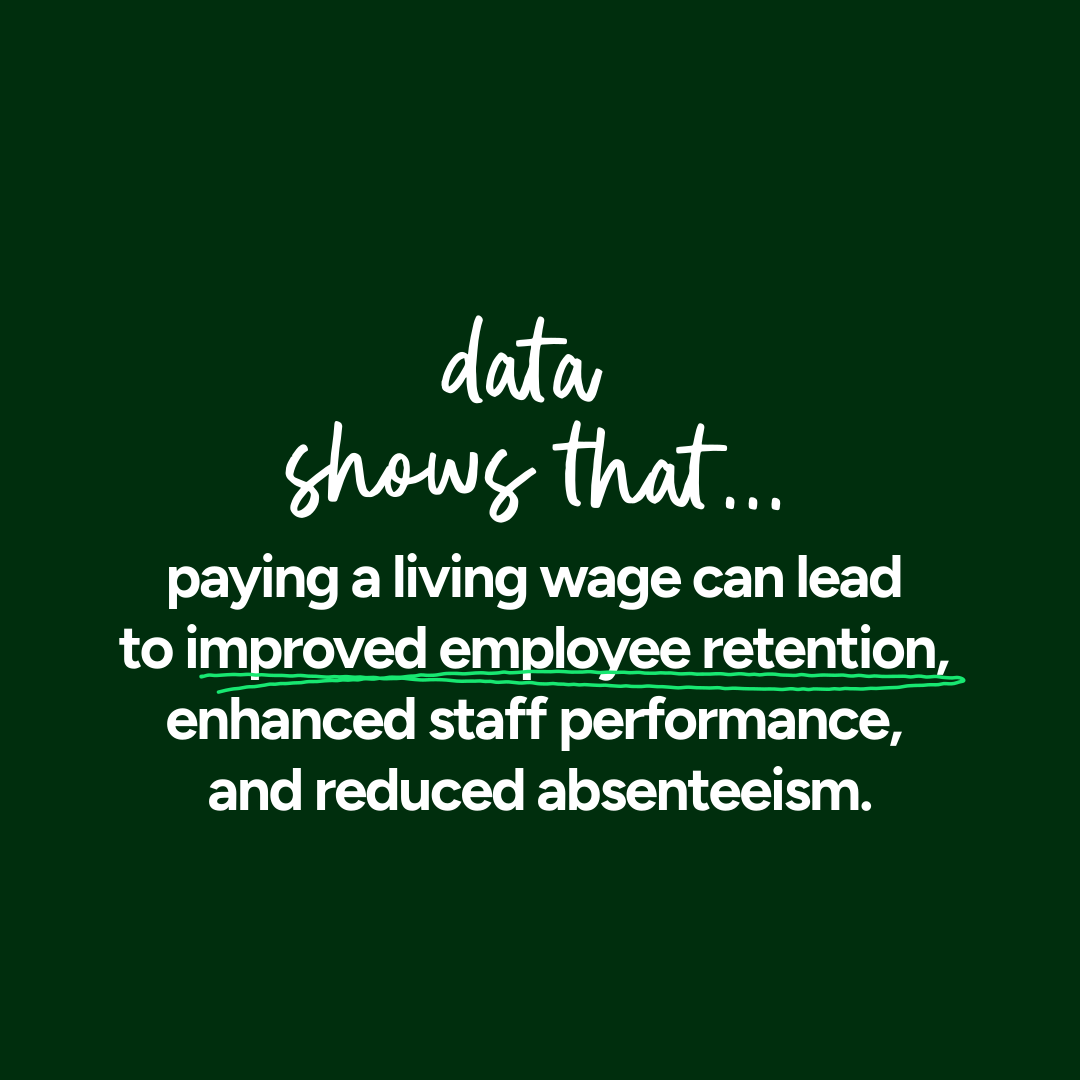
Global data indicates that fair compensation supports business resilience across several key metrics:
- Improved employee retention: When workers earn a wage that covers basic living expenses, they are less likely to seek competing roles, reducing recruitment and training costs. A recent Living Wage Study found that 60% of employers reported improved employee retention since adopting a living wage.
- Enhanced staff performance: Financial stability helps alleviate stress, allowing workers to remain focused and productive on the job. In a study conducted by GLA Economics, up to 4/5 of employers reported that work quality improved after they introduced living wages.
- Reduced absenteeism: Another Living Wage Study found that 42% of UK workers paid below the real Living Wage report that their level of pay negatively affects their mental health, and 34% report that it negatively affects their physical health. Adequate pay supports access to proper healthcare and nutrition, leading to a healthier workforce and fewer missed shifts due to illness or family emergencies.
Building a stable and well-supported workforce can help mitigate operational disruptions and create truly resilient supply chains.
4. Choosing a Living Wage Estimate and Navigating Data Complexity
Because the cost of living varies from country to country (and even city to city), there are several different approaches to calculating a living wage. The estimate your organization chooses will depend heavily on your geographic scope, the nature of your industry and the data available to your team.
Companies do not need to calculate these figures from scratch. High-quality living wage data already exists through local benchmarks and global data providers like WageIndicator and Valuing Impact. These platforms can give organizations the baseline metrics they need to take measurable action.
When multiple estimates exist for a single region, tools like WageMap allow businesses to map different methodologies and estimates to understand variations. Gathering this data helps organizations align living wage estimates with localized economic realities, providing the clarity needed to advance fair compensation across the supply chain.
Conclusion: Turning Commitment Into Measurable Progress
Translating high-level corporate commitments into measurable progress requires continuous collaboration and shared insight. Because no single organization can navigate global wage complexity alone, exchanging practical experience is vital to building resilient supply chains and truly sustainable business models.
The EcoVadis Community serves as a central hub where sustainability leaders connect to gather practical experience, share case studies and turn theoretical understanding into collective action. Within the platform, members can access the full Living Wage Foundation series. This includes detailed articles, an online webinar with employee speakers and step-by-step implementation guides.
Alongside these resources, the community provides insights on a range of topics like driving internal buy-in for ESG, navigating complex reporting standards and building a biodiversity strategy from peer organizations and global institutions like the World Wildlife Fund (WWF) and European Financial Reporting Advisory Group (EFRAG). Connect with your peers within the platform today to turn strategy into measurable progress across your global supply network. Join the Community
FAQs
Q: What is the difference between a legal minimum wage and a living wage?
A: A legal minimum wage is a statutory baseline set by local governments, which is frequently influenced by political negotiations, labor laws and macroeconomics. In contrast, a living wage is strictly a needs-based metric calculated using real-world data. It reflects the absolute minimum income required for a worker and their family to afford basic necessities, such as food, housing, healthcare and education, within their specific geographic location during normal working hours, without relying on overtime.
Q: Why is stakeholder collaboration necessary for successful living wage implementation?
A: Implementing a living wage cannot happen in isolation because corporate buyers rarely have full visibility into local economic contexts or supplier constraints. Collaborating with local employers, civil society groups and trade unions can ensure that the data used to set wages is accurate, credible and trusted by the people it impacts. Furthermore, this cooperative approach helps organizations safely identify and remedy sensitive localized challenges, such as regional inflation spikes or hidden gender pay gaps within the supply chain.
Q: How does living wage implementation directly contribute to broader supply chain resilience?
A: While fair compensation is often categorized as a social compliance objective, it can also function as a strategic investment in operational stability. Data shows that when suppliers pay a living wage, it directly mitigates systemic operational risks by lowering employee turnover and reducing the high costs of recruitment and training. Additionally, it addresses the root causes of financial stress among workers, which can significantly lower absenteeism due to health issues and improve daily on-the-job productivity and performance.

Eloise Moench is a Communications Expert at EcoVadis. Backed by a decade of experience driving communications for international energy transition and ecological restoration organizations, she brings deep insight into clean energy policy, human rights, and biodiversity. She holds a Masters Degree in Climate Ethics from the University of Amsterdam, and specializes in breaking complex environmental frameworks down into clear, actionable insights.