
 ChatGPT
 Gemini
 Perplexity
 Claude
 Grok

Gain insights from 30+ sustainability leaders, including superstars like Paul Polman, former CEO of Unilever, and Helena Helmersson, former CEO of H&M Group. Learn how to build a sustained advantage through responsible business practices.
20th October 2026
Carbon Accounting Software and Beyond: A Guide to Carbon Management Solutions
Read summarized version with:
Carbon management has grown significantly more complex in recent years. The number of platforms has multiplied, regulatory requirements have expanded across jurisdictions and the challenge of collecting credible emissions data, has pushed companies to evaluate tools that go beyond basic reporting. For companies evaluating carbon accounting software, the options are broad and the differences between them are significant.
At the same time, carbon disclosure is no longer purely voluntary. Regulations including the EU’s CSRD and California’s SB 253 are making emissions reporting a business requirement. Investors increasingly price climate risk into capital decisions. Major customers are embedding carbon criteria into supplier qualification processes. For companies serious about responding to that pressure with credible data, understanding how the market is structured and where different platforms fit within it is the right place to start.
Key Takeaways
- Carbon accounting software automates the collection, calculation and reporting of GHG emissions data, giving companies a reliable foundation for disclosure and reduction planning.
- The market offers multiple entry points: accounting platforms for reporting rigor, supplier engagement platforms for Scope 3 data quality, and management platforms for reduction strategy.
- Scope 3 supply chain emissions average 21 times Scopes 1 and 2 combined, and collecting that data at scale requires a platform with supplier-facing tools and an active reporting network.
- The most capable platforms go beyond measurement to support supplier engagement, reduction target-setting and progress tracking across a range of operational metrics.
- Choosing the right platform means evaluating long-term fit, including how the provider supports implementation and responds as reporting requirements evolve.
What Is Carbon Accounting Software?
Carbon accounting software gives organizations the tools to measure, track and report greenhouse gas (GHG) emissions across their operations and supply chains. Platforms vary significantly in what they cover, which makes understanding the underlying emissions framework a useful starting point for evaluating options.
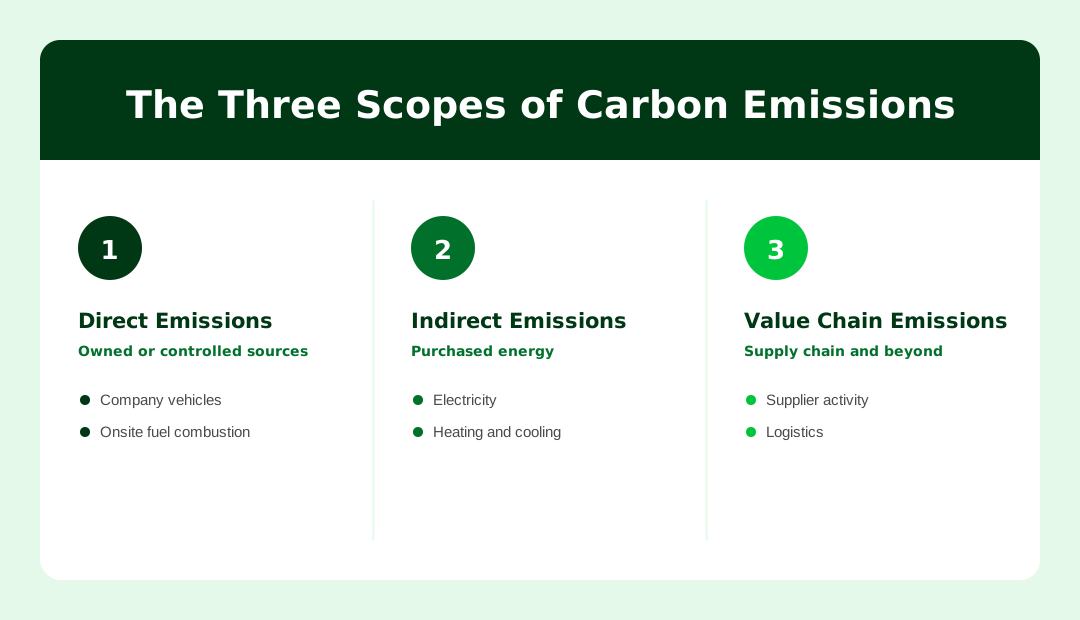
Emissions are organized according to the GHG Protocol’s three-scope framework. Scope 1 covers direct emissions from owned or controlled sources. Scope 2 covers indirect emissions from purchased energy. Scope 3 covers all remaining value chain emissions, including supplier activity, purchased goods and logistics. Scope 3 is where most corporate emissions sit and where data collection is most complex, which is why platform selection often comes down to how well a solution handles it.
The Carbon Accounting and Management Landscape: Understanding Your Options
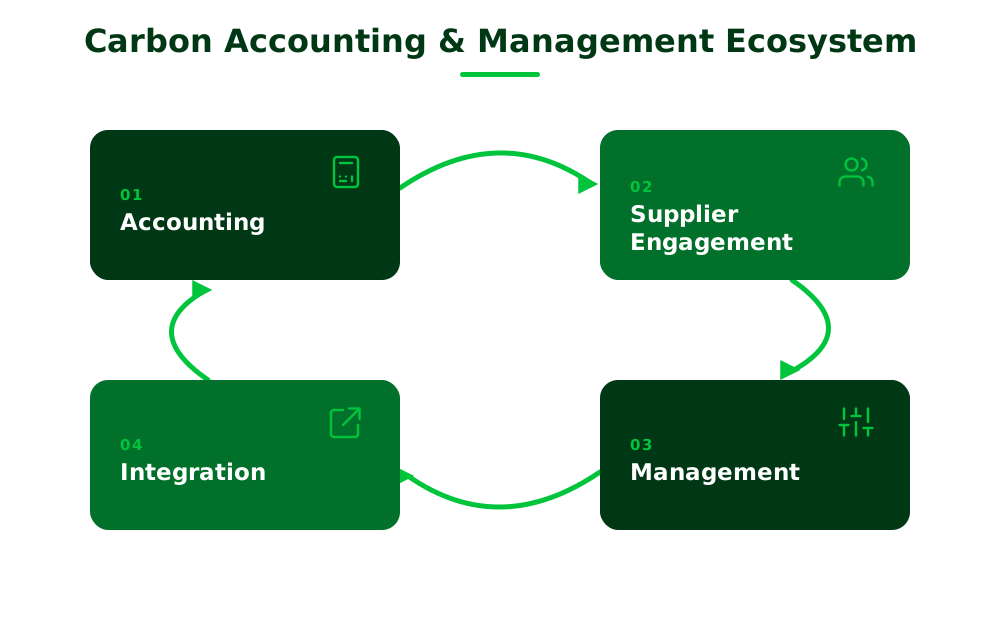
The carbon accounting and management market has evolved into distinct capability layers. Organizations typically enter at the layer that addresses their most urgent need, then integrate complementary capabilities as their strategy matures. This architecture allows companies to select best-of-breed solutions at each layer.
The Accounting Layer: Regulatory Compliance and Standardized Reporting
For organizations where the primary need is auditable emissions reporting to comply with CSRD, respond to investor requests or establish a standardized measurement methodology, accounting platforms serve as an easy entry point. These solutions automate calculation, maintain audit trails, integrate with ERP systems and produce reports aligned with regulatory frameworks.
When to prioritize this layer: Organizations that have basic emissions awareness but require reporting for regulators or investors. Scope 3 data initially relies on estimates, but the foundation is set.
The Supplier Engagement Layer: Scope 3 Primary Data Collection
For organizations where Scope 3 supply chain emissions are both the largest emissions source and the biggest data quality gap, supplier engagement platforms enable verified primary data collection at scale. These solutions provide suppliers with standardized tools to calculate and report their own emissions, validate submissions and track improvement against commitments.
When to prioritize this layer: Organizations with large, complex supply chains where Scope 3 dominates the emissions profile. This layer often becomes the priority because it addresses the most significant data gap and drives the most material reduction opportunities.
The Management Layer: Decarbonization Strategy and Target-Setting
For organizations with foundational emissions data that need to translate measurement into operational action like modeling which interventions reduce emissions, setting science-based targets or tracking progress against commitments, management platforms can help move from measurement to execution. These tools connect emissions data to operational KPIs and reduction pathways.
When to prioritize this layer: Organizations with reliable emissions data who need structured approaches to reduction planning, SBTi-aligned target-setting and progress monitoring against strategic commitments.
The Integration Layer: Connecting Across Platforms
Once companies have selected entry points across the market, data integration becomes critical. Primary supplier data must flow into accounting systems. Accounting results must feed management dashboards. Leading platforms increasingly offer APIs and pre-built connectors to major systems, enabling seamless data movement without manual consolidation.
The Business Case for Carbon Accounting Software
The pressure to measure and report corporate emissions is coming from multiple directions, and understanding which capability layer addresses your most material need helps you prioritize investment effectively.
- Regulatory compliance: Regulations like the EU’s CSRD and California’s SB 253, require verifiable, auditable emissions data that manual processes struggle to produce consistently. Dedicated software creates the documentation trail that keeps companies prepared as regulatory enforcement grows.
- Scope 3 complexity: Scope 3 supply chain emissions average 21 times Scopes 1 and 2 combined. That data often spans hundreds or thousands of suppliers across different industries, geographies and reporting maturities. Without software to automate collection and standardize inputs, companies are left with incomplete data that cannot support credible disclosure or reduction targets.
- Investor scrutiny: 88% of investors have increased their use of ESG information in investment decisions, and data quality ranks among their top concerns. Carbon accounting software produces the consistent, methodology-backed data that gives reported figures credibility with that audience.
- Consumer expectations: Consumer demand for corporate climate accountability is accelerating across every major market. Carbon tracking platforms give companies the verified emissions data needed to back those commitments with something more than broad statements.
- Operational efficiency and cost reduction: Measuring carbon footprints provides visibility into energy, logistics and supply chain inefficiencies. Organizations that follow their emissions data typically identify opportunities for meaningful cost reductions alongside emissions improvements.
The right platform depends on which of these drivers is most material to your organization. The key is selecting a solution that can grow with your strategy and integrate with complementary platforms as your sophistication evolves.
Features by Capability Layer: What to Evaluate in Carbon Accounting Software
Different platforms excel at different functions. Rather than comparing feature checklists, evaluate platforms against the specific capability layer that addresses company priorities and your unique decarbonization strategy.
Scope 3 Supplier Data Quality: What to Look For
If your organization has Scope 1 and 2 measured but lacks verified Scope 3 supplier data, prioritize supplier engagement capabilities:
- Primary data collection infrastructure: Supplier-facing tools that streamline emissions calculation and submission, reducing the friction of participation
- Supplier network access: Connectivity to suppliers already participating in emissions reporting reduces onboarding time
- Accounting system integration: APIs that move verified supplier data directly into your accounting platform without manual consolidation
- Supplier scorecarding and engagement: Tools to identify material suppliers, create improvement frameworks, and track progress against commitments
Regulatory Reporting and Compliance: What to Look For
If regulatory reporting rigor and standardization are your priority, evaluate accounting platform capabilities:
- Standardized emission factors: Built-in, regularly updated databases (EPA, DESNZ, IPCC) aligned with regulatory expectations
- Calculation audit trails: Comprehensive documentation of data sources, methodologies, and assumptions for regulatory review
- Compliance reporting templates: Pre-built alignment with CSRD, CDP, GRI, TCFD standards, including Scope 3 reporting
- Double materiality workflows: Tools to identify which Scope 3 categories are material under regulatory definitions
Reduction Strategy and Science-Based Targets: What to Look For
If your priority is translating measurement into actionable reduction strategy, evaluate management platform capabilities:
- Scenario modeling: Ability to model how operational changes translate to emissions impact and financial cost
- Science-based target frameworks: Alignment with CSRD and SBTi validation requirements for near-term and long-term pathways
- Operational KPI tracking: Measurement of underlying drivers (energy intensity, logistics efficiency, waste management) alongside emissions outcomes
- Reduction program economics: Cost-benefit analysis to prioritize highest-impact interventions
Multi-Platform Integration: What to Look For
If you’re layering multiple platforms across accounting, engagement and management functions, integration becomes critical:
- APIs and webhooks: Seamless data movement between systems
- Pre-built connectors: To major ERP and reporting systems and other accounting tools
- Data standardization protocols: Consistent schemas across supplier data, accounting data, and operational metrics
Leading platforms increasingly compete on integration capabilities; this is now table-stakes.
How to Evaluate Carbon Management Software
Selecting the right platform requires more than a feature comparison. These five steps provide a structured way to assess options against your actual needs before making a commitment.
- What’s your most critical priority? Is it regulatory compliance, Scope 3 data quality or perhaps reduction strategy? Your answer determines your entry point. If your primary constraint is collecting verified emissions data from suppliers, an accounting platform won’t solve it. Accounting platforms standardize and report data you already have, while supplier engagement platforms address the collection challenge directly.
- What’s your regulatory timeline? Imminent compliance deadlines, whether a CSRD reporting obligation, SB 253 scope or investor disclosure request, often make the accounting layer the priority. However, if your Scope 3 data is too unreliable to support that reporting, you may need to prioritize supplier engagement in parallel to build credible data.
- How extensive is your supply base? Organizations with 100+ suppliers where Scope 3 represents the majority of emissions typically benefit from starting with supplier engagement capabilities. Smaller supply bases may prioritize accounting and compliance rigor.
- Do you have baseline emissions data already? If Scope 1 and 2 are established but Scope 3 is unknown, supplier engagement platforms address your most immediate gap. If you’re measuring for the first time, accounting platforms provide the standardization framework.
- What’s your integration requirement? Do you need data flowing from supplier systems to accounting to management dashboards? The more interconnected your needs, the more critical integration capabilities become in your platform selection.
Managing Supply Chain Carbon Accounting With EcoVadis
For companies working through the complexity of Scope 3, EcoVadis Carbon Action Manager provides the infrastructure to move from estimates to verified primary data. Built on a network of 60,000+ active GHG reporters, the platform gives companies the tools to identify emissions risk across their supply base, collect and validate supplier data, and track reduction progress.
- Scope 3 emissions identification across your supply base by industry and geography, surfacing material exposure without requiring outreach to every supplier
- Primary data collection infrastructure through supplier-facing tools including the Carbon Estimator and PCF Calculator, which make emissions calculation straightforward for your suppliers
- Data reliability classification through EcoVadis’s Data Reliability Level (DRL) framework, which rates the quality of each supplier’s emissions data. Provides transparency on which figures are verified primary data, which are calculated estimates and where to focus data improvement efforts.
- Engagement and improvement programs backed by verified data: scorecards and improvement plans give suppliers a factual basis for reduction work
- Progress tracking through industry-benchmarked dashboards that measure progress against commitments across more than 35 metrics
Ready to move Scope 3 from estimates to reliable primary data?? Get started with EcoVadis today.
FAQs
What is the difference between carbon accounting software and carbon offsetting platforms?
Carbon accounting software measures, tracks and reports actual greenhouse gas emissions across a company’s operations and supply chain. Carbon offset platforms facilitate the purchase of credits that compensate for emissions on paper. The two serve different functions, and purchasing offsets through a marketplace does not substitute for measuring and disclosing actual emissions performance.
Is carbon accounting or management software required for CSRD compliance?
The CSRD does not mandate a specific software solution, but it does require companies to report verified, auditable emissions data across Scopes 1 and 2, with Scope 3 being added in coming years. Meeting that standard with manual processes is difficult, particularly for companies with complex supply chains. Carbon accounting software provides the data trails and calculation documentation that auditable CSRD disclosure requires.
How does carbon tracking software handle Scope 3 emissions?
Scope 3 coverage varies significantly across platforms. Basic tools rely on spend-based estimates derived from financial data. More capable platforms support primary data collection directly from suppliers, with supplier-facing tools that generate verified emissions figures rather than proxies. The quality of Scope 3 data ultimately depends on the platform’s ability to engage suppliers and standardize the data they submit.