
 ChatGPT
  Gemini
  Perplexity
  Claude
  Grok
Grok 
Gain insights from 30+ sustainability leaders, including superstars like Paul Polman, former CEO of Unilever, and Helena Helmersson, former CEO of H&M Group. Learn how to build a sustained advantage through responsible business practices.

Decarbonization & Decarbonization Strategies
6th May 2026
Read summarized version with:
For modern business and government leaders, decarbonization is a critical requirement for market access and long-term resilience. While many organizations originally viewed climate action as a reputational goal, it has since evolved into a fundamental part of risk management and operational efficiency. This process requires eliminating carbon emissions from every level of a company’s footprint, including energy use and global supply chains.
At the center of these efforts is the Paris Agreement, which commits participating governments to limit global warming to well below 2°C and preferably 1.5°C. Meeting the 1.5°C target requires global emissions to fall by 43% by 2030 and 60% by 2035, a goal that is only possible through rapid and structural changes to how we power, move and build our world.
In this guide, we explore what decarbonization is, why it has become a priority and how organizations can take measurable action. We cover key net-zero strategies and frameworks for managing risk across sectors and value chains. If you lead on sustainability, compliance, or procurement, this guide will help you develop practical and science-aligned decarbonization strategies that move beyond public pledges toward real results.
Key Takeaways
- Climate Urgency: Meeting the 1.5°C Paris Agreement target requires global emissions to fall by 43% by 2030 and 60% by 2035
- Mandatory Compliance: Frameworks like EU CSRD and California SB 253 mandate detailed reporting across all scopes.
- Direct Reductions: Current standards prioritize absolute cuts at the source over carbon offsets or removals.
- Scope 3 Strategy: Success requires replacing industry averages with primary supplier data to address a company’s largest impact.
- Operational Execution: Move beyond pledges by embedding carbon metrics directly into procurement workflows with EcoVadis
What is Decarbonization?
Decarbonization means reducing the carbon intensity of energy production, manufacturing, and service delivery. It targets the sources of greenhouse gas emissions, mainly fossil fuel combustion, and replaces them with low- or zero-carbon alternatives. The goal is a net-zero economy in which remaining emissions are offset by removals, such as through reforestation or carbon capture.
A carbon footprint measures the total greenhouse gas emissions from an activity, product or organization. These emissions are categorized as scope 1 (direct emissions), scope 2 (indirect emissions from purchased energy) and scope 3 (indirect emissions from the value chain). Offsets can compensate for residual emissions, but they don’t replace the need to cut emissions at the source. Effective decarbonization means reducing absolute emissions first, then addressing what can’t yet be eliminated.
Why Decarbonization Matters Now
Delaying action now means higher costs and greater disruption later. Every year of inaction narrows the window for meeting climate targets as physical risks become more acute. Recent research shows that 2023, 2024 and 2025 were the hottest on record. For the first time, the average global temperature across this three-year period exceeded 1.5°C above pre-industrial levels. While breaching the Paris Agreement limit requires exceeding this level over a 20-year average, these record temperatures underscore the urgency of the transition.
Pressure for proactive decarbonization strategies is rising from all sides. Investors want credible transition plans and emissions data while regulators introduce mandatory disclosure rules and carbon pricing. Customers expect low-carbon products and supply chain transparency. Meeting these expectations is becoming a condition of market access, not a bonus.
Inaction, therefore, carries a growing risk. Carbon-intensive assets may become stranded by regulation or market shifts. Weak emissions reporting can result in non-compliance, fines or litigation. Reputational damage can also impact access to capital, sales and partnerships.
While most of the world’s largest companies are connecting decarbonization to business value, a critical gap remains: over 90% of corporates have no specific Scope 3 supply chain reduction targets. This represents a massive blind spot, as upstream Scope 3 emissions are, on average, 21 times higher than a company’s direct emissions. This gap between high-level commitments and supply chain execution highlights the urgent need for more structured, accountable net-zero strategies that prioritize supplier engagement.
Key Frameworks and Targets for Decarbonization
Decarbonization efforts rely on a growing set of international targets, emissions standards and disclosure rules. These frameworks guide how governments and companies define their goals, measure emissions and report progress. Together, they create the structure needed to deliver emissions reductions at scale.
Paris Agreement and Global Goals
The Paris Agreement requires all signatory countries to submit nationally determined contributions (NDCs) outlining how they will reduce greenhouse gas emissions. These targets are expected to align with the overarching goal of limiting global temperature rise to well below 2°C and pursuing efforts to stay below 1.5°C. Achieving this requires rapid and steep cuts across all sectors to reach net-zero global emissions by approximately 2050.
This target is reinforced by the UN Sustainable Development Goals, specifically SDG 13: Climate Action. Decarbonization is central to achieving this and other interconnected goals, including sustainable energy, resilient infrastructure and responsible production.
The GHG Protocol
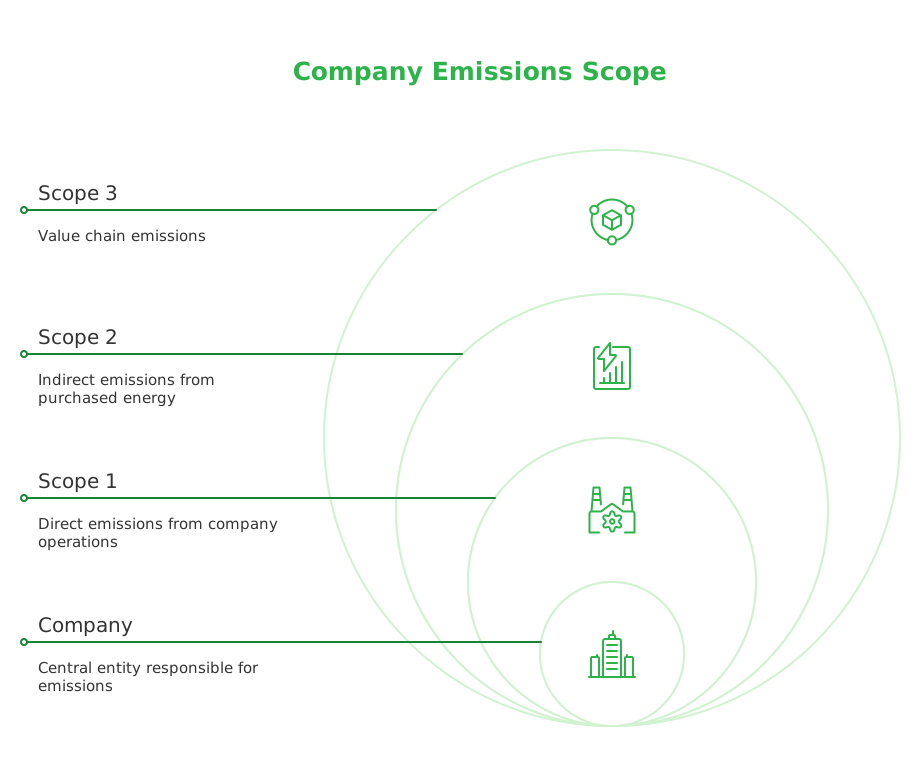
The Greenhouse Gas (GHG) Protocol is the global standard for measuring and managing emissions. It breaks emissions into three scopes:
- Scope 1: Direct emissions from owned or controlled sources (e.g., company vehicles, onsite fuel combustion).
- Scope 2: Indirect emissions from purchased electricity, steam, heating, or cooling.
- Scope 3: All other indirect value chain emissions, including upstream suppliers and downstream use of products.
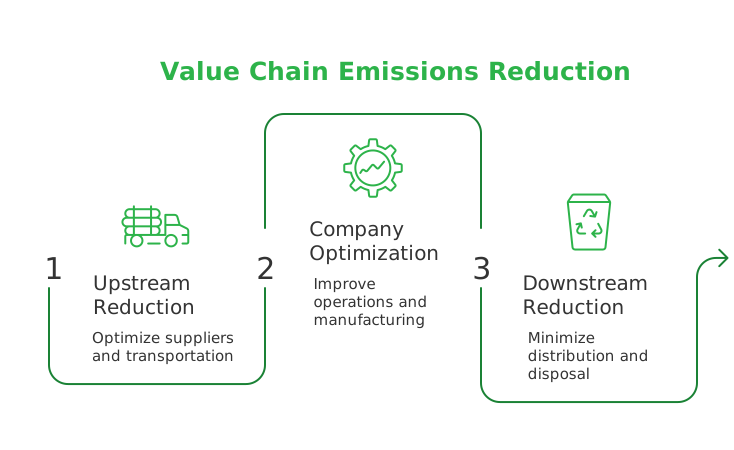
Scope 3 often accounts for the majority of a company’s footprint. Most large companies are now expected to report on all three scopes, especially under emerging regulations and investor scrutiny.
Science-Based Targets
The Science Based Targets initiative (SBTi) helps companies set emissions reduction targets that align with climate science and the 1.5°C limit. More than 3,000 companies use the initiative to validate their goals and establish best practices for net-zero reporting. The organization provides the technical guidance and independent assessments necessary to ensure corporate goals are credible and transparent.
Updated 2026 standards place a heavier emphasis on direct emissions reductions at the source rather than neutralization or offsetting. While previous frameworks allowed more near-term flexibility, current guidelines require companies to prioritize absolute cuts across all scopes. Under these rules, carbon removal is primarily reserved for residual emissions that remain only after an organization has achieved its long-term reduction targets.
Reporting and Compliance Frameworks
Reporting standards and regulatory frameworks are shaping how companies disclose emissions, climate risks and decarbonization progress. Many of these frameworks now apply to companies across virtually all regions, sectors and supply chains in one way or another.
- EU Corporate Sustainability Reporting Directive (CSRD): The CSRD requires companies operating in the EU to report detailed climate and ESG data aligned with European Sustainability Reporting Standards (ESRS). Under the recent Sustainability Omnibus I Directive, the EU adjusted the reporting threshold to focus on organizations with over 1,000 employees and €450 million in net turnover. This shift increases the pressure on large enterprises to secure high-quality data from their global supply chains.
- California SB-253: This law requires companies with more than $1 billion in revenue doing business in California to disclose greenhouse emissions using GHG Protocol methods. Scope 1 and scope 2 emissions disclosure is mandated starting in 2026, while scope 3 reporting requirements go into effect in 2027. Supply chain emissions are in scope, making reliable upstream data a key compliance requirement.
- Carbon Border Adjustment Mechanism (CBAM): The EU’s CBAM creates a carbon cost on imported goods based on their embedded emissions. Importers must track and report product-level carbon data. Importers must report product-level carbon data and, from 2026, surrender CBAM certificates.
- SEC Climate Disclosure Rule: The US Securities and Exchange Commission (SEC) rule would mandate emissions and climate risk disclosures for listed companies. While the SEC ended its legal defense of the rule in 2025 and implementation is currently paused, the framework continues to align with broader market and investor expectations.
- IFRS S1 & S2 (formerly TCFD): The International Sustainability Standards Board’s (ISSB) IFRS S1 and S2 standards have officially superseded the TCFD, with the IFRS Foundation taking over monitoring responsibilities. These standards provide a global baseline for reporting climate risks, governance, strategy and metrics. As of 2026, over 40 jurisdictions have integrated these standards into their national regulatory frameworks, making ISSB alignment the primary focus for global sustainability reporting.
Corporate Decarbonization Strategies
Organizations play a central role in cutting emissions. Corporate decarbonization strategies span targets, operations, product design, governance and value chains. Effective action depends on combining clear goals with operational changes and decision-making structures that support sustained progress.
Target Setting and Strategy
A clear, science-aligned target is the foundation of corporate decarbonization. Net zero by 2050, with interim targets for 2030, is the prevailing benchmark. Interim goals track near-term progress and build accountability within an organization.
Only 4% of companies currently have a science-based Scope 3 target in place, and only 3% are on track to meet such a target. While many organizations participate in industry networks, true collaborative action remains a hurdle: only 1 in 3 corporates actively engage their suppliers on climate action, and a mere 4% have moved beyond communication to deep partnerships for emissions reduction. Setting credible, time-bound targets through frameworks like the SBTi is essential to move from high-level awareness to measurable progress.
Energy and Operations
Operational emissions reductions are often the most direct and cost-effective starting point. Common strategies include:
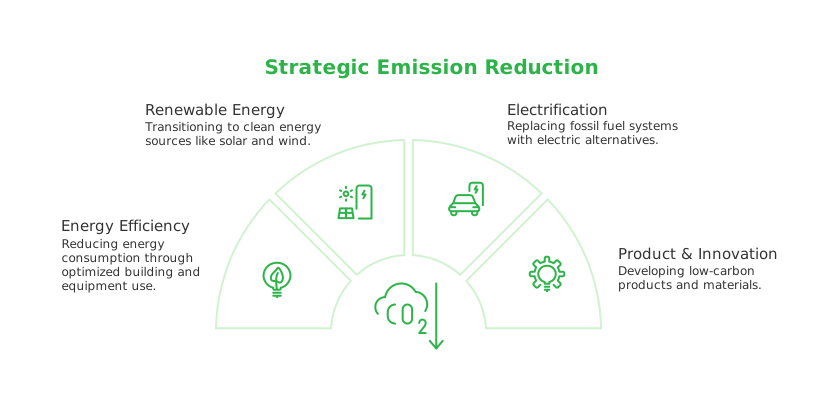
- Energy efficiency: Upgrades to lighting, HVAC, equipment and controls in buildings and plants.
- Renewable energy: Installing solar or wind, or purchasing certified green power through PPAs or RE100-aligned procurement.
- Electrification: Replacing fossil-fueled vehicles, heating, and equipment with electric alternatives, especially where grids are decarbonizing.
- Process innovation: Redesigning products to use low-carbon technologies, such as electric furnaces, green hydrogen or waste heat recovery.
Product and Innovation
Decarbonization applies to what companies sell, not just how they operate. Redesigning products to use recycled or lower-impact materials, extending lifespans and minimizing waste supports a circular approach that lowers emissions throughout the value chain.
Developing low-carbon products that require less energy or materials to produce and use can significantly reduce scope 3 emissions. In some cases, shifting from physical goods to digital alternatives offers further reductions.
A note on carbon offsetting: Some emissions are currently hard to eliminate. For these, high-quality carbon removal can play a role through nature-based solutions, such as reforestation, and engineered methods, like direct air capture. Offsets should meet strict standards and be used only after all practical reductions are made. Long-term strategies should limit reliance on offsets and prioritize structural decarbonization.
Government and Policy-Led Decarbonization Strategies
Public policy is a primary driver of decarbonization. Governments set targets, regulate emissions, reshape markets and allocate finance to support the transition. Their actions directly impact companies through compliance obligations, reporting requirements and new market dynamics.
National Decarbonization Roadmaps
Most major economies have adopted national net-zero targets. The EU, UK, Canada, and Japan target 2050. China has committed to carbon neutrality by 2060, and India by 2070. These targets are often backed by interim carbon budgets and sectoral roadmaps that define emissions ceilings and decarbonization milestones over time.
In 2025 and early 2026, many nations submitted updated Nationally Determined Contributions (NDCs) that set even more ambitious 2035 targets. For example, the UK has pledged to cut emissions 81% from 1990 levels by 2035, while the EU has moved toward a 90% reduction goal by 2040. These roadmaps influence energy policy, industrial development, transport planning and fiscal policy. Governments use these frameworks to allocate emissions responsibilities, guide public investment and set expectations for private sector contributions.
Carbon Pricing and Markets
Carbon pricing internalizes the cost of emissions, creating a financial incentive to reduce them. There are two main types:
- Emissions Trading Systems (ETS) cap total emissions and allow trading of permits. The EU ETS covers more than 10,000 installations and is expanding to shipping and road transport. Other regions with ETSs include the UK, South Korea and parts of China.
- Carbon taxes set a fixed price per tonne of CO2 emitted. At least 35 countries have carbon tax programs in place, including Sweden, Chile and Canada.
Governments also use incentives to accelerate clean investment, though the landscape for these supports is shifting. In the US, the 2025 One Big Beautiful Bill Act (OBBBA) significantly modified many tax credits originally introduced by the Inflation Reduction Act. As federal incentives fluctuate, businesses must navigate state-level mandates and international mechanisms. From 2026, the EU’s CBAM requires importers to surrender certificates for embedded emissions, turning carbon intensity into a direct financial liability.
Renewable Energy and Grid Decarbonization
Many jurisdictions now mandate minimum shares of renewable energy in national electricity mixes. Instruments include Renewable Portfolio Standards (RPS), feed-in tariffs, auctions for solar and wind power, and clean energy certificates. Phasing out coal and limiting fossil fuel subsidies are also key components.
Some governments invest directly in grid infrastructure to support renewables by expanding transmission lines, building energy storage and integrating smart grid technologies. These efforts aim to address intermittency, improve system flexibility and make zero-carbon electricity available to businesses. Without a decarbonized grid, full electrification of transport and industry is not possible.
Supply Chain Engagement for Decarbonization
Most emissions lie outside a company’s direct operations. According to EcoVadis and BCG, upstream scope 3 emissions can be more than 21 times greater than scope 1 and 2 combined. Reducing these emissions requires active engagement with suppliers.
Leading companies are taking responsibility by embedding climate criteria into procurement. This includes requiring suppliers to disclose emissions, adopt science-based targets or certify products using eco-labels. These actions shift decarbonization pressure upstream and make emissions data available where it matters most.
- Utilize specialized platforms: Tools like EcoVadis, CDP and initiatives such as the Partnership for Carbon Transparency (PACT) allow companies to collect, assess and standardize supplier data.
- Prioritize supplier collaboration: Many small and medium-sized suppliers lack the resources to decarbonize independently. Companies can support supplier progress by sharing tools, offering training and co-developing improvement plans.
- Create commercial incentives: Procurement teams can link decarbonization to commercial decisions by awarding business to low-carbon suppliers, weighting emissions performance in RFQs and setting minimum carbon management thresholds for preferred status.
Despite these opportunities, uptake remains limited. According to CDP, fewer than 15% of companies have set targets that cover supplier emissions. Data quality and completeness remain a challenge, especially across global, multi-tiered supply chains.
Measurement, Reporting and Tools for Decarbonization
Reliable data underpins every effective decarbonization strategy. Measuring emissions accurately, reporting consistently and using the right tools enables companies to track progress, meet compliance obligations and guide investment decisions. This is especially important for scope 3, where supplier data and reporting integration are essential.
Emissions Accounting
Start with a complete carbon inventory that includes scope 1, scope 2 and relevant scope 3 emissions. Use the GHG Protocol and ISO 14064 standards for consistency and comparability. Apply science-based methodologies and region-specific emissions factors where available. This creates a credible foundation for internal targets, external reporting and regulatory compliance.
Reporting Frameworks
Organizations must align with both mandatory and voluntary disclosure requirements:
- Mandatory: CSRD and California SB 253 and SB 261 require disclosures based on the GHG Protocol. These frameworks often mandate reporting on targets, transition plans and supply chain emissions.
- Voluntary: CDP, GRI and ISSB offer widely used reporting structures. Many organizations use them to satisfy investor, customer or internal expectations even where not legally required.
Analytics, Verification and Assurance
Visualization tools help organizations interpret emissions data and act on it. Dashboards show progress against targets, compare performance across departments or suppliers and flag underperforming areas. Through its Carbon Action Manager, EcoVadis provides carbon ratings and management tools that allow teams to prioritize actions and benchmark their performance against industry peers. These solutions enable companies to request carbon data from thousands of suppliers at scale, moving the focus from simple risk assessment to collaborative performance improvement.
Because these platforms centralize reporting data, they simplify the path toward third-party verification. This independent assurance adds credibility and reduces risk in regulatory and investor-facing disclosures. CDP, CSRD and other frameworks increasingly require assurance for emissions data. Internal audits, platform verification features and external assurance providers help validate claims and increase stakeholder trust.
Challenges and Risks in Decarbonization Implementation
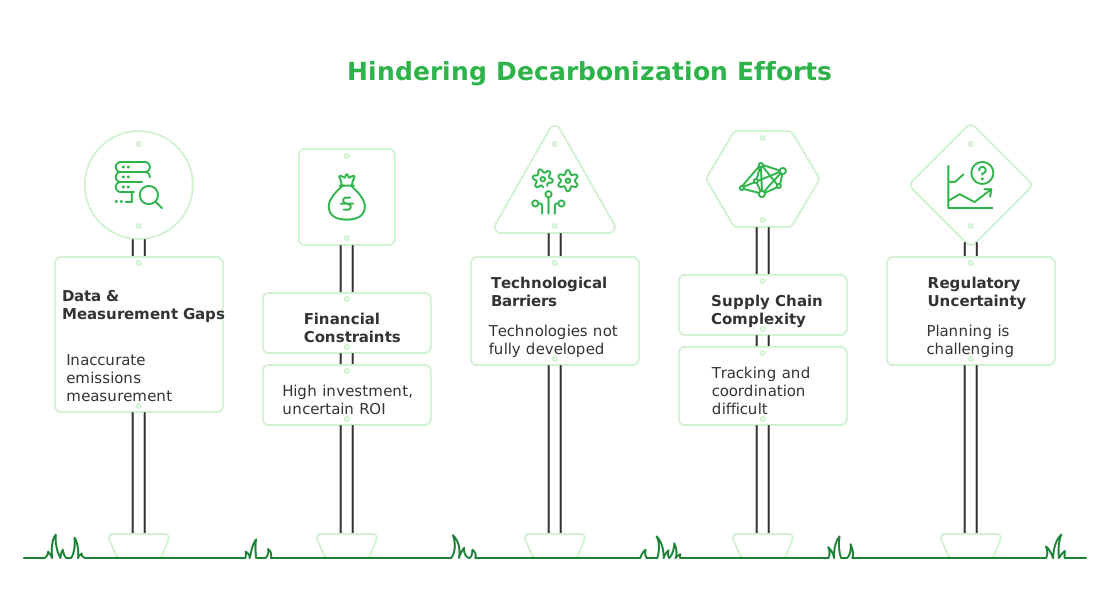
Implementing a decarbonization strategy requires deep investment, cross-functional alignment and extensive coordination across global supply chains. Progress can be slowed by data limitations, cost barriers and external uncertainty. Recognizing these risks allows companies to plan realistically and target support where it’s most needed.
- Data and Measurement Gaps: Measuring emissions accurately is a persistent challenge, especially for scope 3 and product-level footprints. Many suppliers lack systems to track or report emissions. Data inconsistencies, reliance on averages and coverage gaps reduce confidence in reported figures and weaken target-setting.
- Financial and Resource Constraints: Upfront investment in decarbonization technologies, systems or training can be high. Budget constraints and uncertain ROI timelines may delay action. Smaller firms may lack internal resources or access to affordable financing to fund necessary changes.
- Technological Barriers: In some high-emission sectors, mature low-carbon technologies are still limited. Decarbonizing process heat, heavy transport or material inputs often depends on innovation in the early stages. Cost, availability and infrastructure constraints slow deployment.
- Supply Chain Complexity: Large, multi-tiered supply chains complicate emissions tracking and engagement. Emissions often sit with suppliers several tiers removed, many of whom are SMEs with limited capabilities. Fragmented systems and inconsistent expectations hinder coordination and progress.
- Regulatory Uncertainty: Climate-related rules are evolving. Companies face uncertainty around future obligations, regional inconsistencies, and the timing of enforcement. Delays or changes in policies or carbon pricing can affect long-term planning.
Turning Decarbonization Challenges Into Action
Despite growing momentum, many organizations still face serious barriers to effective decarbonization. Incomplete emissions data, supplier engagement gaps and mounting compliance requirements can stall progress, even when leadership commitment is strong.
To move beyond intention and deliver measurable results, companies need a way to operationalize carbon reduction across their value chains, backed by credible insights and scalable systems. Partnering with a specialized platform allows organizations to bridge the gap between high-level climate goals and the procurement decisions that deliver real impact.
EcoVadis: A Trusted Partner for Accelerating Decarbonization
EcoVadis provides the infrastructure and intelligence organizations need to transform decarbonization ambition into results within the supply chain. From validating science-based targets and preparing for mandatory regulatory disclosures to baseline carbon footprinting, the platform delivers the granular data and expert support required to lead with confidence. By integrating carbon ratings and improvement tools directly into the procurement process, leaders can more effectively manage risk and drive structural emissions reductions across their entire global footprint.
Join over 150,000 companies already accelerating climate impact through EcoVadis. Contact us today to see how our Carbon Action Manager can help you turn your sustainability strategy into measurable results.
FAQs
Q: What is the difference between decarbonization and net zero strategies?
A: Decarbonization is the process of reducing or eliminating greenhouse gas emissions from a company’s operations and value chain. It focuses on structural changes such as switching to renewable energy, electrifying vehicle fleets or redesigning manufacturing processes to be less carbon intensive.
Net zero is a broader accounting goal where any residual emissions that cannot be eliminated are balanced by an equivalent amount of carbon removals. While decarbonization prioritizes cutting emissions at the source, a net zero strategy uses these removals to reach a state of climate neutrality.
Q: What are the mandatory climate disclosure requirements for businesses in 2026?
A: The 2026 reporting requirements include two primary mandates for companies with significant operations in the US or EU:
- California SB 253: Companies doing business in California with over $1 billion in annual revenue must disclose their scope 1 and scope 2 emissions by August 10, 2026.
- EU CSRD: Large companies and listed SMEs must report comprehensive sustainability data under the European Sustainability Reporting Standards (ESRS). This includes detailed transition plans and double materiality assessments.
Q: How can a company measure and reduce its Scope 3 emissions?
A: Measuring scope 3 emissions requires collecting primary data directly from suppliers, rather than relying on secondary data like industry averages and estimates. An effective approach to capturing primary data on your direct emissions involves:
- Mapping the value chain: Identify the categories with the highest carbon impact, such as purchased goods or transportation.
- Supplier engagement: Use platforms like EcoVadis to request specific carbon data and emissions targets from high-impact suppliers.
- Standardizing data: Apply the GHG Protocol Corporate Value Chain Standard to ensure consistency across different tiers of the supply chain.
Reductions can be achieved by setting minimum carbon performance standards for procurement and collaborating with suppliers to improve energy efficiency.
Q: What tools are available for tracking carbon footprints across a global supply chain?
A: Companies rely on a combination of enterprise resource planning (ERP) software and specialized sustainability platforms to track their carbon footprint.
- Carbon management platforms: EcoVadis provides carbon ratings and the Carbon Action Manager tool to track and improve supplier performance.
- Data exchange initiatives: The Partnership for Carbon Transparency (PACT) offers frameworks for sharing product-level carbon footprints across different software systems.
- Emissions factor databases: Tools that provide regional and sector-specific data to fill gaps when primary supplier data is unavailable.