
 ChatGPT
  Gemini
  Perplexity
  Claude
  Grok
Grok 

Gain insights from 30+ sustainability leaders, including superstars like Paul Polman, former CEO of Unilever, and Helena Helmersson, former CEO of H&M Group. Learn how to build a sustained advantage through responsible business practices.
16th June 2026
ESG Management in the Supply Chain: Risks, Challenges and Solutions
Read summarized version with:
Many companies considering an ESG management program start in the same place: internal operations. They set emissions targets, update labor policies and build robust governance frameworks. It is a reasonable starting point. But for most organizations, most ESG risk and exposure does not sit within their own operational walls. It actually sits within their supply chain, specifically within transportation emissions and supplier practices.
This article explores why extending ESG management across the full value chain is essential and how companies can establish programs that address their full ESG risk profile.
Key Takeaways
- Most ESG risks exist in the supply chain, not within internal operations.
- ESG management connects risk assessments, policies and performance data into a system that drives measurable improvement.
- Extending ESG management into the supply chain requires structured, scalable processes to overcome data and regulatory challenges.
- Companies that get supply chain ESG management right build more resilient operations and more credible sustainability programs
What is ESG Management?
ESG management is the ongoing process of measuring, monitoring and actively working to improve a company’s performance across environmental, social and governance (ESG) factors. It aims to move ESG beyond basic annual disclosure and into an integrated discipline, giving organizations a way to identify risks, set performance targets and demonstrate accountability to stakeholders and the public.
ESG management helps connect the dots between the risk assessments that surface exposure, ESG policies that set expectations, and performance data that tracks whether meaningful progress is being made. A mature ESG program treats these elements as a cohesive system, not simply a compliance checklist. It tells your company not just where it stands against ESG goals today, but where it needs to improve and what can be done to get there.
The Three Pillars of ESG Management
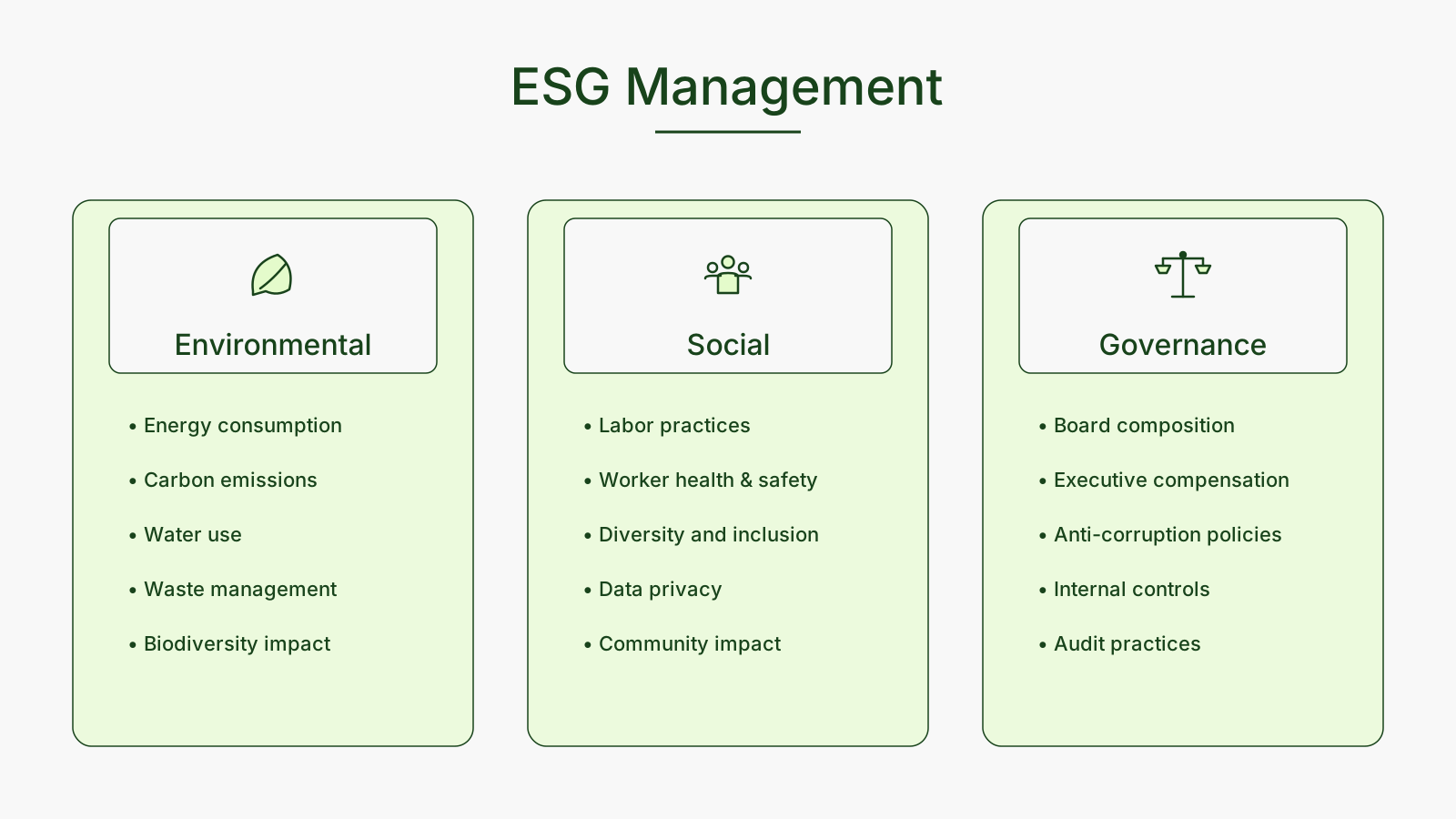
ESG management considers three interconnected pillars, each covering a specific area of business responsibility.
- Environmental: Energy consumption, carbon emissions, water use, waste management and biodiversity impact. Addresses how a company impacts the natural world through its operations and value chain.
- Social: Labor practices, worker health and safety, diversity and inclusion, data privacy, and community impact. Accounts for how a company treats people inside and outside its organization.
- Governance: Board composition, executive compensation, anti-corruption policies, internal controls and audit practices. Covers how a company is led and held accountable.
How Supply Chain Risks Impact ESG Management
For modern organizations, most ESG risk originates upstream, in the operations, labor practices and governance structures of their suppliers. Internal ESG frameworks typically monitor what a company controls directly, but are not designed to capture what happens two or three tiers deep in a supply chain. That gap creates significant exposure across all three ESG pillars.
- Scope 3 emissions are largely a supply chain problem. Emissions generated across a company’s upstream and downstream value chain account for an estimated 70% to 90% of total corporate carbon footprints. Supplier energy use, transportation emissions and raw material extraction are rarely captured by internal carbon accounting alone.
- Supplier labor practices create direct liability. With approximately 87% of forced labor occurring in the private sector across services, manufacturing, construction and agriculture, the risk embedded in global supply chains is substantial. Companies with no direct knowledge of tier-2 or tier-3 labor conditions may face legal and reputational consequences when violations surface.
- Governance failures travel up the supply chain. Only 17.2% of companies have public processes for screening new suppliers for sustainability-related risks, leaving most organizations with limited visibility into the corruption, bribery and control failures that can originate with suppliers and land squarely on the purchasing company.
- Regulatory pressure is growing. The EU Corporate Sustainability Due Diligence Directive (CSDDD), Germany’s Supply Chain Due Diligence Act (LkSG) and France’s Duty of Vigilance Law all place legal responsibility on companies to identify and address ESG risks beyond their own operations.
Knowing where supply chain ESG risk exists is a critical first step. The harder question is why it remains so difficult to manage.
The Challenges of Managing ESG in the Supply Chain
Even organizations with clear ESG goals and dedicated sustainability teams often run into the same obstacles when they try to extend ESG management into their supply chains.
- Supplier data availability: Companies may work with hundreds or thousands of suppliers across multiple geographies. Collecting reliable ESG data from that base is difficult, and the problem compounds at tiers 2 and 3, where visibility drops significantly and standardized reporting is rare.
- Self-assessment questionnaire reliability: Suppliers may lack the tools or internal structure to provide accurate ESG information, and those with recognized performance gaps have little incentive to fully disclose them. The result is data that is difficult to verify and insufficient to support meaningful comparison across the supplier network.
- Fragmented regulatory requirements: CSRD, LkSG, CSDDD and other regulations each include different requirements, timelines and disclosure standards. Procurement and sustainability teams are frequently managing overlapping obligations with limited internal resources to absorb the complexity.
- Translating data into action: Companies may successfully collect supplier ESG data but still struggle to turn scores and ratings into concrete improvement plans. The gap between assessment and action is why many ESG efforts fail to make meaningful progress.
These challenges don’t make supply chain ESG management impossible, but they make clear that effective programs require more than good intentions and a questionnaire.
How to Create a Supply Chain ESG Management Program
Building a supply chain ESG management program means moving from policy to process. The steps below outline how companies translate ambitions into a structured, scalable program that reaches beyond their own operations.
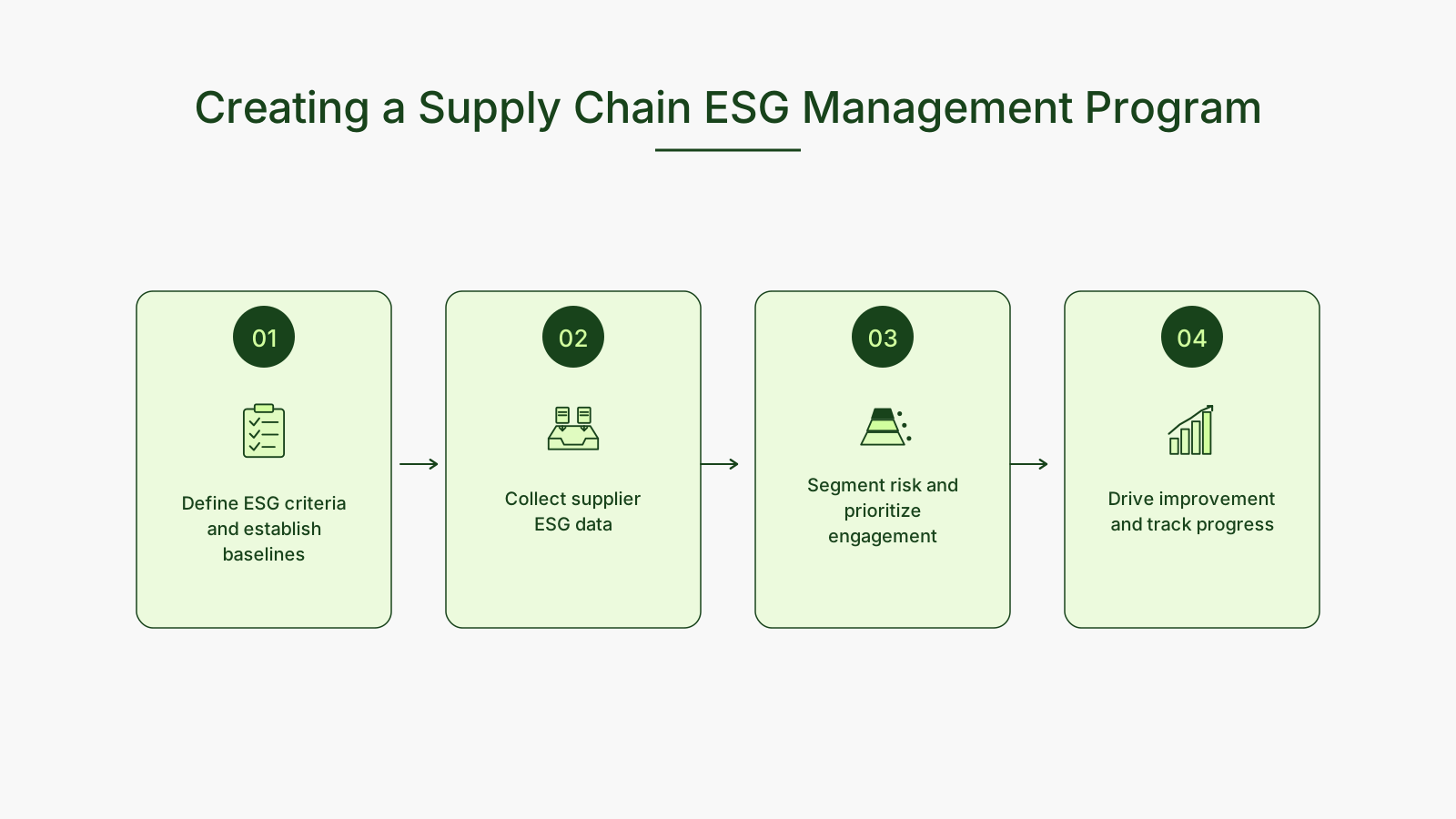
1. Define ESG Criteria and Establish Baselines
Determine what ESG performance looks like for your specific supplier network. This includes identifying the issues most material to your industry and geography, then setting minimum standards suppliers are expected to meet. Without a clear baseline, there is no way to measure progress or prioritize where to focus first. Inputs at this stage should include:
- Industry-specific materiality assessments
- Geographic and category-level risk profiles
- Minimum ESG standards and supplier code of conduct requirements
2. Collect Supplier ESG Data at Scale
Manual outreach and disconnected questionnaires don’t scale across large, multi-tier supplier bases. Effective programs utilize recognized assessment frameworks that produce consistent, comparable data across diverse suppliers and regions. EcoVadis assessments provide procurement teams with independently validated ESG scorecards across hundreds of suppliers simultaneously, covering over 200 spend categories and 175 countries.
3. Segment Risk and Prioritize Engagement
Not all suppliers carry equal ESG risk. A tiered approach focuses deeper assessment and engagement on high-risk or high-spend suppliers, making programs manageable without sacrificing coverage. EcoVadis IQ supports this step by providing country and industry-level risk intelligence, allowing teams to segment their supplier base before deploying full assessments.
4. Drive Improvement, Not Just Scores
A scorecard is a starting point, not an outcome. Effective supply chain ESG management sets improvement targets with suppliers, provides corrective action guidance and tracks progress through reassessment over time. This cycle typically involves:
- Setting scored improvement targets by supplier tier or category
- Sharing corrective action plans tied to specific ESG gaps
- Tracking progress through annual or biannual reassessment
Tracking reassessment results over time provides companies with the data to hold suppliers accountable and to demonstrate actual progress to regulators and stakeholders.
The Value of Effective ESG Management
Extending ESG management into the supply chain creates measurable value across the business, well beyond avoiding fines or meeting minimum disclosure requirements.
- Supply chain resilience: Suppliers that perform well on ESG tend to be better managed overall, reducing disruption risk from labor disputes, environmental incidents or governance failures.
- Regulatory readiness: Established supply chain ESG programs position companies to meet mandated requirements without scrambling to close data gaps under deadline pressure.
- Investor and customer confidence: Verified ESG performance data gives stakeholders a credible basis for evaluating sustainability claims, backed by independently validated results rather than self-reported assertions.
- Supplier relationship quality: Structured ESG engagement builds more transparent supplier relationships, creating a foundation for long-term collaboration rather than transactional compliance.
EcoVadis’ sustainability intelligence platform gives companies the ratings, intelligence and engagement tools to build programs that deliver on all four. For companies serious about supply chain ESG management, the difference between a program that looks good on paper and one that drives real performance comes down to high-quality, reliable data and robust processes for turning that data into action.
FAQs
Q: What is the difference between an ESG policy and ESG management?
A: An ESG policy defines a company’s commitments and expectations across environmental, social and governance factors. ESG management is the process of putting those commitments into practice, tracking performance against them and driving continuous improvement.
A policy sets the standard. ESG management determines how to move forward and meet those standards.
Q: What is a supplier code of conduct and how does it relate to ESG management?
A: A supplier code of conduct is a formal document that outlines the environmental, social and governance standards a company expects its suppliers to meet. It serves as the foundation for supply chain ESG management, establishing baseline expectations before assessments, audits or corrective action processes begin.
Q: What ESG metrics should companies track across their supply chains?
A: The right metrics depend on industry, geography and materiality, but most supply chain ESG programs track performance in three areas:
- Environmental: Scope 3 emissions by supplier, energy consumption, water use and waste generation
- Social: Labor practice compliance, health and safety incident rates, diversity metrics and human rights due diligence coverage
- Governance: Supplier code of conduct adherence, anti-corruption policy coverage, percentage of suppliers formally assessed and improvement rates over time

Ashley Raleigh is a supply chain professional with 10 years of experience across freight operations, logistics technology, and sustainability. Her work focuses on the evolving role of technology, strategy, and responsible practices in modern supply chains.