
 ChatGPT
  Gemini
  Perplexity
  Claude
  Grok
Grok 

Gain insights from 30+ sustainability leaders, including superstars like Paul Polman, former CEO of Unilever, and Helena Helmersson, former CEO of H&M Group. Learn how to build a sustained advantage through responsible business practices.
3rd June 2026
ESG Materiality Assessment: Prioritizing What Matters in a Complex World
Read summarized version with:
As sustainability reporting becomes embedded in global regulations, treating every ESG topic as equally material is no longer viable. The International Sustainability Standards Board (ISSB) standards were developed to establish a global baseline for sustainability and climate-related financial disclosures are gaining global traction, while simultaneously the EU is enforcing double materiality under CSRD. This means organizations are increasingly expected to identify and prioritize the issues that truly affect enterprise value and stakeholder impact.
An ESG materiality assessment provides the structure to make those distinctions. It helps leadership teams focus on financially and operationally significant risks across governance, operations and supply chains.
This article explains what ESG materiality means in practice, how double materiality reshapes supply-chain accountability and how organizations can embed materiality into strategy and decision-making.
What is an ESG Materiality Assessment?
An ESG materiality assessment is a structured process for identifying, evaluating and prioritizing environmental, social and governance topics that are most significant to a company’s financial and sustainability performance.
It helps organizations determine which ESG risks and opportunities require immediate attention, increased resource allocation or additional governance oversight. The assessment typically evaluates issues across two dimensions: their impact on enterprise value and their impact on society and the environment. The outcome is a ranked list of material topics that guide reporting, risk management, procurement decisions and long-term strategy.
Why Materiality Matters
Every company is faced with managing a wide range of ESG issues. These issues may include carbon emissions, water scarcity, labor practices, data privacy and anti-corruption. These issues generally cannot be addressed simultaneously without diluting resources.
A materiality assessment helps bring clarity. It guides an organization’s priorities so teams can focus on what matter most. It also helps companies align sustainability actions with enterprise value and what stakeholders care about.
Materiality has become an important factor for two critical external audiences:
- Investors increasingly treat ESG materiality as a due diligence requirement. They expect companies to demonstrate they have identified and are managing the issues most likely to impact long-term value. Institutional investors and fund managers now regularly screen for materiality processes as part of their risk assessment.
- Regulators are also embedding materiality into mandatory disclosure requirements. ISSB standards and the EU’s Corporate Sustainability Reporting Directive (CSRD) require companies to identify and report on material topics. This makes a verified materiality assessment essential for compliance.
Internally, a materiality assessment provides a roadmap for corporate ESG policies so organizations can focus on the categories most relevant to their industry and business. EcoVadis Ratings support this process by evaluating companies against industry-specific criteria across sustainability themes, drawing on over 159,000 ratings to reflect what actually matters by sector.
Global Momentum for Materiality
The ISSB’s momentum underscores why companies must pay attention. As of early 2026, 37 jurisdictions from Brazil and Canada to the UK and Japan are moving to implement ISSB standards. This adoption will eventually cover around 60% of global GDP and more than 40% of stock‑market value. Not only will this adoption give companies a common reporting baseline, but it will also significantly reduce the risk of conflicting national rules.
Europe is taking the double-materiality requirement one step further. Under CSRD and the European Sustainability Reporting Standards (ESRS), businesses must show how sustainability issues affect financial performance and how their activities impact people and the planet.
Evidence of Increasing Materiality Adoption
| Topic | Statistic | Source |
| Jurisdictions adopting ISSB Standards | 37 jurisdictions cover ~ 60% of GDP, 40% + market capitalisation, 60% of global emissions | IFRS adoption update |
| Boards conducting regular ESG reviews | 71.6% of boards review ESG strategy regularly | CSRD Pulse Check Survey |
| Boards with dedicated ESG committees | 62.6% | CSRD Pulse Check Survey |
| Companies ranking identification of material impacts as top CSRD benefit | 54% | CSRD Pulse Check Survey |
| Firms planning to use CSRD information for strategic planning | 56.7% | CSRD Pulse Check Survey |
| Boards linking executive remuneration to ESG metrics | 32.87% | CSRD Pulse Check Survey |
These stats are proof that materiality is supported by regulators, investors and even the boards, and is crucial in shaping incentives inside organizations.
What is Double Materiality?
Double materiality expands on traditional materiality. It asks two questions:
- Does a sustainability issue pose a significant risk or opportunity to the company’s financial performance?
- Does the company’s business materially affect society or the environment?
A topic is material if it passes either test. Double materiality acknowledges that it’s entirely possible that a company can be exposed to climate risks while contributing to them.
It also highlights the EU’s goal of redirecting capital towards sustainable activities. In practice, double materiality requires companies to look both inward at enterprise value and outward at their broader impact on society and the environment.
For most organizations, that outward impact is concentrated in the supply chain, including Scope 3 emissions, labor practices and human rights risks embedded deep within supplier networks. This means procurement and supplier oversight become central to any credible double materiality assessment.
How to Conduct a Materiality Assessment
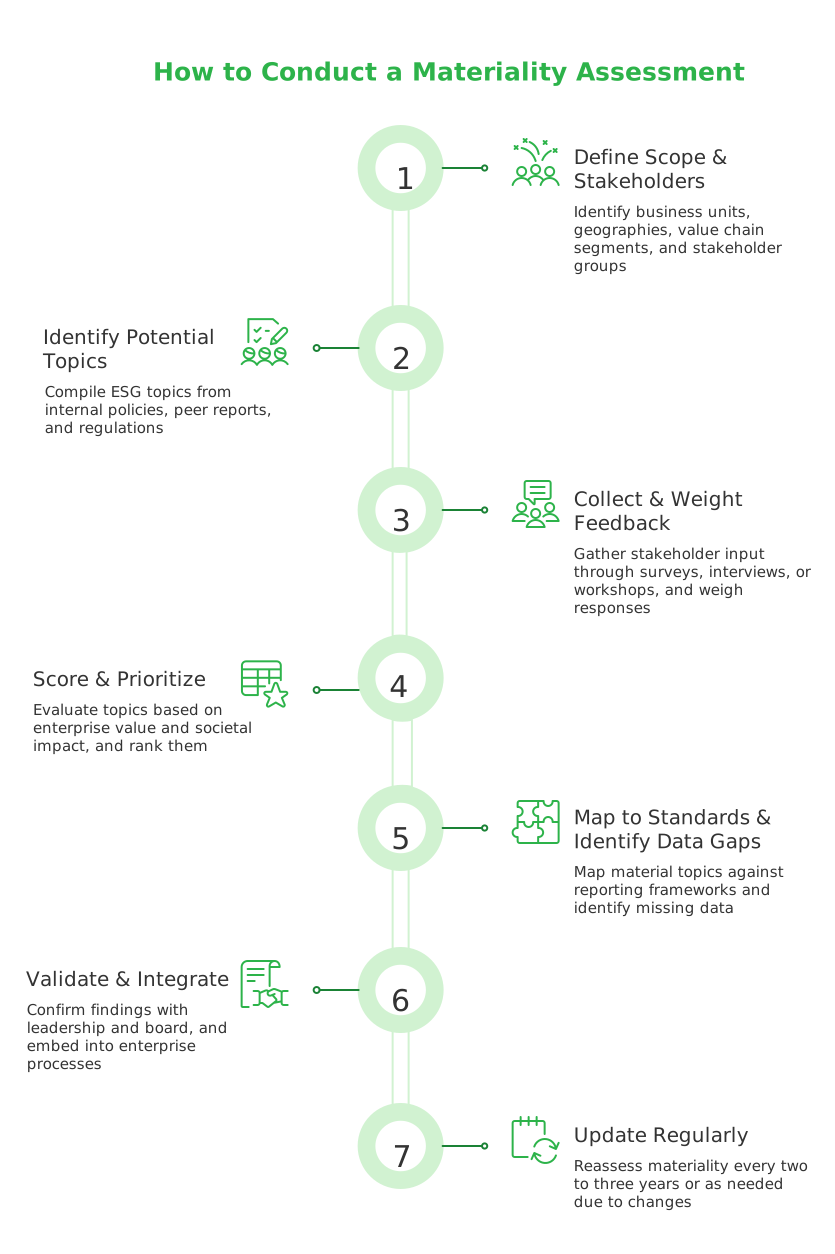
Conducting a materiality assessment involves a series of structured steps. The process typically includes the following:
- Define scope and stakeholders: Identify the business units, geographies and value chain segments to be covered, along with the relevant stakeholder groups (customers, investors, employees, suppliers, regulators and community members). Determine how you will gather their input.
- Identify potential topics: Compile a list of ESG topics from internal policies, peer reports, rating agencies and emerging ESG regulations like ISSB, GRI, SASB and ESRS. Remember to consider both financial risks and societal impacts while doing so.
- Collect and weight feedback: Use surveys, interviews or workshops to gather stakeholder input, then weigh responses based on influence. Customers and regulators tend to drive market access considerations, while employees help guide operational priorities.
- Score and prioritize: Evaluate each topic based on its impact on enterprise value and on people or the environment. Use a scoring matrix to rank topics as “critical,” “important” or “emerging.” This helps sort priorities.
- Map to standards and identify data gaps: Map your material topics against relevant reporting frameworks such as ISSB, ESRS or the GHG Protocol’s Scope 3 Standard to identify where data is missing or incomplete.
- Validate and integrate: Once confirmed by leadership and the board, findings should be embedded into enterprise risk management, procurement policies and performance evaluations. EcoVadis supports this step through globally recognized supplier ratings that feed directly into procurement and risk workflows.
- Update regularly: Materiality is dynamic. Most companies reassess every two to three years, with more frequent reviews in the early stages. New regulations, geopolitical shifts or advances in technology should also trigger interim updates.
Tips for Success
A strong materiality assessment is both analytical and practical. The following principles help strengthen execution:
- Start with a hypothesis. Propose likely material topics based on your sector and value chain before stakeholder engagement begins.
- Use clear visuals. Materiality matrices and heat maps help leadership quickly understand priority areas.
- Leverage structured sustainability intelligence. Reliable supplier-level data improves scoring accuracy and reduces blind spots, particularly across complex global value chains.
- Work cross-functionally. Finance, procurement, risk, legal and sustainability teams should align material topics with capital allocation and operational controls.
- Plan for assurance early. Adjusting methodology with recognized standards improves credibility and audit readiness.
Many organizations struggle with value-chain visibility, data gaps and the complexity of double materiality. Addressing these challenges requires disciplined processes, trusted data sources and continuous refinement. When executed well, materiality shifts from compliance to strategy.
Conclusion: Put Materiality to Work
The days of materiality being an optional administrative task are over. With ISSB adoption expanding globally and the EU enforcing double materiality under CSRD, companies are expected to define and prioritize what truly matters.
With a strategic materiality process, you can allocate capital wisely and develop ESG assessments and reports that exceed stakeholder expectations. In a volatile world full of ESG noise, focusing on what is truly relevant to your business is the smartest use of executive time.
If you’re ready to move beyond identifying material risks to actively managing them, EcoVadis is here to help. Contact us to learn more about our sustainability intelligence platform.

Ashley Raleigh is a supply chain professional with 10 years of experience across freight operations, logistics technology, and sustainability. Her work focuses on the evolving role of technology, strategy, and responsible practices in modern supply chains.