
 ChatGPT
  Gemini
  Perplexity
  Claude
  Grok
Grok 
Gain insights from 30+ sustainability leaders, including superstars like Paul Polman, former CEO of Unilever, and Helena Helmersson, former CEO of H&M Group. Learn how to build a sustained advantage through responsible business practices.
20th July 2026
Supply Chain Compliance: Best Practices to Protect Your Business from Disruptions
Read summarized version with:
Global trade is getting more complex each day. Businesses are increasingly being asked to comply with evolving regulations, earn the trust of investors and consumers, and maintain full transparency and accountability across their entire supply networks. Otherwise, they may face severe financial penalties, reputational damage and legal consequences.
This article explores the core components of supply chain compliance, the associated risks and best practices for businesses. It also presents technological solutions and emerging trends that will shape the future of responsible supply chains.
Key Takeaways:
- Supply chain compliance shields businesses from legal penalties, financial loss and long-term brand damage.
- Success requires balancing legal mandates, ESG standards, human rights and product quality.
- Effective programs use clear supplier codes of conduct and deep-tier due diligence to prevent issues before they occur.
- AI, blockchain and automation provide the real-time visibility and data accuracy needed for modern audits.
- Beyond meeting rules, strong compliance builds market trust and strengthens long-term supplier partnerships.
What is Supply Chain Compliance?
Supply chain compliance is the practice of ensuring that all activities within a company’s supply chain fully adhere to applicable laws, regulations, industry standards and ethical requirements. It covers the entire journey of goods from sourcing to delivery to minimize risks.
In today’s global economy, effective compliance processes have become essential for building resilience against supply chain risks, meeting stakeholder expectations and avoiding penalties associated with non-compliance.
Why Is Supply Chain Compliance Important?
To succeed in a global market, companies must look beyond cost and speed. Supply chain compliance serves as a protective shield for operations while opening the door to new opportunities. Here is why it matters:
- Avoids legal risks: Regulations governing supply chain operations are expanding, with many now requiring disclosure on environmental, social and governance (ESG) factors. Non-compliance can result in fines, penalties and reputational damage.
- Protects brand reputation: Violations involving forced labor, environmental damage or unethical practices can cause significant reputational damage and loss of customer trust.
- Satisfies stakeholder expectations: Over 79% of investors consider ESG and sustainability performance key factors in deciding whether to invest in a project.
- Enhances operational resilience: Compliant supply chains are often better positioned to handle disruptions and regulatory change. Companies with visibility into labor and safety standards across their supplier network are less exposed to potential issues that can halt production with little warning.
- Supports sustainability goals: Supply chain compliance empowers companies to monitor environmental impact and human rights issues.
- Provides competitive advantage: Companies with strong compliance programs gain better market access, with 90% of consumers reporting greater loyalty to brands that prioritize social and environmental responsibility.
Components of Supply Chain Compliance
Ensuring supply chain compliance requires a clear understanding of its core elements. The following components are critical to establishing a robust compliance structure.
Legal and Regulatory Compliance
An organization’s ability to adhere to global legal requirements is a core pillar of international trade and operational stability. Navigating this landscape requires cross-functional visibility, as non-compliance can result in severe financial penalties, seizure of goods and canceled commercial contracts.
Key global regulations impacting modern supply chains include:
- Corporate Sustainability Reporting Directive (CSRD): This EU regulation forces companies to publicly disclose environmental and social data across their entire value chain. It requires businesses to collect precise metrics on partner carbon emissions, resource consumption and labor practices.
- Corporate Sustainability Due Diligence Directive (CSDDD): This framework legally mandates that large companies actively map, prevent and remediate human rights violations and environmental harms within their networks.
- California Transparency in Supply Chains Act (CTSCA): This law requires large retailers and manufacturers doing business in California to publicly disclose their efforts to eliminate slavery and human trafficking from their supply chains. It covers sourcing practices, supplier audits, certification requirements and internal accountability standards.
Environment & Sustainability
Environmental compliance focuses on minimizing the supply chain’s ecological footprint through an ESG lens. To minimize this environmental burden, companies should implement controls across several high-impact areas:
- Managing Carbon Emissions (Scope 1, 2, & 3): Moving beyond direct operations to address Scope 3 emissions, which arise from upstream suppliers and downstream logistics.
- Circular Economy & Waste Mitigation: Moving from linear “take-make-dispose” to closed-loop systems for material recovery and waste reduction.
- Resource Sovereignty: Managing the consumption of critical inputs like water and rare earth minerals to prevent depletion in high-risk regions.
- Biodiversity Protection: Ensuring sourcing practices do not contribute to deforestation or habitat destruction.
Prioritizing environmental oversight and regulatory compliance strengthens supply chain resilience by reducing exposure to climate-related risks and resource scarcity.
Human Rights and Labor Standards
Ensuring fair labor practices is essential for modern compliance, specifically by eliminating forced labor, child labor and unsafe working conditions. Companies should conduct in-depth ESG due diligence to ensure that workers across their supply chains are treated ethically and compensated fairly.
Following these standards helps an organization maintain a positive reputation, avoid legal issues and foster a sustainable and equitable global workforce. This commitment is increasingly driven by global regulations, including:
- The German Supply Chain Due Diligence Act (LkSG): One of the first national laws to impose significant fines (up to 2% of annual turnover) for companies failing to monitor their suppliers for labor rights violations.
- Uyghur Forced Labor Prevention Act (UFLPA): A critical U.S. trade enforcement tool that presumes goods manufactured in certain regions are made with forced labor unless “clear and convincing evidence” proves otherwise.
Product Safety and Quality Compliance
Product safety and quality compliance ensure that finished goods meet the necessary health, safety and performance specifications before reaching the consumer. This process centers on rigorous testing and is designed to ensure adherence to industry-specific regulations, including the US Consumer Product Safety Act (CPSA), the EU General Product Safety Regulation (GPSR) and EU REACH, which governs chemical safety for products sold in Europe.
Supply Chain Compliance Risks and Challenges
Managing a global supply chain involves navigating various risks that can disrupt operations. Identifying these risks early allows businesses to put protections in place, helping them avoid legal issues and maintain a positive reputation.
Complexity of Multi-Tier Chains
Deep-tier visibility is often limited because of the vast number of sub-suppliers involved. According to the Sustainable Procurement Barometer 2026, only 12% of organizations have visibility into at least half of their Tier 2 suppliers, and this figure drops to just 1% for Tier 3 and beyond. This complexity makes it difficult for companies to verify compliance with safety and quality standards at the raw-material level.
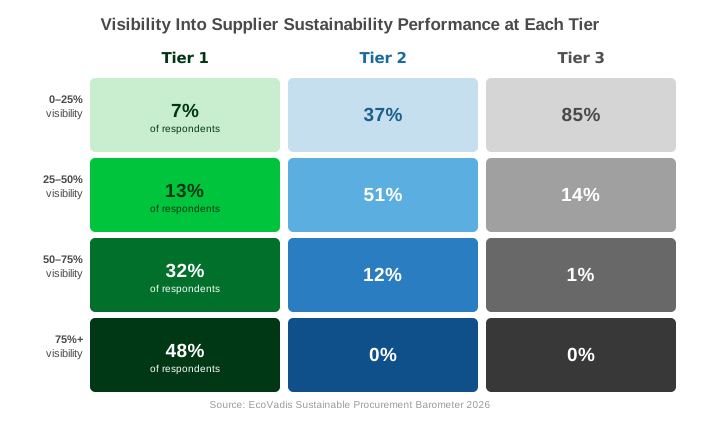
Begin mapping your supply chain by focusing on high-risk regions. You can also collaborate with industry peers to share data on common sub-suppliers, helping close information gaps more efficiently.
Compliance Costs
The financial requirements of maintaining a compliance program, including frequent third-party audits and specialized software licenses, can strain a company’s operational budget. For many organizations, the rising costs of monitoring a global network of partners make it difficult to sustain high standards across every level of the supply chain.
Focus your initial investments on high-risk regions or suppliers with the greatest potential for a breach. Additionally, consider automating routine reporting and data collection to reduce the need for manual intervention, allowing your team to maintain oversight without a proportional increase in costs.
Evolving Regulations
Keeping up with a fragmented landscape of changing international laws and environmental mandates requires constant attention. As regulations evolve across different regions, businesses may find it difficult to ensure their operations remain fully compliant at all times.
Subscribe to automated services that provide real-time regulatory updates and design your compliance framework to be flexible. This allows your organization to adapt to new legal requirements quickly without needing a complete system overhaul.
How to Build a Robust Supply Chain Compliance Program
Maintaining supply chain compliance requires more than meeting regulations. It involves building transparent and ethical systems to reduce risk across suppliers and logistics operations.
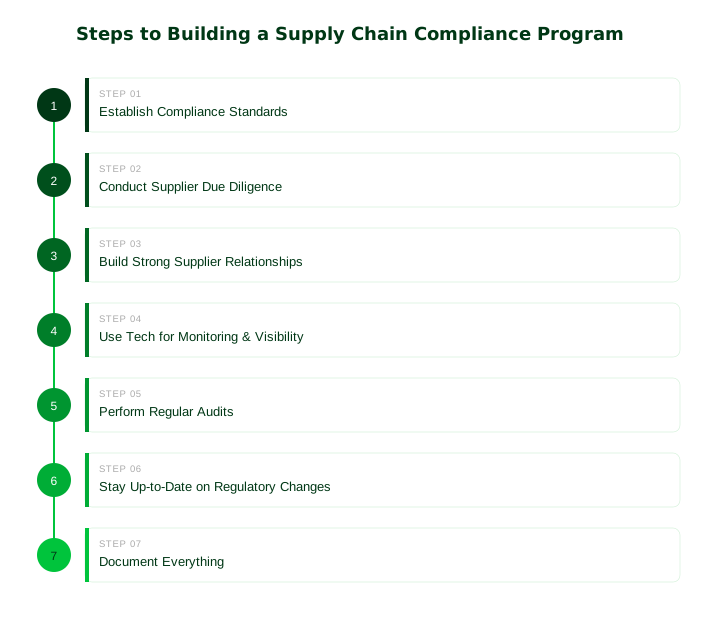
1. Establish Clear Compliance Standards
Create a formal set of rules that combines legal requirements with company values. These policies must cover essential areas such as labor laws, anti-corruption, environmental protection and data privacy. By setting specific expectations, a business establishes a consistent baseline that all partners and suppliers must follow.
To implement these standards effectively, companies usually include them in supplier codes of conduct and in legal contracts. This ensures that requirements are clearly communicated and enforceable across the entire supply chain. Having these rules in writing provides a clear benchmark for monitoring performance and managing potential risks.
2. Conduct Thorough Supplier Due Diligence
Evaluate suppliers before onboarding and continuously monitor them afterward to ensure they meet your established standards. This initial screening involves a detailed review of a supplier’s legal history, financial health and operational transparency.
By verifying certifications and auditing labor practices early on, businesses can identify red flags, such as prior regulatory fines or unethical sourcing practices, that could lead to future disruptions or legal liabilities.
3. Build Strong Supplier Relationships
Open communication and collaboration with suppliers help reinforce expectations and encourage compliance. By following this approach, businesses can ensure that compliance expectations are not just dictated, but fully understood and integrated into the supplier’s daily operations. Regular training, shared standards and clear contracts further strengthen accountability.
4. Use Technology for Monitoring and Visibility
Implement sustainable supply chain management software and automation tools to improve transparency, identify potential risks early and maintain accurate records for audits. This digital transparency ensures that every movement of goods and every supplier action is recorded, providing a clear and accessible trail for internal and external audits.
Furthermore, real-time tracking systems and predictive analytics enable companies to identify potential risks or compliance gaps before they become critical. Instead of reacting to issues after they occur, technology allows for a proactive approach by flagging delays and documentation errors immediately.
5. Perform Regular Audits and Risk Assessments
Routine internal reviews and independent third-party audits provide an objective view of supplier operations, helping detect noncompliance, fraud or operational weaknesses early. This systematic evaluation ensures that any gaps between official policy and field performance are identified and corrected before they lead to significant legal or reputational damage.
6. Stay Updated on Regulatory Changes
Staying up to date on regulatory changes is essential, as global trade laws and industry standards shift rapidly. To ensure continuous compliance, businesses must actively monitor legislative updates across every region where they operate.
Many companies utilize specialized legal databases, industry alerts and expert consultants to stay informed about upcoming changes.
7. Document Everything
Maintaining accurate records of supplier agreements, certifications, and audit results ensures that a business can demonstrate its due diligence to regulators and stakeholders. This systematic approach to record-keeping transforms compliance from a verbal agreement into a verifiable, legally binding record of performance.
Beyond legal security, documentation is essential for managing corrective actions and continuous improvement.
The Role of Technology in Supply Chain Compliance
Technology ensures transparency, helping all parties meet legal, environmental and ethical standards. By replacing fragmented manual processes with integrated digital systems, organizations can pinpoint compliance gaps in real time.
This shift is becoming a strategic priority, with 86% of executives now viewing increased investment in digital technology as essential to maintaining this level of oversight. The following tools and technologies can support the development of a strong supply chain compliance program.
Blockchain and Digital Traceability
Blockchain technology provides a permanent record of every transaction and movement of goods from origin to the final user. Because this data cannot be changed once recorded, it creates a reliable audit trail for regulators and stakeholders.
Using this digital traceability allows companies to verify the source of raw materials instantly, helping to eliminate blind spots and confirm that ethical sourcing claims are accurate.
AI and Predictive Risk Analytics
Artificial intelligence improves compliance by analyzing large amounts of data to identify patterns that may suggest future risks or supplier issues. These predictive tools allow companies to be proactive, flagging high-risk vendors or regional shifts before they lead to regulatory issues.
This data-driven approach helps leadership make informed decisions about where to focus resources and how to reduce potential risks.
Automation in Compliance Management
Automation reduces the administrative workload of compliance by handling repetitive tasks like document verification, certification renewals and reporting. These automated workflows minimize human error, a common cause of regulatory issues, and ensure that checks are performed consistently across all regions.
By using these systems, businesses can remain audit-ready at all times without significantly increasing their operational costs.
Case Studies: Success Stories in Supply Chain Compliance
The following companies are examples of how organizations have successfully implemented effective compliance strategies to improve supply chain integrity.
Henkel: Incentivizing Compliance through Sustainable Finance
Henkel has streamlined supply chain compliance by integrating EcoVadis sustainability ratings directly into its SAP procurement systems. This digital integration allows for real-time monitoring of suppliers’ environmental and social performance.
By linking these ratings to its “Sustainable Supply Chain Finance” program, Henkel offers preferential interest rates to high-performing suppliers. This approach transforms compliance into a financial incentive, proving that digital transparency can effectively drive both ethical standards and large-scale carbon reduction.
IKEA: The IWAY Standard
IKEA is widely recognized for its comprehensive supplier code of conduct, known as IWAY. Established in 2000, this framework sets clear requirements regarding environmental protection, social conditions and working environments. The company uses a combination of internal and third-party auditors to ensure compliance across thousands of global suppliers.
By providing training and support to vendors who fail to meet these standards, IKEA emphasizes long-term improvement and partnership over immediate termination.
Bottom Line
Supply chain compliance is no longer just a legal requirement; it is a vital part of a successful business strategy. By using clear standards and modern technology, companies can move beyond simple rule-following to build a more transparent and trustworthy brand.
While managing global risks is challenging, the investment leads to a more resilient and credible organization. In today’s economy, prioritizing ethical practices and regulatory integrity is the best way to avoid disruptions and gain a lasting competitive edge.
To see how your organization can automate these insights and mitigate risk effectively, explore EcoVadis’ risk management solutions to start building a more responsible value chain today.