
 ChatGPT
  Gemini
  Perplexity
  Claude
  Grok
Grok 
Gain insights from 30+ sustainability leaders, including superstars like Paul Polman, former CEO of Unilever, and Helena Helmersson, former CEO of H&M Group. Learn how to build a sustained advantage through responsible business practices.
20th July 2026
What Is Supplier Relationship Management (SRM)?
Read summarized version with:
The strongest supply chains are built on relationships. When procurement teams invest in genuine partnerships with their suppliers, the returns go well beyond reliable delivery. They get earlier access to innovation, more flexibility during disruptions and suppliers who are motivated to solve problems rather than wait for instructions.
Done well, SRM turns a supply base into a genuine competitive advantage through shared goals, structured engagement and mutual accountability. This guide covers everything procurement and supply chain leaders need to build that capability: from foundational concepts and the step-by-step SRM process to maturity benchmarking, failure modes and how ESG is reshaping supplier relationships in 2025 and beyond.
Key Takeaways:
- Supplier relationship management (SRM) builds partnerships that create mutual value over time. This is different than vendor management, which typically focuses on contract enforcement.
- Mature SRM programs deliver measurable returns across cost reduction, supply chain resilience, innovation access and Scope 3 emissions management.
- Most SRM programs are less mature than their owners believe. Understanding where a program sits on the maturity curve is the first step toward closing that gap.
- SRM stalls when it sits only in procurement. Without board-level support, the resources and authority needed to run an effective program won’t follow.
- As ESG obligations expand, sustainability assessment and carbon data collection are becoming core SRM capabilities.
What Is Supplier Relationship Management (SRM)?
Supplier relationship management is the strategic framework for managing, evaluating and developing a company’s relationships with its suppliers to maximize mutual value. It goes well beyond placing purchase orders or negotiating contracts.
Done right, SRM aligns supplier capabilities with your business goals, builds trust and transparency across the supply base, and creates the conditions for joint innovation.
Supplier Relationship Management vs. Supplier Management vs. Vendor Management
These three terms are used interchangeably, but they have distinct functions within procurement.
- Supplier relationship management is specifically about the quality and depth of your interactions with suppliers (how you engage, collaborate, develop and create mutual value over time).
- Supplier management includes relationship management but also covers supplier information management, risk management, performance tracking and activities like forecast collaboration and onboarding.
- Vendor management enforces SLAs, manages contracts and ensures vendors deliver on their promises. It tends to be reactive rather than proactive, and it doesn’t presuppose any strategic intent behind the relationship.
Supplier Relationship Management Maturity Mode
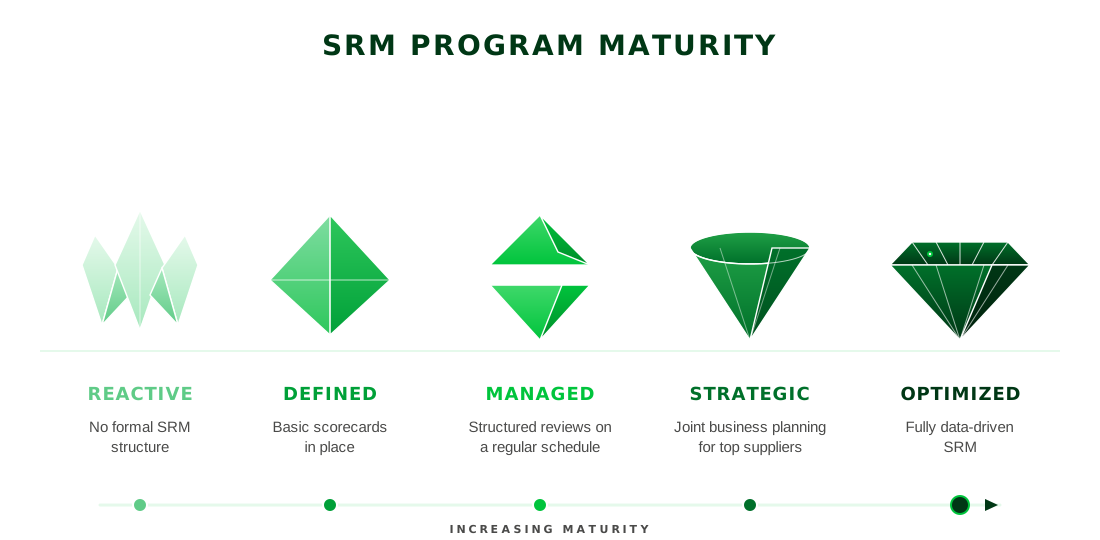
Many companies believe their SRM process is more mature than it actually is. Understanding where your program sits on the maturity curve is the first step toward closing that gap. The five levels below describe how SRM programs typically evolve.
- Level 1: Reactive. No formal SRM structure, and supplier interactions are mostly issue-driven. When something goes wrong, someone calls the supplier. When nothing is visibly wrong, the relationship goes unmanaged. Segmentation is informal or nonexistent.
- Level 2: Defined. Basic structure exists, and scorecards are in place for at least some suppliers. Segmentation is documented, though not consistently applied. Communication is mostly one-directional, from buyer to supplier. ESG is not yet part of the framework.
- Level 3: Managed. Structured reviews happen on a regular schedule. KPIs are shared with suppliers and tracked over time. There is early evidence of two-way communication and collaborative problem-solving. ESG criteria are beginning to appear in supplier risk assessments.
- Level 4: Strategic. Joint business planning is in place for strategic suppliers. Shared roadmaps, innovation pipelines and executive relationships characterize the top tier. Sustainability performance is a standard part of segmentation and review. The relationship is recognized as mutually beneficial.
- Level 5: Optimized. Fully integrated, data-driven SRM. Predictive risk intelligence flags issues before they escalate. AI and analytics inform supplier prioritization. ESG performance drives sustainable sourcing decisions alongside cost and quality. Suppliers at this tier are genuine co-innovators and competitive differentiators.
Benefits of an Effective Supplier Relationship Management Process
When SRM is working, the impacts are measurable. The following areas reflect where mature programs tend to deliver the most value.
Cost Reduction Beyond Price Negotiation
Strong supplier relationships create joint cost-reduction opportunities that price negotiation simply cannot reach. Process efficiencies, waste elimination, packaging redesign and logistics optimization all become possible when buyers and suppliers are working toward shared goals. Research indicates that effective SRM can deliver cost reductions of up to 12.7% through improved collaboration and structured engagement, on top of what contract negotiation achieves alone.
Supply Chain Resilience
In 2024, 80% of organizations faced supply chain disruptions, with many experiencing multiple throughout the year. Those without structured supplier relationships had the least visibility and the fewest options when things went wrong.
Companies with mature SRM programs get earlier warning signals, more goodwill to draw on when they need suppliers to flex and suppliers who are motivated to problem-solve. According to Deloitte’s 2025 Global Chief Procurement Officer Survey, 61% of respondents identified enhancing supplier collaboration and information sharing as their most effective risk mitigation strategy.
Innovation Access
Suppliers see operational and technical realities that buyers often miss. When the relationship creates the conditions to share that knowledge, it becomes a competitive advantage. Recent research suggests that 55-65% of innovations are sourced through external suppliers and partners, making the supply base one of the most underutilized R&D assets in most organizations. What’s more, over 90% of executives report that deeper supplier partnerships are yielding tangible benefits, particularly in driving innovation and sustainability outcomes.
Scope 3 Emissions Management
For most companies, the majority of their carbon footprint sits in the supply chain, often around 90% of total emissions. Yet reducing those emissions requires something no internal policy can deliver on its own: direct supplier engagement on carbon data collection, emissions reporting and reduction targets. According to the EcoVadis Carbon Action Report, supplier engagement is the single most impactful action a company can take to reduce Scope 3 emissions, making SRM a critical component of any corporate climate strategy.
Reduced Sourcing and Onboarding Costs
High supplier turnover is expensive. Every new supplier brings onboarding, qualification, tooling and ramp-up costs that dramatically increase total costs. Investing in existing supplier relationships is consistently more cost-effective than replacing them.
Common Supplier Relationship Management Challenges
SRM programs typically break down for a few common reasons. The following challenges come up consistently across industries and program sizes.
Executive Buy-In Gaps
SRM is often positioned as a procurement initiative when it needs to be a company-wide strategy. Without senior leadership treating supplier relationships as strategic assets, the resources needed to run an effective program won’t follow. The solution is to connect SRM outcomes to board-level priorities like supply chain resilience, ESG compliance and regulatory risk.
Data Quality Problems
Scorecards built on bad data produce misleading conclusions. If delivery data doesn’t reflect actual receipt dates, or quality data is manually entered with inconsistent definitions, the supplier performance picture is distorted.
This is a common problem in supplier networks where smaller vendors rely on manual processes and self-reporting, and where technology maturity varies significantly across tiers. Investing in standardized data collection and supplier-facing tools is what defines reliable performance management.
Supplier Fatigue
Suppliers working with multiple large buyers often face an enormous audit and questionnaire burden. Asking the same supplier to complete five different sustainability assessments from five different customers is genuinely costly for them in time, resources and attention.
This dynamic erodes goodwill and reduces the quality of responses over time. A shared, standardized assessment platform that suppliers complete once and share with multiple buyers addresses this problem and improves data consistency across the network.
Internal Silos
In most large companies, procurement, finance, operations, legal and sustainability teams all have some interaction with suppliers, often without coordinating. A supplier might receive contradictory messages from different internal teams, leading to confusion and eroding trust. Effective SRM requires cross-functional alignment on how each strategic supplier is managed.
Over-Reliance on Single Strategic Suppliers
Sole-source situations concentrate risk in ways that only become visible during disruptions. When a single supplier controls a critical input, any operational, financial or geopolitical issue on their end becomes your problem immediately. These situations should be actively managed, and where the risk is high enough, corrected through supplier development or dual sourcing programs.
How to Build Strong Supplier Relationships
The strongest supplier relationships are built on structure, not goodwill alone. Companies that manage suppliers well tend to share similar foundational practices.
- Clear and consistent communication: Procurement teams that engage suppliers proactively and share strategic priorities and performance feedback on a regular cadence build more resilient relationships than those that only reach out when something goes wrong.
- Aligned goals and shared metrics: Relationships improve when suppliers understand how their performance connects to business outcomes. Sharing KPIs, collaborating on improvement targets and recognizing suppliers who consistently deliver gives them a reason to invest in the partnership.
- Fair and transparent commercial practices: Suppliers extend more flexibility, innovation and effort to buyers who pay on time, provide reasonable lead times and engage honestly in negotiations.
- Structured performance management: Regular scorecards, corrective action processes and improvement plans keep relationships grounded in data and give both sides a shared language for progress.
What to Look for in SRM Technology
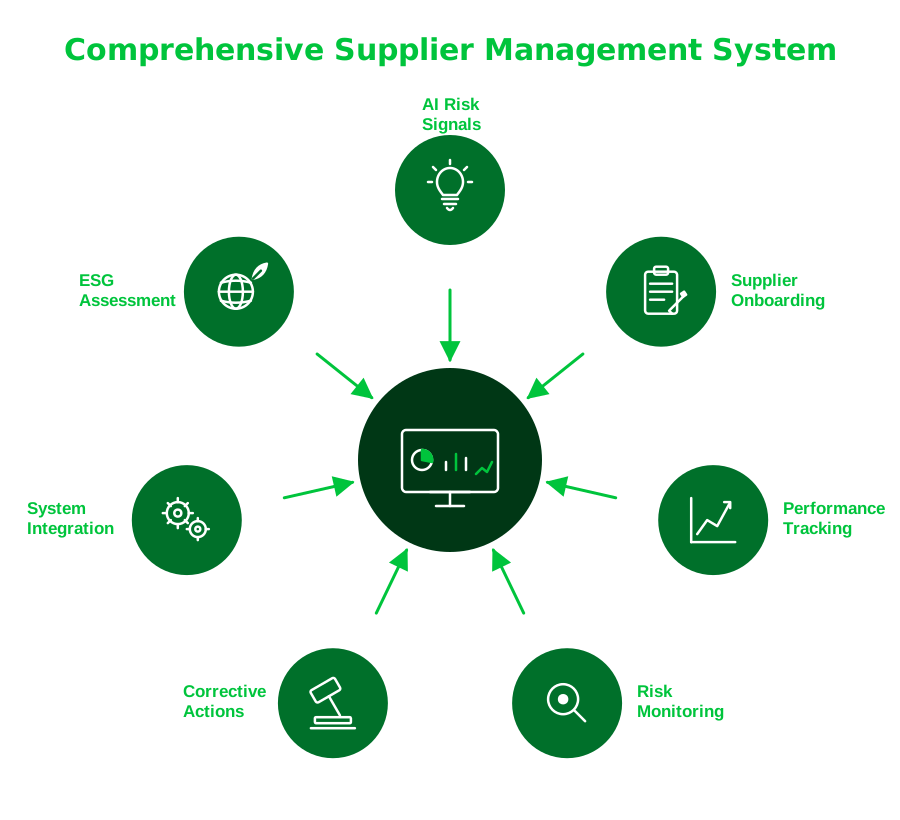
Supplier relationship management software has matured significantly over the past decade, and the best platforms now do far more than store supplier contact information. Core capabilities to evaluate include:
- Supplier onboarding and information management: Centralizes certifications, contacts, contracts and compliance documentation in a single place.
- Scorecard and performance tracking: Provides supplier-facing views alongside internal dashboards so both sides are working from the same performance picture.
- Risk monitoring: Surfaces real-time signals that flag emerging issues rather than relying on periodic assessments after problems have developed.
- Corrective action plan management: Enables teams to assign, track and close improvement actions within the same platform used to identify them.
- Integration with procurement systems: Connects SRM data directly to sourcing, contracting and payment so nothing sits in a separate tool.
With regulatory requirements expanding rapidly, any SRM platform that doesn’t address sustainability assessment, ESG scoring and carbon data collection will require additional tools alongside it, creating exactly the kind of fragmentation modern procurement teams are trying to avoid. The most advanced platforms also use AI to surface risks before they materialize, analyzing financial health indicators, news events and operational data to flag suppliers that need attention.
Turn Supplier Sustainability Data into SRM Action with EcoVadis
EcoVadis provides sustainability ratings and intelligence for global supply chains, covering over 150,000 businesses across 220 industries and 180 countries. Ratings evaluate supplier performance across four themes: Environment, Labor & Human Rights, Ethics and Sustainable Procurement, benchmarked against peers in the same industry and region.
For procurement teams, that means every supplier in the network is assessed on the same methodology and scored on the same 1-100 scale. The data is directly applicable to compliance reporting under frameworks including CSRD, CSDDD and LkSG, not just internal monitoring.
To see how EcoVadis can support your supplier sustainability program, contact us today.
FAQs
How many suppliers should be in a strategic SRM program?
Most companies designate 5–15% of their supply base as strategic, depending on industry and supply chain complexity. Each strategic supplier relationship requires executive sponsorship, joint business planning and regular reviews. Spreading that investment too thin produces surface-level engagement rather than genuine partnership.
What is the difference between a supplier scorecard and a supplier assessment?
A scorecard tracks ongoing operational performance, covering delivery, quality, cost and responsiveness, measured against agreed KPIs on a recurring basis. An assessment is a deeper, structured evaluation of a supplier’s capabilities, risks and ESG practices, typically conducted at onboarding or annually.
When should a company exit a supplier relationship?
Exiting a supplier relationship makes sense when performance consistently falls below agreed thresholds despite structured corrective action, when ESG or compliance risks cannot be remediated or when the supplier no longer aligns with strategic direction. A planned exit with adequate transition time is significantly less disruptive than a forced one triggered by a crisis.