
Supply Chain Data Integration: A Guide for Sustainability Teams
Read summarized version with:
 ChatGPT
 Gemini
 Perplexity
 Claude
 Grok
Most companies already have ESG goals. Few have the connected data needed to execute or verify them. A supplier’s carbon disclosure lives in one system, its labor audit in another and its financial risk score in a third, so no one sees the full picture until an issue becomes public. Supply chain data integration closes that gap by bringing scattered sustainability data into a single source of truth.
This article covers what supply chain data integration means for sustainability programs, the challenges that slow it down and a step-by-step approach to building an integration strategy that holds up as regulations and supplier networks grow.
Key Takeaways
- Supply chain data integration connects supplier, manufacturing and logistics data into one system, giving sustainability teams a clear view of ESG performance.
- Fragmented, inconsistent data makes ESG numbers unreliable for CSRD, CS3D and other disclosures.
- A defined strategy, from auditing data gaps to prioritizing high-risk suppliers, builds an integrated system that scales as regulations and supplier networks grow.
- Connected, continuously updated supplier data, including risk mapping, ratings and Scope 3 tracking, provide meaningful insights procurement teams can act.
What Is Supply Chain Data Integration?
Supply chain data integration is the process of connecting and synchronizing disparate data sources from various stakeholders and bring them together into a single, unified system. This includes data from suppliers, manufacturers and logistics providers.
The primary objective of this integration for sustainability and procurement teams is to enhance visibility into performance and practices across the full supply base. When ESG data is integrated, organizations have a clearer view of environmental impacts, human and labor rights issues, and other ethical concerns that define sustainable procurement. It turns scattered data into useful insights, helping guide collaborative remediation efforts and improve overall performance.
Why Data Integration Matters for Sustainability Programs
Integrating supply chain data transforms fragmented networks into a unified, responsive ecosystem. By connecting disparate data streams, you can eliminate blind spots in your sustainability program and build a more resilient foundation for global operations. The benefits of integrated data include:
- Visibility into supplier ESG performance – Robust data integration enables organizations to monitor ESG performance on an ongoing basis, helping to identify potential issues as they arise. The earlier a problem is identified, the faster it can be addressed and resolved.
- Scope 3 emissions tracking across supplier tiers – The average company’s Scope 3 emissions are 27x higher than their internal operational footprint. With global regulations increasingly holding businesses accountable for their upstream emissions, integrating this data is essential to both staying compliant and making progress toward decarbonization.
- Reliable data for CSRD, CS3D and other regulatory requirements – While regulations around supply chain sustainability are evolving, staying ahead of reporting requirements is essential for global enterprises. Data integration provides a foundation for collecting and standardizing the information required to stay compliant, even as requirements change over time.
- Reduced reliance on self-reported supplier data – Collecting, managing and verifying supplier-reported data is often time-consuming and unreliable. While questionnaires offer some insight into supplier performance, an integrated data management system offers a more effective way to validate reported information and ensure accuracy.
Components of an Integrated Sustainability Data System
A successful supply chain data integration strategy requires several core building blocks. These technical elements work together to bridge gaps in ESG reporting and sustainability efforts.
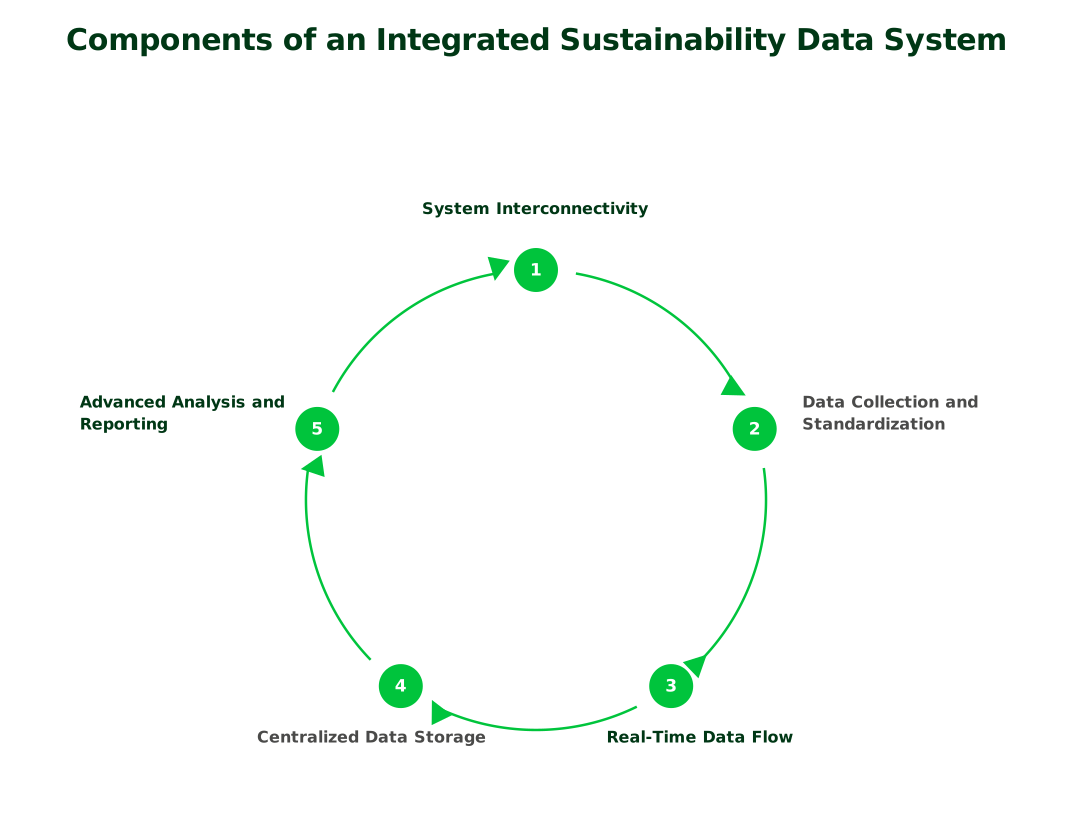
- System interconnectivity: Connecting internal enterprise systems and external partner systems wherever possible to ensure seamless data exchange. This connection allows data to flow smoothly between suppliers, logistics partners and internal teams for a more collaborative workflow.
- Data collection and standardization: Capturing and standardizing supplier ESG data makes it easier for procurement teams to compare suppliers and make informed purchasing decisions. They also help teams identify underperforming suppliers and implement corrective actions as needed to stay compliant with due diligence regulations.
- Real-time data flow: Collecting live updates is essential for monitoring and addressing modern supply chain risks. A regional conflict, an unexpected climate event, or a publicized labor violation can all impact an organization’s downstream operations, so tracking these events as they occur is critical for maintaining business continuity.
- Centralized data storage: Providing an architecture to gather data from across the supply chain into a single source of truth that internal teams can use to coordinate and improve sustainability efforts. This also supports faster reporting, as data lives in a singular repository.
- Advanced analysis and reporting: Turning raw data into ethical intelligence drives more informed and confident business decisions. Analysis tools allow companies to evaluate ESG metrics to determine the environmental and social impact of their global partners.
Common Data Integration Challenges
Modernization is not without challenges, of course. Understanding what may come up when trying to integrate supply chain data can help you prepare a more comprehensive approach.
- Fragmented ESG data across systems: Emissions data, supplier codes of conduct and audit records typically sit in separate systems, so no team has a complete view of a supplier’s ESG performance without pulling data from several places and piecing them together manually.
- Inconsistent supplier reporting: Suppliers report emissions, labor practices and other ESG data in different formats and on different timelines, which makes it hard to compare performance across the supply base or track real progress year over year. Additionally, smaller suppliers may lack the ability to track and report detailed metrics, adding further complexity and uncertainty.
- Long-tail supplier coverage gaps: Most companies have solid visibility into their largest, tier-one suppliers but far less into the thousands of smaller suppliers further down the chain. McKinsey’s Supply Chain Risk Pulse 2025 found that 95% of companies have visibility into tier-one supplier risks, but that visibility extends to tier two or beyond for only 42%, which is often where labor and environmental risks are most concentrated.
- Regulatory traceability requirements: Modern regulations require companies to trace and document ESG performance across multiple supplier tiers, which is difficult to do consistently without a system that connects and timestamps data across the network.
How to Build a Supply Chain Data Integration Strategy
A clear integration strategy turns fragmented ESG data into a connected, navigable source of truth. Follow these five steps to build a strategy that can scale as your supplier network and reporting requirements grow.
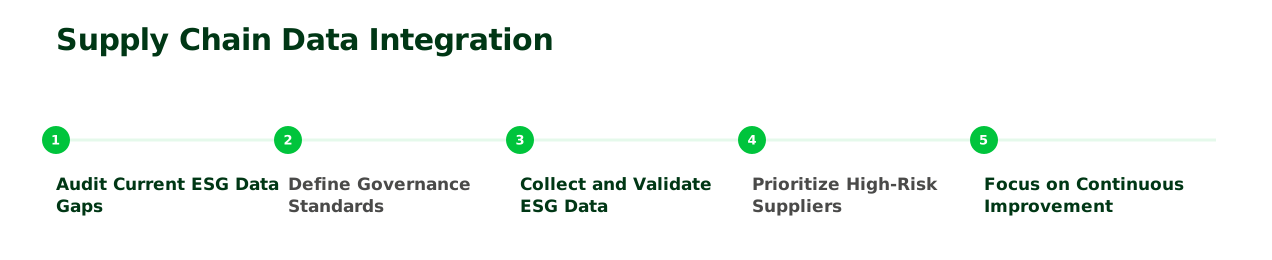
1. Audit Current ESG Data Gaps
Start by mapping where your ESG data actually lives today, whether that’s spreadsheets, a shared drive or a data management software. This internal audit shows which processes need to be connected, as well as which data points don’t exist at all.
- Inventory ESG data sources: List every system that holds supplier sustainability data, including ratings platforms, ERP systems and manual trackers.
- Locate manual data: Identify ESG information stored in disconnected files, such as spreadsheets or paper records, since this is often where the most valuable supplier context lives.
- Pinpoint coverage gaps: Note where ESG data exists for some suppliers but not others, particularly beyond tier one.
2. Define Governance Standards
Clear governance ensures ESG data stays accurate as more suppliers, business units and regulations tie into the system. Establish ownership and standards early, before the network of connected sources grows too large to manage.
- Assign data ownership: Name a specific team or individual responsible for the accuracy of each ESG data set, from emissions figures to labor audit results.
- Set entry standards: Define how suppliers submit data and in what format, so scores and metrics stay comparable across the supply base.
- Establish access protocols: Set clear rules for who can view or edit supplier ESG data, especially where the information supports regulatory disclosures.
3. Collect and Validate ESG Data
A comprehensive data integration platform does more than move data between systems. It captures accurate data, validates what suppliers report, flags inconsistencies and gives procurement teams a reliable view of performance across the supplier network.
- Prioritize validation, not just collection: Choose a platform that cross-checks supplier-reported data against independent sources, rather than one that simply aggregates self-reported figures.
- Confirm regulatory alignment: Verify the platform tracks the specific frameworks your business reports against, such as CSRD or CS3D.
- Test supplier usability: Choose a platform suppliers can actually use, since low adoption undermines even the most sophisticated integration.
4. Prioritize High-Risk Suppliers
Suppliers carry different ESG risks, and few organizations have the resources to capture deep, real-time data on every supplier at once. Focus integration efforts on the suppliers most likely to expose the business to environmental, labor or compliance risk.
- Rank suppliers by risk category: Weigh factors such as country of operation, industry and spend to identify which suppliers warrant the closest data monitoring.
- Start with tier-two exposure: Extend integration beyond tier-one suppliers, where visibility typically drops off and risk often concentrates.
- Set escalation triggers: Define what a change in a high-risk supplier’s data, such as a dropped certification or a new violation, should trigger internally.
5. Focus on Continuous Improvement
Data integration isn’t a one-time project. Supplier networks change, regulations evolve and new ESG risks emerge, so the system needs a process for catching problems and improving over time.
- Monitor data quality on an ongoing basis: Track for gaps and delays in supplier data regularly, and flag any inconsistencies.
- Revisit governance as requirements shift: Update data standards as evolving regulations add new reporting obligations.
- Gather feedback from data users: Ask the sustainability, procurement and compliance teams relying on the system what’s missing or unreliable, and adjust accordingly.
The Role of Technology and Verified Data
For most procurement teams, ESG data still sits outside the systems that actually drive sourcing decisions. The EcoVadis Sustainable Procurement Barometer 2026 found that only 30% of companies report full digital integration into procurement analytics. The rest still work from spreadsheets, periodic reviews and fragmented data that cannot effectively inform smarter procurement.
Closing that digital gap requires advanced technology that connect ESG data and sustainability metrics to deliver real, actionable insights. EcoVadis’ sustainability intelligence platform offers a suite of solutions that does just that. It maps ESG risk across the full supply base, then evaluates suppliers through either low-touch questionnaires or more in-depth sustainability ratings, depending on their risk level. It also helps organizations track Scope 3 emissions data at the supplier level and monitors real-time news to flag emerging risks as they happen.
Because that data updates continuously instead of sitting stagnant until the next assessment, it stays useful for actual sourcing decisions, not just an annual compliance check.
Request a demo to learn more about EcoVadis and how the platform supports supply chain data integration.
FAQs
What is supply chain data integration? And how does it support ESG reporting?
Supply chain data integration is the process of connecting supplier, manufacturing and logistics data from across the supply base into one system, rather than leaving it scattered across spreadsheets, portals and individual supplier emails. For ESG reporting, that means emissions figures, labor audits and certifications flow into the same pipeline used for CSRD, CS3D and other disclosures, instead of being reconstructed by hand every reporting cycle.
What data sources are typically included in an ESG data integration strategy?
An ESG data integration strategy typically pulls together supplier questionnaires, third-party sustainability ratings, real-time risk monitoring and internal systems like ERP and procurement platforms. Questionnaires and ratings show how a supplier performs over time, monitoring feeds catch emerging risks such as a labor violation or environmental incident as they happen, and ERP or procurement data ties that ESG picture back to actual spend and sourcing decisions.
What’s the difference between self-reported supplier data and verified sustainability data?
Self-reported supplier data comes directly from the supplier, usually through a questionnaire, disclosure or certification the supplier fills out and submits without independent review. Verified sustainability data goes through additional checks, such as evidence review or cross-referencing against public records and news sources, before it counts as reliable. Self-reported data can be accurate, but a company relying on it alone has no way to confirm that. Verified data gives procurement and sustainability teams a baseline they can act on immediately.
How does data integration help with Scope 3 emissions tracking?
Data integration helps with Scope 3 emissions tracking by connecting supplier-level emissions data, spend data and activity data into one system, instead of estimating emissions from industry averages alone. Most companies’ Scope 3 emissions come from their supply chain rather than their own operations, so accuracy depends on real supplier data. An integrated system pulls supplier-reported emissions figures, or spend-based estimates where supplier data isn’t yet available, into the same reporting pipeline used for CSRD and other disclosures.