
Building a Sustainability Baseline Without a Dedicated Team: 4 Actions to Take Now
Read summarized version with:
 ChatGPT
 Gemini
 Perplexity
 Claude
 Grok
“We’ve been asked to complete an EcoVadis assessment. Where do we even begin if we don’t have a dedicated sustainability team?”
That’s a real question from a EcoVadis Community discussion posted this August. It is also one of the most common ones small companies ask when an assessment request lands on their desk. According to the Supplier Intelligence Report 2026, the answer has less to do with budget than most teams assume. Building a credible baseline comes down to consistency and documentation.
You Have More Than You Think
Small and mid-sized suppliers preparing for their first assessment often assume they’re starting from zero. In reality, most companies already have safety protocols, ethics guidelines, or basic policies in place — it just hasn’t been consolidated or written down in a way an analyst can evaluate. Recognizing what already exists is usually the fastest way to build early momentum.
4 Actions Any Team Can Take Now
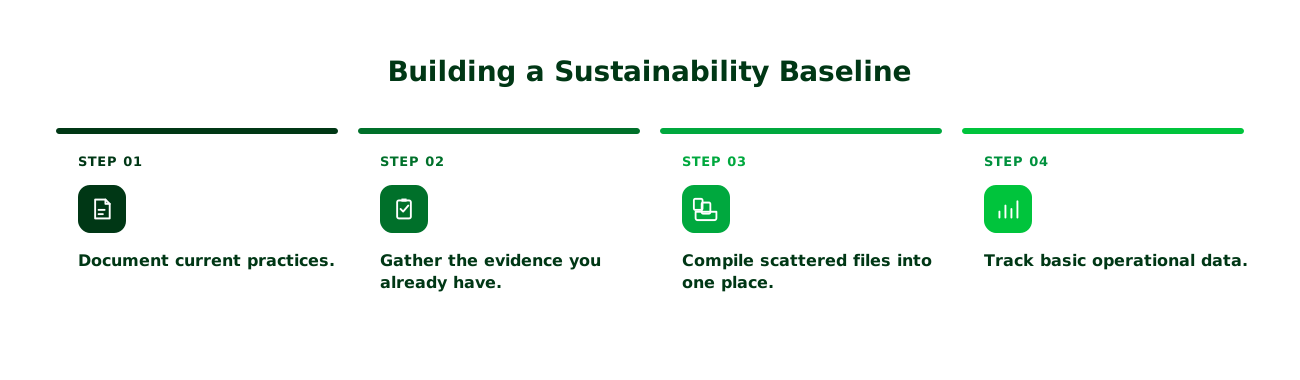
- Document current practices. Get credit for work you’re already doing by formalizing it on paper. Write down any safety protocols, training requirements, ethics guidelines, and labor policies to demonstrate your commitment to sustainable practices.
- Gather the evidence you already have. Compile any previous assessment and audit findings, corrective actions, and other sustainability data you have recorded.
- Compile scattered files into one place. Organize your files so they can be shared easily with buyers and analysts when needed.
- Track basic operational data. Take an inventory of what operational data you’re currently tracking, and what’s still missing. Prioritize filling in the gaps to give buyers a full picture of your processes.
Why This Matters Beyond the First Assessment
This isn’t a one-time exercise. 48% of buyers today have visibility into the sustainability performance of 75% or more of their Tier 1 suppliers. Sustainability performance is becoming a standing part of how buyers choose and retain partners, not a one-off request tied to a single contract.
And the first score isn’t the ceiling. Small companies see an average 7.4-point improvement on their second EcoVadis Rating, using the same resources they started with. The gain comes from understanding how the methodology evaluates documentation.
Learn from Peers Who’ve Been There
You don’t have to figure this out alone. The EcoVadis Community helps companies with a small team or without a dedicated sustainability team. You can compare notes with peers who’ve been through their first assessment and can tell you exactly what worked. [Join the EcoVadis Community Today→]