
 ChatGPT
  Gemini
  Perplexity
  Claude
  Grok
Grok 

Gain insights from 30+ sustainability leaders, including superstars like Paul Polman, former CEO of Unilever, and Helena Helmersson, former CEO of H&M Group. Learn how to build a sustained advantage through responsible business practices.
3rd June 2026
ESG in Private Equity: What CPOs and Sustainability Leaders Need to Know
Read summarized version with:
Private equity investors are no longer just evaluating balance sheets. ESG capability has become a decisive factor in how they select managers and assess portfolio companies, with nearly 90% of limited partners (LPs) now ranking it as a key differentiator. For CPOs and sustainability leaders, that shift has tangible consequences for your business. This article explores what ESG in private equity means in the modern market, why it matters to your organization and how to turn ESG performance into value.
What Is ESG in Private Equity?
ESG in private equity (PE) refers to the integration of environmental, social and governance factors into how investors evaluate, acquire and manage portfolio companies. For general partners (GPs), it increasingly guides due diligence and portfolio monitoring. For the sustainability leaders inside those companies, it defines what investors will ask for, what regulators will require and what issues might surface under scrutiny.
This distinction matters. ESG is not just a reporting exercise or a box to check before a formal audit. It is an indication of operational maturity. PE firms use ESG metrics to determine whether a company is well-governed and primed for long-term value creation. Companies that can demonstrate credible supplier data and clear improvement trajectories are better placed to attract new capital and maintain stronger valuations throughout the hold period to exit.
For PE-backed companies, this creates a clear expectation. GPs are under growing pressure from their LPs to demonstrate ESG progress across their portfolios. That pressure flows directly to the portfolio company level, where CPOs and sustainability leaders are expected to deliver the data, programs and improvement trajectories that GPs need to satisfy their own reporting obligations.
Why ESG Performance Matters to Investors
LP demand for ESG accountability has moved beyond voluntary disclosures. Today, sustainability performance is a serious consideration into how funds are dispersed across the portfolio. Forward-thinking organizations are those that understand what investors are actually looking for.
- Returns are at stake. Sustainability-linked initiatives have been shown to increase EBITDA by up to 7%. GPs are looking for proof that ESG performance translates into operational efficiency and long-term value.
- Regulations are raising the bar for everyone. Frameworks like SFDR, CSDDD and California’s SB-253 require verifiable supplier-level data on emissions, human rights and supply chain risks.
- Structured ESG programs reduce risk exposure. Portfolio companies with documented ESG processes are better positioned to absorb supply chain disruptions and regulatory changes without significant (and costly) operational impact.
The companies that treat ESG as a real priority now will be the ones with the least to prove when investors come asking for evidence later.
A Look at Where ESG Risk Lives
When companies think about ESG risk, the instinct is often to look inward at operations, facilities and direct emissions. That focus is necessary, but it often misses other significant issues. For most organizations, environmental and social risks are concentrated upstream in the supply chain, compounding across tiers and often invisible until they emerge as a disruption or a compliance failure.
- The supply chain carries the majority of environmental and social risk. Carbon emissions, labor practices and human rights violations are concentrated upstream, often several tiers deep into supplier networks where visibility is weakest.
- Scope 3 emissions alone tell the story. Research indicates that supply chain emissions are 11.4 times higher than a company’s direct operational emissions, making supplier data essential to any credible decarbonization strategy.
- Investors know where to look. ESG due diligence across the hold period now routinely probes supplier risk management, emissions data and remediation plans. Companies that cannot answer those questions with primary data are at risk of losing funding opportunities.
That upstream exposure means that improving ESG performance is largely a supplier risk assessment challenge, not just a reporting one. Expanding internal ESG policies to account for the larger external network is critical.
A Framework for ESG Integration: From Strategy to Reporting
Building a robust ESG program demands an intentional and thoughtful approach that connects internal priorities to what investors and regulators expect. The following five steps outline how to build that foundation.
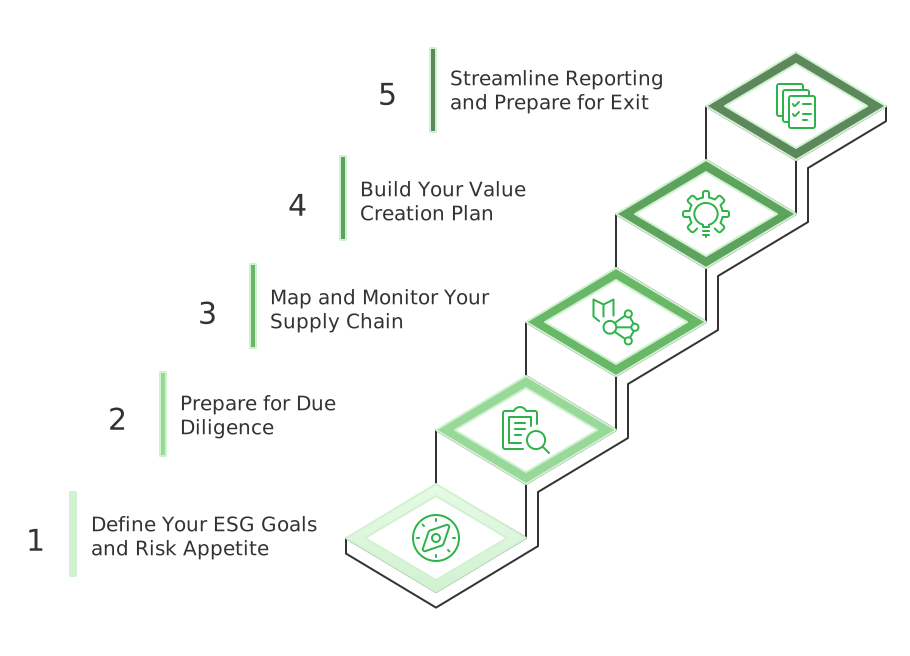
1. Define Your ESG Goals and Risk Appetite
The starting point is clarity. Before any data is collected or supplier assessed, organizations need to define which ESG issues are most material to their business or mandated by regulations, and how much risk they are prepared to accept across each one.
This process should reflect the principle of double materiality, meaning companies have to consider not only how ESG factors affect their own financial performance, but also how their business impacts people and the environment. Regulations like SFDR, CSDDD and California’s SB-253 inform this process from the outset, as they set clear expectations for ESG reporting.
Setting ESG goals around the data these parameters creates a solid foundation for meeting both investor requirements or regulatory mandates. When setting goals, consider three things:
- Which ESG issues are most relevant to your sector and business model
- What thresholds of risk exposure are acceptable across each one
- How those boundaries get embedded into procurement and investment decisions
Organizations that codify their goals and priorities early create a defensible foundation for everything that follows.
2. Prepare for Investor Due Diligence
ESG due diligence in private equity has become considerably more rigorous. ESG is no longer just a supplementary section of a diligence questionnaire. It is a meaningful inquiry covering internal governance structures, supplier risk management, emissions data and remediation plans.
Preparation means being able to produce primary data instead of relying on estimates. It means having documented processes, clear ownership of ESG risks and evidence of improvement over time. The most effective approach is to treat investor readiness as an ongoing discipline. Maintaining a live evidence base of policies, supplier assessments and incident responses means that when the diligence process begins, you already know where you stand.
3. Map and Monitor Your Supply Chain
Understanding where ESG risk exists in your supplier network is one of the most complex challenges organizations face. As of 2025, only 42% of companies report having visibility into tier-2 supplier risks or beyond. That gap limits the ability to track emissions, monitor labor practices and identify compliance issues before they escalate.
Effective supply chain risk mapping requires a staged approach:
- Start with tier-1 suppliers, ranked by spend and dependency
- Extend visibility deeper into the supply chain where operational or compliance exposure is highest
- Move from periodic audits to consistent monitoring using structured supplier ratings and assessments
EcoVadis Ratings give procurement teams ongoing visibility into ESG performance across their supply base. This enables risk prioritization and targeted improvement plans, rather than reactive responses to problems after they’ve surfaced.
4. Build Your Value Creation Plan
Demonstrating progress to GPs and LPs requires a documented, measurable record that connects ESG activity to actual business outcomes. That means tracking relevant ESG metrics alongside financial KPIs, assigning ownership to performance and monitoring improvement over time. Investors want to see that ESG commitments are actively managed, not passively reported.
This level of discipline also creates tangible business value beyond investor relations. Organizations that monitor ESG metrics diligently are better equipped to anticipate operational risk, reduce costs and make faster, more informed decisions.
5. Streamline Reporting and Prepare for Exit
Exit preparation should begin long before a transaction is on the horizon. The organizations that command strong valuations at exit are those that have built a consistent, auditable record of ESG performance throughout the ownership period. Formal ESG records is a genuine differentiator, with only 39% of companies currently publishing sustainability reports.
Getting there requires building good habits early:
- Maintain a diligence-ready evidence base of policies, supplier risk processes and remediation actions
- Track ESG indicators alongside financial KPIs from the start
- Document quick wins and improvement trajectories so progress is visible and auditable over time
Exit preparation is the culmination of the work done in every step before it.
Final Thoughts: ESG Performance Is a Private Equity Imperative
Private equity has shifted in a way that truly rewards preparation. LPs are allocating capital toward portfolio companies that can demonstrate structured ESG programs, regulators are demanding primary data over estimates, and exit valuations increasingly reflect the quality of ESG oversight established during the hold period.
For sustainability leaders and CPOs, that creates an exciting opportunity. The organizations that build credible ESG programs now will be the ones that move through diligence faster, satisfy LP reporting requirements and defend valuations at exit.
EcoVadis supports that work through globally recognized supplier ratings and sustainability intelligence that give procurement teams the visibility and evidence base they need across their entire supply chain.
To learn more about how EcoVadis supports ESG in private equity, contact us today.