Food and beverage (F&B) companies are operating in an environment of unprecedented volatility. From rising tariffs and supply chain disruptions to increasing regulatory and consumer scrutiny, the pressure to build resilient, transparent supply chains has never been greater.
76% of food executives report being negatively impacted by tariffs and supply chain disruptions over the past year, a dramatic increase from just 11% the year before. These disruptions are hitting hardest where it matters most: raw materials, packaging costs, and labor availability, forcing leaders to rethink how they manage risk, sustainability, and supplier performance.
These pressures are already impacting business performance. More than 50% of F&B companies report a drop in sales volume due to tariff impacts, and 87% are making or planning changes to their pricing strategies in response. Labor market uncertainty is also rising, with 46% of industry leaders describing current conditions as somewhat or extremely negative.
While some companies are making short-term, tactical adjustments, many, particularly in North America, are pursuing long-term, structural changes to build supply chain resilience and protect margins.
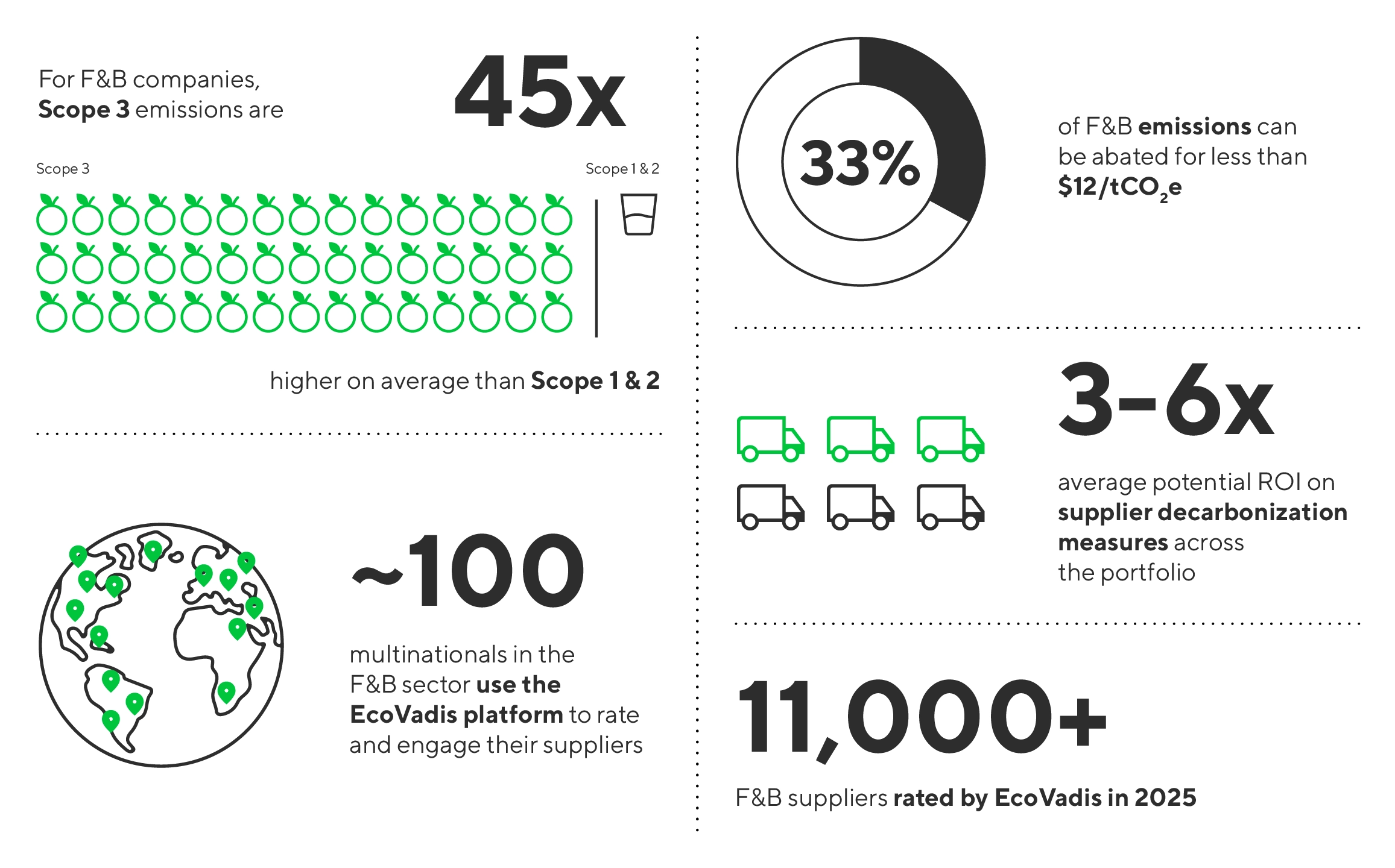
As sustainability expectations rise, many food and beverage companies are discovering a critical gap: historically, the industry has relied more on estimates than verified data to understand ESG performance. That approach is no longer sufficient.
Investors, customers, and regulators now expect credible, comparable, and auditable data to support ESG reporting, risk management, and strategic decision-making. To keep pace, F&B organizations must move beyond spreadsheets and assumptions toward digital platforms that deliver real-time visibility across their supplier base.









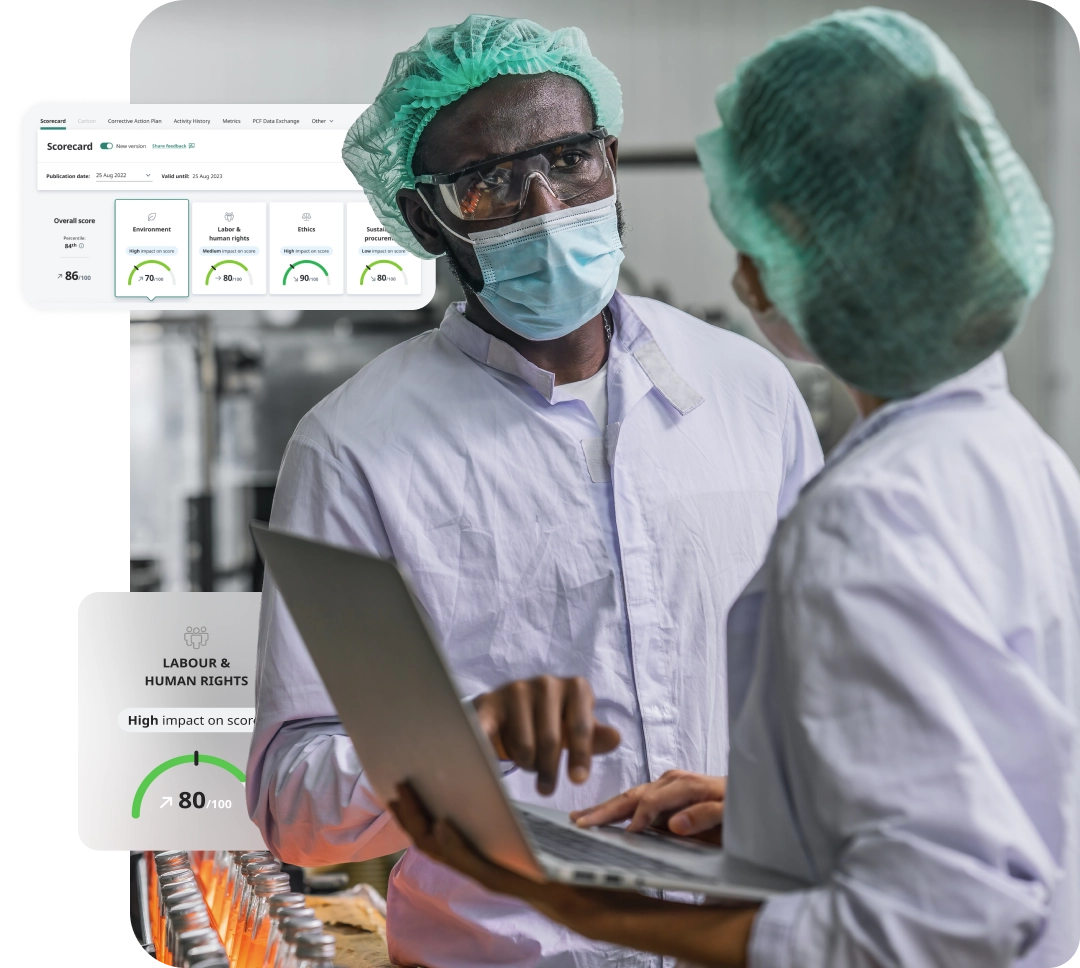
Interactive scorecards and dashboards transform complex sustainability data into clear, decision-ready insights, enabling procurement, sustainability, and compliance teams to prioritize improvements, mitigate risk, and report with confidence.