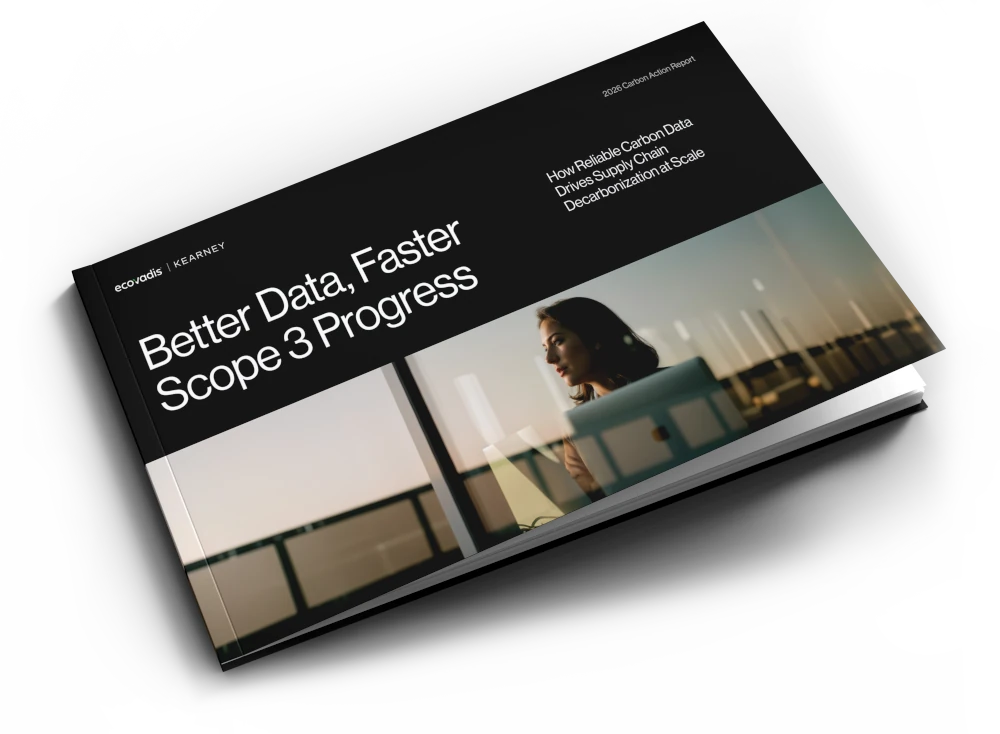
Companies are investing in supply chain decarbonization, but most are building their strategy on data too unreliable to drive real results. This report shows what separates leaders from the rest.
ECOVADIS & KEARNEY
CARBON ACTION REPORT 2026
CARBON ACTION REPORT 2026
Better carbon data means faster
Scope 3 progress.


Main content
What this report covers
56000
companies rated on carbon over the past year
56
%
report Scope 1&2 data
40
%
also share estimate-based Scope 3 data
4
%
report primary
Scope 3 data
The Scope 3 challenge
The Carbon Action Report 2026, produced alongside Kearney, draws on data from 56,000 companies and interviews with leading multinationals to examine the Scope 3 challenge from three angles: the measurement gap hiding real emissions, the data quality dividend driving faster reductions, and the network dynamics scaling action across supply chains. It shows where the biggest emissions are concentrated, what separates companies cutting fastest from those stalling, and why data quality is the lever most organizations are underestimating.
The headline findings
- The Scope 3 measurement gap
-
The reliable
data edge -
The engagement
multiplier -
The network
effect - The commercial signal
The Scope 3 measurement gap
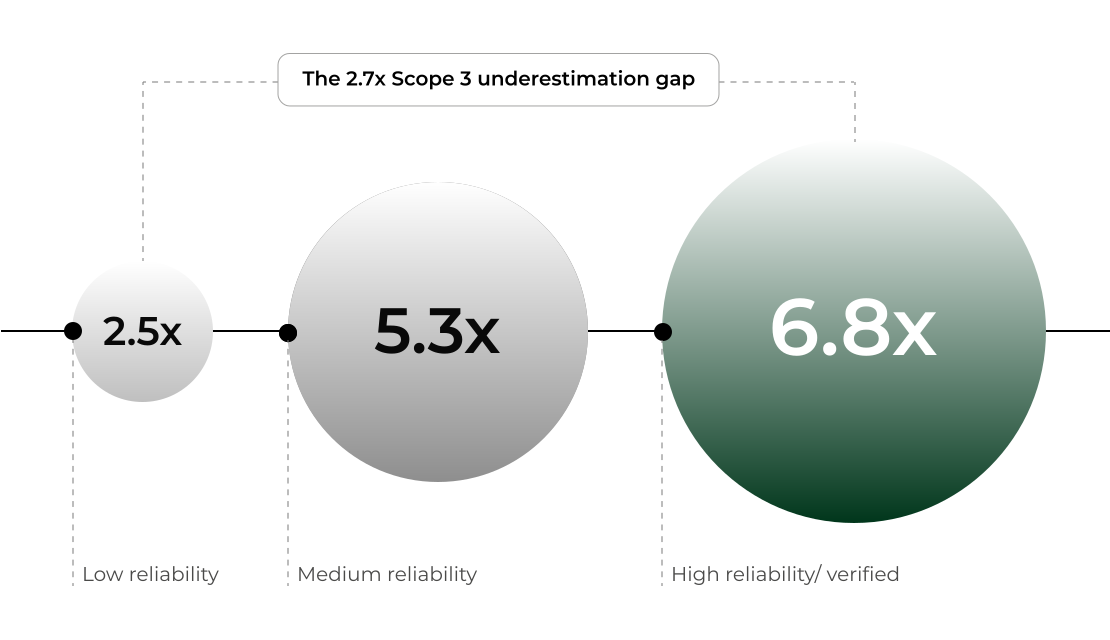
Companies may be underestimating Scope 3 emissions by 2.7x.
Companies relying on low-reliability supplier data report a median Scope 3 multiplier of 2.5x their operational footprint, versus 6.8x for those with high-reliability or verified data. This gap may represent hidden emissions that mean inaccurate targets, misdirected investment, and flawed decarbonization strategies.
The reliable data edge
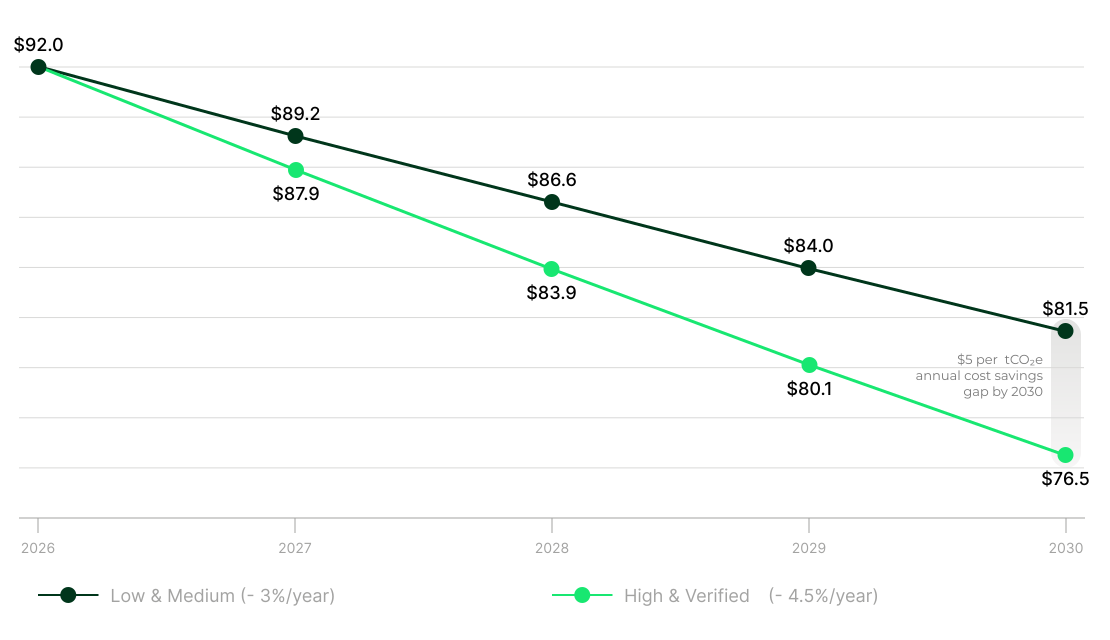
Better Scope 1&2 data means faster reductions and more cost savings.
Companies with high-reliability or verified data cut direct emissions by 4.5% over a two-year period – 50% faster than those with less reliable data. This translates to cost savings of $5 per tCO2e annually by 2030.
The engagement multiplier
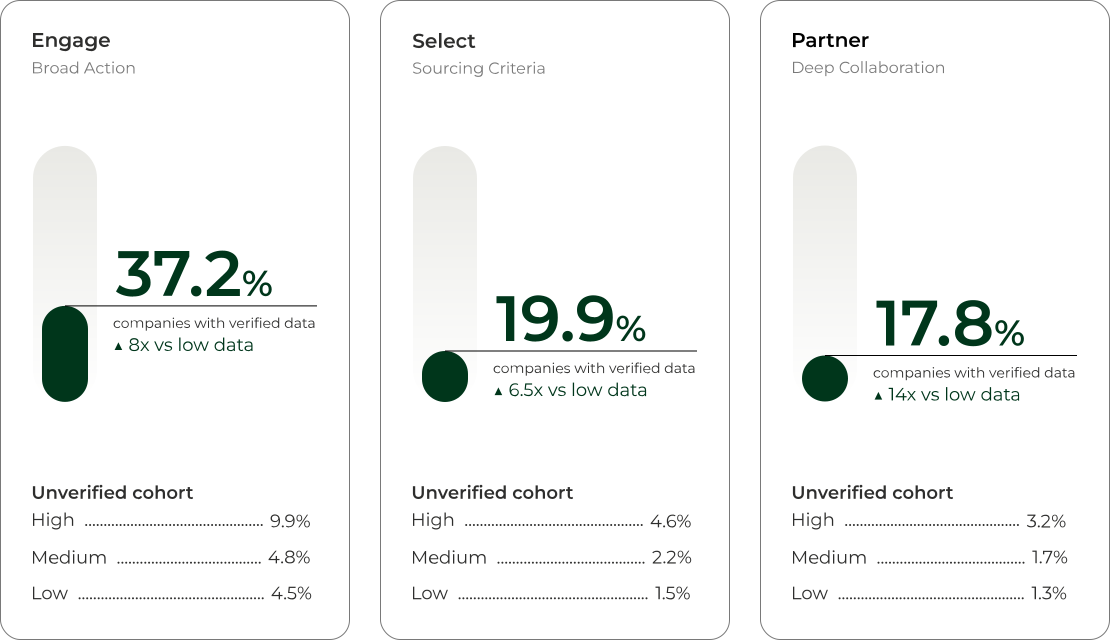
Verified data drives 8x supplier engagement.
Companies with verified Scope 1&2 data are 8x more likely than those with low-reliability data to engage suppliers on carbon. They are 6.5x more likely to integrate carbon into sourcing criteria, and 14x more likely to pursue deep collaboration.
The network effect
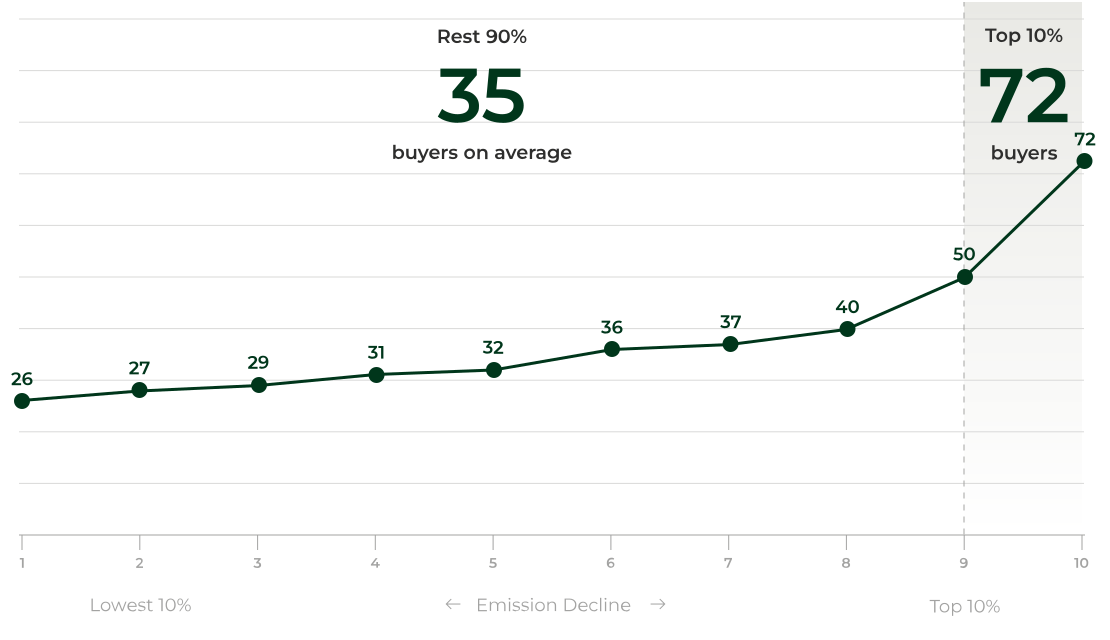
10% of companies account for 95% of emissions across the EcoVadis network – and are the most connected.
These high-emitting companies are also the most connected, linked to 72 buyers on average. Targeting one high-emitter can simultaneously improve Scope 3 visibility for dozens of buyers at once.
The commercial signal
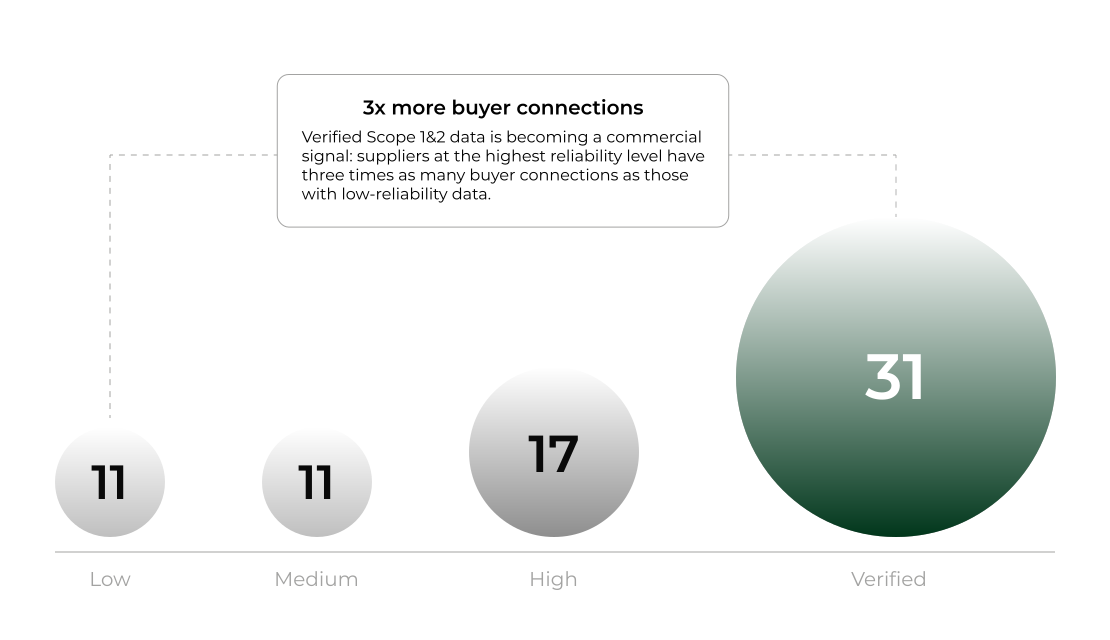
Better data is already reaching more buyers.
Suppliers with verified Scope 1&2 data have 3x as many buyer connections as those with low-reliability data. As Scope 3 requirements tighten under CSRD, CBAM, and other frameworks, verified suppliers are gaining a measurable commercial advantage. The data quality investment is becoming a competitive signal.
The Scope 3 measurement gap
Companies may be underestimating Scope 3 emissions by 2.7x.
Companies relying on low-reliability supplier data report a median Scope 3 multiplier of 2.5x their operational footprint, versus 6.8x for those with high-reliability or verified data. This gap may represent hidden emissions that mean inaccurate targets, misdirected investment, and flawed decarbonization strategies.
The reliable data edge
Better Scope 1&2 data means faster reductions and more cost savings.
Companies with high-reliability or verified data cut direct emissions by 4.5% over a two-year period – 50% faster than those with less reliable data. This translates to cost savings of $5 per tCO2e annually by 2030.
The engagement multiplier
Verified data drives 8x supplier engagement.
Companies with verified Scope 1&2 data are 8x more likely than those with low-reliability data to engage suppliers on carbon. They are 6.5x more likely to integrate carbon into sourcing criteria, and 14x more likely to pursue deep collaboration.
The network effect
10% of companies account for 95% of emissions across the EcoVadis network – and are the most connected.
These high-emitting companies are also the most connected, linked to 72 buyers on average. Targeting one high-emitter can simultaneously improve Scope 3 visibility for dozens of buyers at once.
The commercial signal
Better data is already reaching more buyers.
Suppliers with verified Scope 1&2 data have 3x as many buyer connections as those with low-reliability data. As Scope 3 requirements tighten under CSRD, CBAM, and other frameworks, verified suppliers are gaining a measurable commercial advantage. The data quality investment is becoming a competitive signal.
WHAT THE DATA SHOWS
The performance gap between low-reliability and verified data is measurable.
The gap between low-reliability and verified carbon data is about more than just reporting. It shapes how quickly companies reduce operational emissions, how much of their supply chain footprint they can see, and how effectively they engage suppliers on carbon.
Low-reliability carbon data


Verified carbon data


The full report goes further, exploring the specific actions companies are taking to reduce operational emissions and engage their suppliers. It also draws on interviews with leading multinationals, like Volvo Cars, Accor, and Hitachi Rail, to reveal what’s really driving Scope 3 progress.